

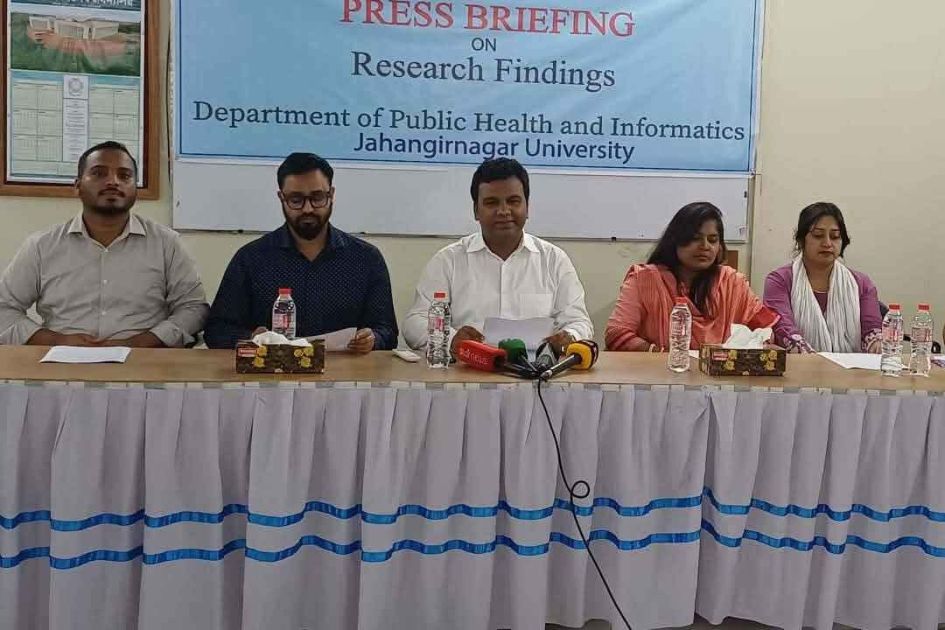



A new study links long-term exposure to PM2.5 pollution in Bangladesh’s largest cities to substantial health and economic burdens, underscoring the need for stronger air quality policies and cleaner urban development.
Bangladesh, one of the world’s most densely populated countries and among the nations most vulnerable to climate impacts, is facing a growing air pollution crisis that is associated with tens of thousands of premature deaths annually and billions of dollars in economic losses, according to a new study by researchers at Jahangirnagar University.
The study found that exposure to fine particulate matter (PM2.5) pollution in six major cities is associated with an estimated 88,240 premature deaths every year. The research also revealed that air pollution causes economic losses of around US$23 billion annually, equivalent to nearly 5 percent of Bangladesh’s Gross Domestic Product (GDP).
Research highlights severe health and economic impacts
The research was conducted by the Climate Change, Air Quality and Health Research Unit of the Department of Public Health and Informatics at Jahangirnagar University, a public university in Bangladesh, and was recently published in the international scientific journal Pollution. The study was supervised by Dr. Md. Sakhawat Hossain, Chairman and Associate Professor of the department.
Researchers analysed long-term PM2.5 exposure data between 2013 and 2021 and assessed its links with major health outcomes and economic impacts across six metropolitan areas: Dhaka, Chattogram, Rajshahi, Khulna, Sylhet and Barishal.
The findings show that particulate pollution is contributing significantly to major health burdens, including cardiovascular diseases, chronic respiratory illnesses and lung cancer. Among the estimated premature deaths, approximately 37,519 were linked to cardiovascular diseases, 8,344 to chronic respiratory diseases and 811 to lung cancer.
Dhaka accounts for the highest number of pollution-related deaths
Dhaka recorded the highest number of premature deaths associated with PM2.5 exposure, with an estimated 68,703 deaths. It was followed by Chattogram with 11,202 deaths, Rajshahi with 2,827, Khulna with 2,625, Sylhet with 1,488 and Barishal with 1,395 deaths.
The study further revealed that air pollution-related premature deaths increased consistently across all six cities during the 2013 to 2021 period, reflecting a worsening urban air quality situation.
In Dhaka alone, PM2.5 exposure was associated with an average of around 3,484 additional premature deaths annually, highlighting the capital’s growing air pollution challenge.
Experts call for urgent action on air quality
Dr. Md. Sakhawat Hossain said air pollution should no longer be considered only an environmental issue but also a major public health and economic challenge.
“Air pollution is causing a significant loss of human lives and imposing economic damage equivalent to nearly 5 percent of the country’s GDP. Immediate and effective action is essential to reduce emissions and protect public health,” he said.
Researchers called for stronger air quality governance, improved monitoring systems, reduced PM2.5 emissions and evidence-based policies aligned with the World Health Organization (WHO) air quality guidelines.
Clean energy and sustainable planning key to reducing pollution
The researchers emphasized that reducing fossil fuel dependence, improving public transportation, expanding clean energy, promoting sustainable urban planning and strengthening industrial emission controls could provide benefits for both climate action and public health.
As Bangladesh continues to experience rapid urbanisation, industrial growth and increasing climate-related pressures, experts say tackling air pollution must become a central priority in the country’s health, environmental and sustainable development strategies.
The findings add to growing global evidence that air pollution is not only a local health emergency but also a major development challenge. Addressing emissions from transport, industries, construction activities and fossil fuel use will be critical for protecting lives and advancing climate-resilient development.




