

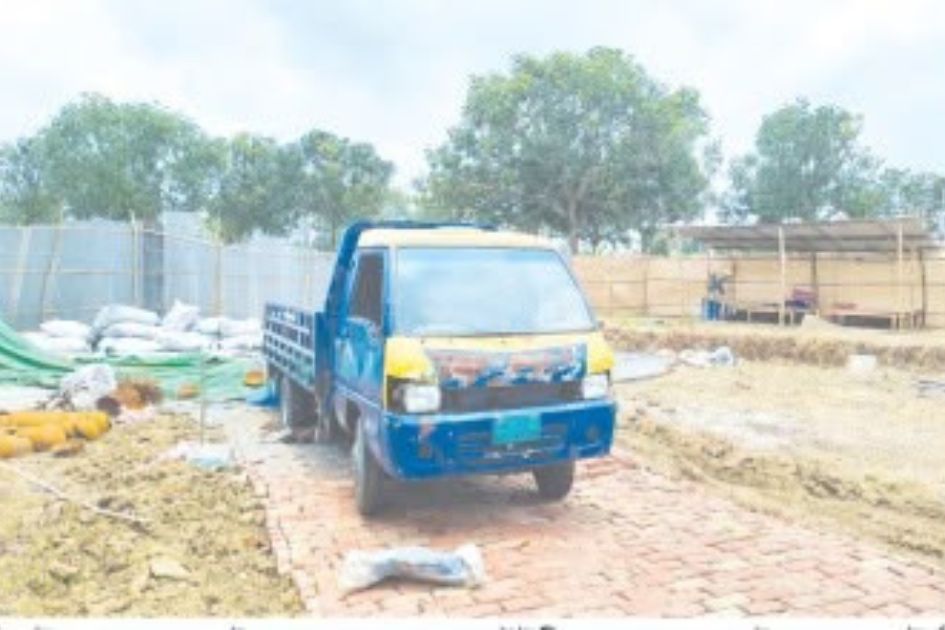



Residents say suspected battery recycling operations begin after dark, contaminating farmland and mango orchards with toxic lead, acid and plastic waste, while the Department of Environment promises enforcement action.
Illegal lead-acid battery recycling factories operating under the cover of darkness are wreaking havoc on fertile agricultural land and mango orchards in the Sahaba Dyeing area of Gobratala Union in Chapainawabganj district, northwestern Bangladesh.
Local residents report that the site remains deserted and silent during the day but undergoes a sinister transformation after sunset. Under the veil of night, unknown individuals transport old auto-rickshaw and charger-van batteries to the area, where they are dismantled and melted down to extract lead.
The process releases toxic acid, lead and plastic waste directly into the soil, causing irreversible damage to the environment. The choking toxic fumes emitted during the night-time operations have made life unbearable for villagers, with the pungent air affecting the respiratory health of nearby residents.
The environmental fallout is already visible. Green grass surrounding the clandestine site has withered and turned black. Farmers are now bracing for long-term agricultural collapse.
“The toxic black smoke is unbearable,” said Rafiqul Islam, a local farmer. “We rely on this land for our livelihood, but if this continues, our crops will be destroyed.”
Mango cultivators are equally alarmed. Momtaz Uddin, whose orchard is adjacent to the site, expressed grave concern over the impact on the region’s primary economy. “The poisonous gases and acid are damaging the leaves and buds of our mango trees. I fear we will face a total loss if this facility is not shut down immediately,” he said.
Abu Said, Deputy Director of the Department of Environment (DoE), the Bangladesh government’s environmental regulator, in Chapainawabganj, condemned the activity as a severe criminal offense. “Burning batteries to extract lead on agricultural land and disposing of toxic acid and waste into the soil is strictly prohibited. It causes catastrophic damage to the air, soil and crops,” he said.
The official promised swift intervention, stating, “We are investigating the reports from the Sahaba Dyeing area. The Department of Environment will conduct a mobile court operation there very soon, and those responsible for this illegal trade will face strict punishment.”
This crisis follows a similar crackdown in Barguna, where the district administration and the DoE conducted a joint operation on July 12, just one day after local reports highlighted the illegal melting of used batteries in the BSCIC industrial area. Authorities fined one factory BDT 150,000 for operating without environmental clearance or the necessary authorization.
As local communities in Chapainawabganj await similar action, there is growing pressure on authorities to dismantle these hazardous operations before the region’s agricultural heritage is irreparably compromised.




