




Bangladesh plans policy support, CETP modernisation, easier loans and improved rawhide preservation to strengthen the leather sector, boost exports and ensure international compliance ahead of Eid-ul-Azha demand.
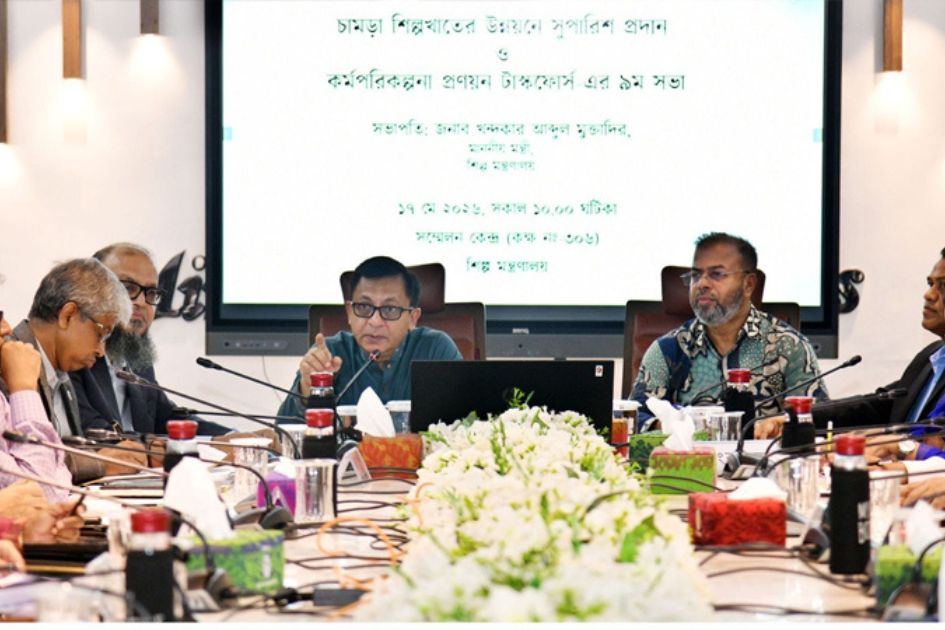
Bangladesh’s Industries Adviser Khondaker Abdul Muktaadir on Sunday said the government has adopted both short and long-term action plans to ensure the overall development of the country’s leather industry, with policy support and implementation assistance to be provided by the Ministry of Industries and the Bangladesh Small and Cottage Industries Corporation (BSCIC).
He made the remarks while chairing the ninth meeting of a task force formed to prepare recommendations and formulate action plans for the development of the leather sector at the ministry’s conference room in Motijheel in the capital Dhaka.
State Minister for Environment, Forest and Climate Change Sheikh Faridul Islam, Industries Secretary Md Obaidur Rahman, Commerce Secretary Abdur Rahman Khan, Bangladesh Export Processing Zones Authority (BEPZA) Executive Chairman Major General Mohammad Mowazzem Hossain and other members of the task force attended the meeting.
Muktaadir said the present government is giving special importance to the leather industry and is committed to ensuring that not a single piece of rawhide goes to waste. He said the entire process, from animal slaughter to leather marketing, would be brought under a well-organised management system to turn the sector into one of the country’s major sources of income.
The adviser stressed the need to expand leather preservation facilities to prevent damage to rawhide during the Eid-ul-Azha season. He also said modernisation of the Central Effluent Treatment Plant (CETP) and ensuring international standard compliance were essential to make the leather industry more profitable.
He said hides collected during Eid-ul-Azha are distributed to orphanages and various religious institutions. To ensure proper skinning, preservation and quality standards, the government has arranged training programmes for those involved in the process.
At the meeting, representatives of the Bangladesh Tanners Association (BTA) requested easier bank loans for leather traders. In response, the adviser urged the Financial Institutions Division and Bangladesh Bank to take necessary steps to provide loans on simplified terms and ensure quicker financial assistance for businesses in the sector.
The meeting also emphasised the need to ensure uninterrupted electricity supply in the Savar tannery industrial area and strengthen security arrangements in the leather industrial city.




