

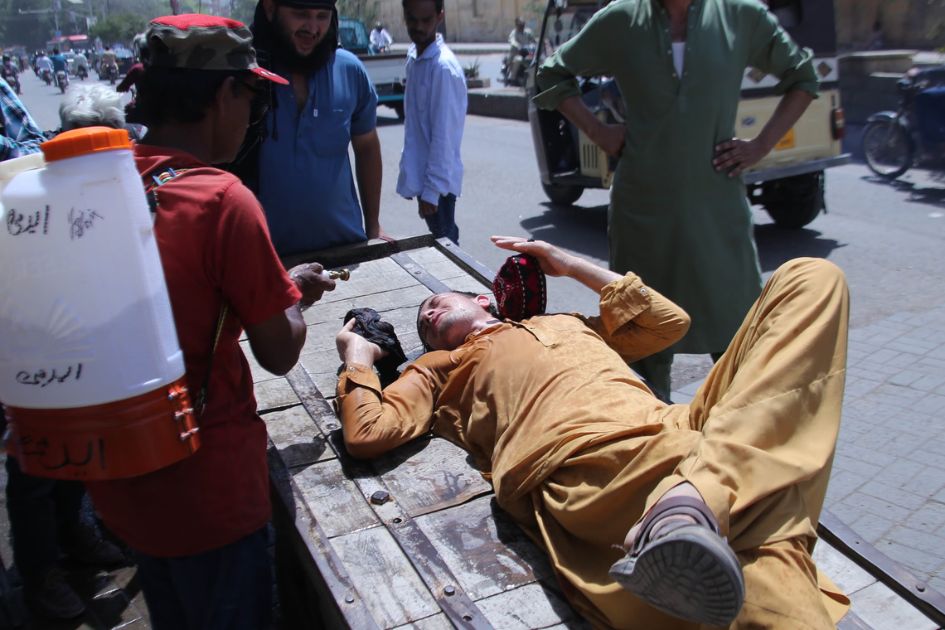



Extreme heat across Pakistan and India is disrupting lives, straining hospitals and exposing how climate change is making deadly South Asian heatwaves increasingly frequent and severe across the region today.
Millions of people across Pakistan and India are struggling through an intense and prolonged heatwave that experts say bears the clear fingerprints of the climate crisis, according to a report by The Guardian.
Temperatures across southern Pakistan remained far above seasonal averages throughout April and May with parts of Sindh province repeatedly recording highs between 44 and 46 degrees Celsius. The extreme heat has pushed daily wage earners, transport workers and farmers into severe hardship.
In Karachi, where cooling sea breezes usually keep temperatures lower, the mercury recently climbed above 44 degrees Celsius, marking the city’s hottest conditions since 2018.
The situation has become especially dire in Karachi’s coastal settlements. In fishing communities such as Ibrahim Hyderi, prolonged shortages of electricity and water have made daily life increasingly unbearable.
Abdul Sattar, a veteran fisherman from the area, said one of his colleagues lost consciousness during the heatwave. Residents are also haunted by memories of Karachi’s devastating 2015 heatwave that killed thousands of people.
Health risks linked to the soaring temperatures are also mounting. Dr Suresh Kumar, head of the paediatrics department at Ibrahim Hyderi Government Hospital, said the number of children being brought to the hospital has surged since the final week of April.
“Previously, we treated around 50 to 60 children a day. Now the number has crossed 200,” he said.
Most of the children are suffering from diarrhoea, stomach infections and dehydration caused by the extreme heat, he added.
In neighbouring India, temperatures have also exceeded 45 degrees Celsius in Rajasthan, Gujarat and Maharashtra.
Climate specialists blame both global warming and unplanned urbanisation for worsening the crisis. According to the World Weather Attribution group, human-induced climate change has made extreme heatwaves in the region three times more likely.
Experts say current heatwaves are being felt at nearly 1 degree Celsius hotter than they would have been during the pre-industrial era.
They warn that deadly heat is no longer an exceptional event in South Asia but is rapidly becoming the region’s harsh new reality.




