

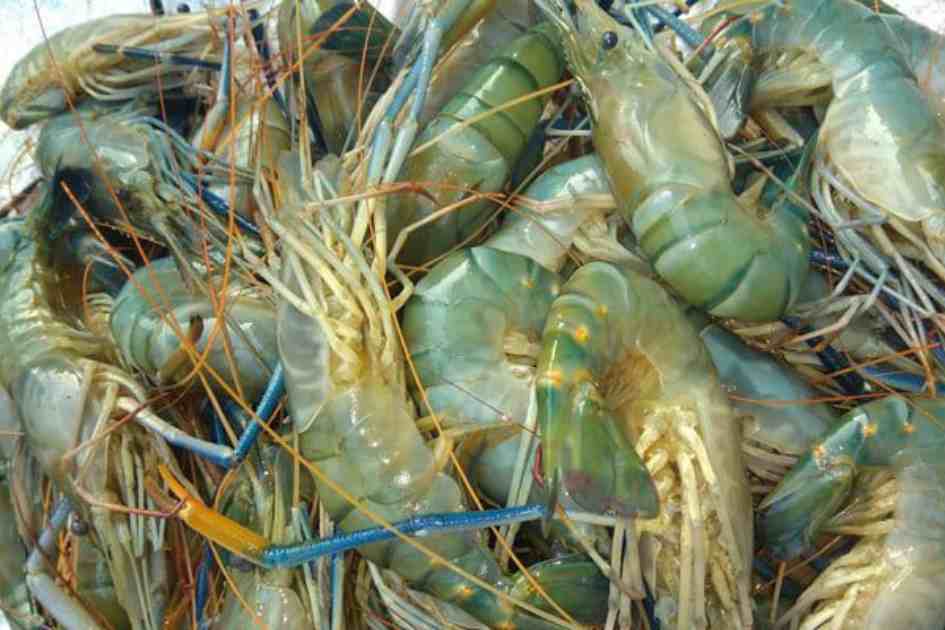



Once hailed as “white gold,” Bangladesh’s shrimp sector is losing global market share as climate stress, high costs and social conflicts expose the limits of unplanned aquaculture growth.
Bangladesh’s shrimp industry, once celebrated as the country’s “white gold,” is steadily losing its shine in the global market. Rising production costs, climate pressures, unplanned expansion and social conflict in coastal areas are weighing heavily on an industry that was once a major foreign currency earner.
Experts say Bangladesh’s shrimp industry could stabilize with investments in modern farming techniques, disease control, financing and aquaculture zoning. Protecting traditional shrimp varieties while balancing export production with domestic supply is crucial for long-term sustainability.
Without meaningful reforms, Bangladesh risks losing more global market share, declining export earnings and worsening livelihoods in some of its most climate-vulnerable regions, areas that once turned shrimp farming into prosperity but are now struggling with the unintended costs of adaptation gone awry.
The global shrimp trade is valued at around $32.5 billion. Bangladesh now accounts for just 1.49 percent of the market, far behind Ecuador and India, which together control nearly half, with shares of 23.9 percent and 23.5 percent, respectively. Frozen shrimp was once Bangladesh’s second-largest export after garments, but exports have declined over the past decade as farmers and processors struggle with raw shrimp shortages, disease outbreaks, rising feed prices and climate impacts on coastal farming zones.
Financing and competitiveness challenges
Shrimp processors say access to affordable finance remains a major hurdle. Most rely on commercial bank loans with high interest rates. Industry groups have urged the government to classify shrimp farming as agriculture to unlock lower-cost credit.
Fisheries and Livestock Adviser Farida Akhter stressed the need to bring production and processing in line with international standards to stay competitive. She also said the government is working to extend subsidized electricity to fisheries, which could reduce costs by about 20 percent if implemented effectively.
Bangladesh primarily produces black tiger shrimp, known locally as bagda, and freshwater prawn, or golda. While these fetch premium prices in niche markets, they are costly and yield far less than vannamei shrimp, the fast-growing variety that dominates global trade. Despite approval for vannamei farming, adoption remains limited due to weak disease management, unplanned practices and limited policy support. Rising feed costs further squeeze profit margins, leaving farmers vulnerable when global prices fall.
Climate adaptation or unintended consequences
The shrimp boom has deep historical roots in Bangladesh’s southwest. Rising sea levels, salinity intrusion, storm surges and extreme temperatures in the 1980s destroyed rice fields, pushing farmers to convert flooded land into shrimp ponds. This shift was encouraged by the government and development agencies as a climate-resilient livelihood strategy.
Development experts praised the transition and shrimp farming eventually expanded to nearly 680,000 acres. The sector earned Bangladesh a global reputation for “white gold,” delivering higher returns than traditional crops for several decades.
However, the unintended consequences soon became clear. Soil salinity increased, freshwater ecosystems were damaged and crop diversity declined. Social tensions intensified, with reports of intimidation, land grabbing and even killings over shrimp enclosures.
Kasía Paprocki, a geographer at the London School of Economics and author of Threatening Dystopia: The Global Politics of Climate Change Adaptation in Bangladesh, said, “Shrimp farming was promoted as a climate adaptation strategy and presented as the only option for areas already inundated by water. Yet today, it is creating the same social and environmental problems it was supposed to address.”
Research indicates that shrimp farming has contributed little to poverty reduction. Most profits have gone to politically connected intermediaries and large landowners, while small farmers and landless labourers face land loss, debt and declining food security.
Local stories: prosperity and pressure
Bagerhat district illustrates both the economic importance and costs of shrimp farming. Bagda shrimp is farmed on 52,551 hectares, producing 20,940 metric tonnes, while Golda covers 19,773 hectares with an output of 19,716 metric tonnes. Total earnings from shrimp in the current fiscal year are expected to reach around Tk 3,700 crore, nearly equal to the country’s total shrimp export revenue last year.
Yet farmers face mounting problems. Many have lost cultivable land to salinity seepage from neighbouring ponds. Siddikur Rahman from Putikhali village said, “I used to grow rice on all my land. Now I cultivate rice on just 2.5 bigha, while the rest is under shrimp ponds.” Alam Sheikh added, “My entire five bigha is now shrimp ponds. Crop production has declined and salinity has ruined neighbouring fields.”
A 2024 joint survey by the Soil Resources Development Institute and the Department of Agricultural Extension found that soil salinity in parts of Bagerhat nearly doubled over the past decade. During the dry season, river salinity reaches 15 to 30 deciSiemens per metre, far beyond the tolerance of rice and most crops.
Environmentalist Sheikh Nur Alam, coordinator of Dhritree Rokkhaay Amra, said, “Shrimp farming introduced in the 1980s has destroyed agriculture in southwest Bangladesh. Rice, vegetables, bananas and even public health are affected. While shrimp exports earn three to four thousand crore taka annually, the environmental, agricultural and health costs exceed fifty thousand crore. Without careful planning, shrimp farming must be restricted or tightly regulated.”
Policy and reform
Officials acknowledge the challenges. Md Motahar Hossain, Deputy Director of the Bagerhat Agricultural Extension Department, noted that rising salinity now enters cropland earlier in the season, intensifying crop losses. Efforts are underway to promote salt-tolerant crops and improve cropping intensity. Water development engineers plan to restrict shrimp enclosures to designated areas to reduce conflicts with communities.
However, Transparency International has reported ongoing political influence and corruption, including illegal cutting of embankments to benefit shrimp farmers. A 2020 report warned that such practices persist despite regulations.
Sohanur Rahman, Executive Coordinator of YouthNet Global, said, “Bangladesh’s coastal communities are on the frontlines of climate change. While shrimp farming has brought short-term income, we must rethink these practices to protect livelihoods, food security and the environment for future generations.”
He added on policy priorities, “The government must focus on integrating climate adaptation, sustainable aquaculture and local community rights into national shrimp policies. Without clear frameworks, economic gains are short-lived, while environmental and social costs continue to rise.”




