

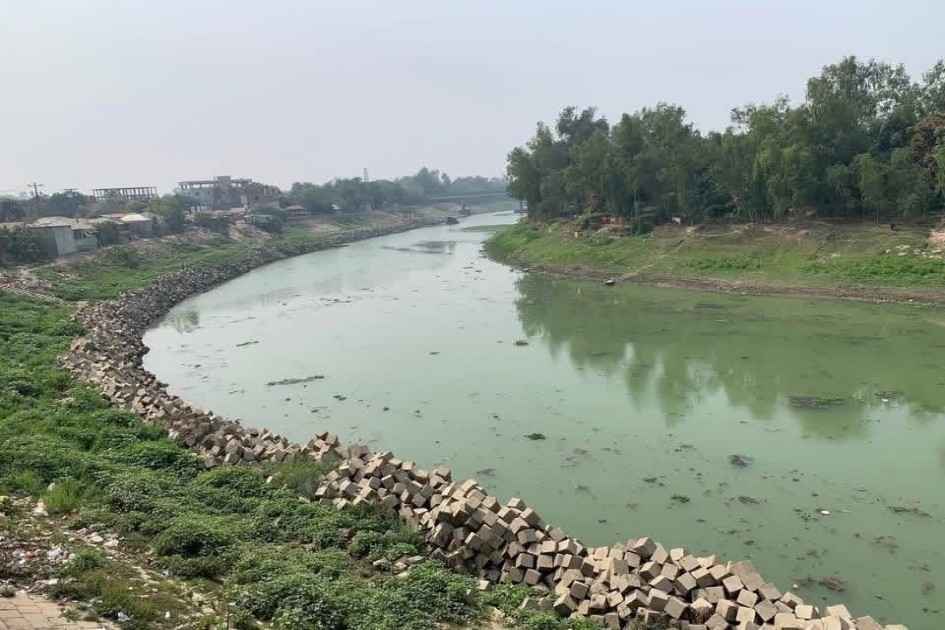

Campaigners say legal action seeks to silence outcry over alleged toxic discharge into Phuljor River, despite High Court ruling declaring all rivers “living beings.”
Two environmental campaigners were arrested in northern Bangladesh days after leading protests over alleged industrial pollution that residents say turned a river toxic and killed aquatic life, in a case activists describe as an attempt to silence dissent in a country where courts have recognised rivers as living entities.
Police detained Touhidur Rahman, 45, known as Babu, and Ali Reza Biswas, 50, a college lecturer, on Sunday night from Shimabari market in Sherpur upazila of Bogura district. Both were produced before a court on Monday and later granted interim bail, police said.
The arrests followed an extortion complaint filed on February 27 by Md Golam Kibria, security in-charge of SR Chemical Industries Limited, a major chemical manufacturing plant located along the Dhaka-Rangpur highway in Mirzapur Union. However, Kibria could not be connected as he did not pick up his phone in reversal attempt.

The complaint accused six named individuals and five unidentified persons of demanding 200,000 taka (around $1,800) during protests held on February 24.
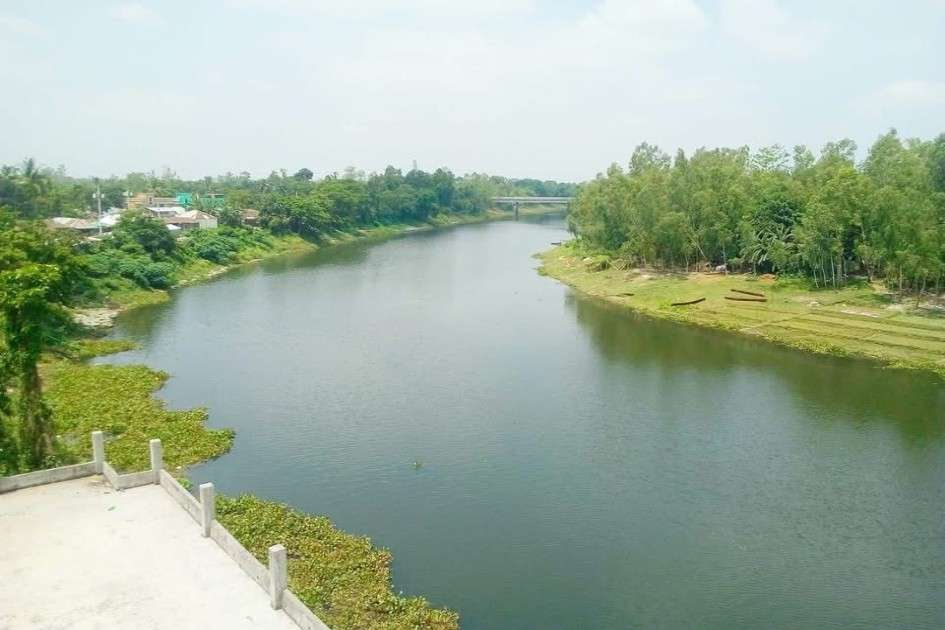
Activists strongly deny the accusation, saying the case was filed in retaliation for demonstrations demanding action over alleged toxic discharge into the Phuljor River, a 55-kilometre waterway that supports fisheries, agriculture and daily water use for hundreds of thousands of people across Bogura and Sirajganj.
Fish deaths spark protests
Residents began mobilising after what campaigners described as large-scale chemical waste discharges on February 21 and 22. Locals reported sudden discoloration of the river water, a sharp chemical odour and widespread fish deaths.
Fish and other aquatic species, including snakes, frogs, crabs and snails, were found dead and floating along stretches of the river, according to witnesses and protest organisers.

Environmental groups rallied under the banner of the Karatoya and Phuljor River Protection Movement, forming a human chain in Dhangora on February 24 and submitting a memorandum to the Upazila Nirbahi Officer demanding immediate intervention.
Further demonstrations were held the following day in Raiganj before protesters marched toward Sherpur and gathered near factories they accused of discharging untreated waste into waterways connected to the Phuljor River system.
“Our professor was arrested simply for raising concerns about hazardous industrial waste,” said Faisal Biswas, a youth environmental activist. “Instead of investigating the pollution and fish deaths, they are filing cases against those who speak up.”
Legal protection for rivers
Bangladesh’s High Court in 2019 declared all rivers in the country to be “living beings” with legal rights, in a landmark judgment aimed at protecting waterways from encroachment and degradation.
In its full verdict published on July 1, 2019, the court issued 17 directives to authorities following a writ petition filed by Human Rights and Peace for Bangladesh. Earlier that year, on January 30, the High Court had declared the Turag River a legal person, warning that both Bangladesh and humanity would face grave danger if rivers were not protected from encroachment and navigability problems.

Environmental campaigners say the arrests in the Phuljor case raise questions about the implementation of that ruling.
“If rivers are recognised as living beings, then harming them should be treated as harming a legal entity,” said one protest organiser. “Instead, those demanding protection for the river are being arrested.”
Political links and denial
SR Chemical Industries, established in 2021 on about 35 acres, is considered one of the largest chemical plants in northern Bangladesh.
The factory is owned by the family of Golam Mohammad Siraj, a ruling party (BNP) Member of Parliament for Bogura-5 following the February 12 national polls.
“I did not do anything that goes against people in my area. We have an effluent treatment plant. We are not polluting the river,” Siraj told The Climate Watch. He did not address allegations of political influence behind the extortion case.
Sherpur Police Station’s Officer-in-Charge Ibrahim Ali said the arrests were made based on the complaint.
“As a case was filed on extortion, we arrested two and produced them before the court. The court granted interim bail,” he said. “We are aware they were protesting river pollution. Whether this is protest or extortion will be determined after investigation.”
Regulatory questions
The Department of Environment (DoE) previously fined SR Chemical in 2023 and formed a nine-member committee that issued 11 recommendations.
Mathir Bin Mohammad, assistant director of the DoE in Bogura, said the company was not authorised to resume operations after the enforcement action.

“Our head office did not allow them to run the factory after 2023 enforcement. However, we learned they continued operations,” he said. “Without instruction from headquarters, we could not conduct further drives.”
Environmental advocates say the case underscores broader concerns about weak enforcement of industrial waste regulations and the risks faced by environmental defenders.
“Communities who raise concerns about environmental damage should be heard and protected,” said Sohanur Rahman, executive coordinator of YouthNet Global. “Authorities must ensure an independent investigation into pollution allegations while safeguarding the rights of those defending rivers that the courts themselves have recognised as living entities.”
For residents along the Phuljor’s banks, the dispute has become a test not only of environmental enforcement but of whether the promise of legal rights for Bangladesh’s rivers can translate into protection on the ground.




