




Bangladesh’s five-year tree-planting drive will emphasise native species, post-planting care and survival, with 51.49 million saplings targeted for 2026.
Bangladesh plans to plant 51.49 million saplings this year as part of a government programme to plant 250 million trees over five years, State Minister for Environment, Forest and Climate Change Sheikh Faridul Islam said Monday, calling for tree planting to become a sustainable social movement.
Faridul Islam said all relevant ministries, departments, government agencies and public and private organisations must work together to ensure the success of the five-year programme.
“Simply increasing the number of saplings planted will not be enough. The care, maintenance and survival rate of every sapling must be ensured,” he said.
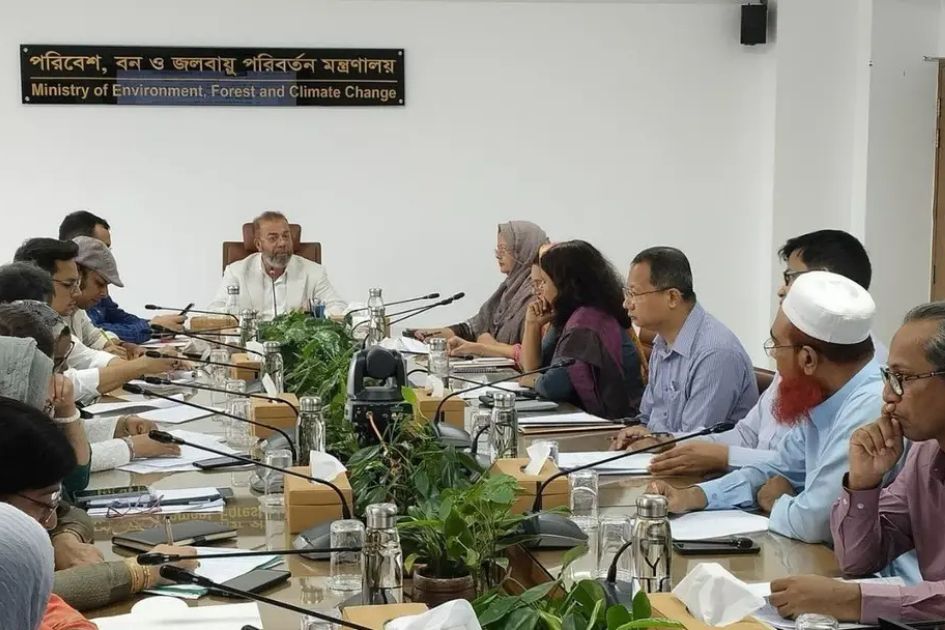
He made the remarks while chairing the third meeting of an auxiliary task force formed under the National Tree Planting Cell to implement the programme. The meeting was held Monday, September 7, in the meeting room of the Ministry of Environment, Forest and Climate Change at the Bangladesh Secretariat in Dhaka.
According to the meeting, a total of 51,488,930 saplings are planned to be planted in 2026. Of these, about 38.2 million saplings will be planted using saplings produced by the relevant agencies themselves, while about 13.3 million will be sourced through their own financing for planting and maintenance.
Various ministries, departments and agencies are planting saplings according to their respective targets. Separately, data from the NGO Affairs Bureau showed that various non-governmental organisations have planted 2.5 million saplings. Information on these saplings will be added to the main database once location-specific data become available, the meeting was told.
The government also plans to plant mangrove species in coastal areas next December. Officials expect the move to help achieve this year’s target.
Faridul Islam instructed authorities to prioritise native fruit, forest and medicinal tree species suited to local weather, soil conditions and ecosystems.
He also stressed planned tree planting on suitable land along rivers, canals, embankments, roads and railway lines. At the same time, he directed authorities to take effective measures to protect planted saplings and to promptly replace those damaged by disasters or other causes.
“A sapling is not a responsibility that ends with planting it,” Faridul Islam said. “Regular care and maintenance must be ensured so that it can grow after planting.”
He instructed the relevant ministries and agencies to prepare plans for the care and maintenance of saplings for the four years following planting and submit them to the ministry.
The meeting was attended by Shamima Begum, additional secretary (administration) of the Ministry of Environment, Forest and Climate Change, along with representatives of various ministries, departments and government agencies.
Representatives of the Forest Department, Professor Dr Md Nurul Islam, technical expert Md Jamail Bashir JB, engineer Shah Adnan Mahmud and other relevant experts and officials also took part in the meeting.




