

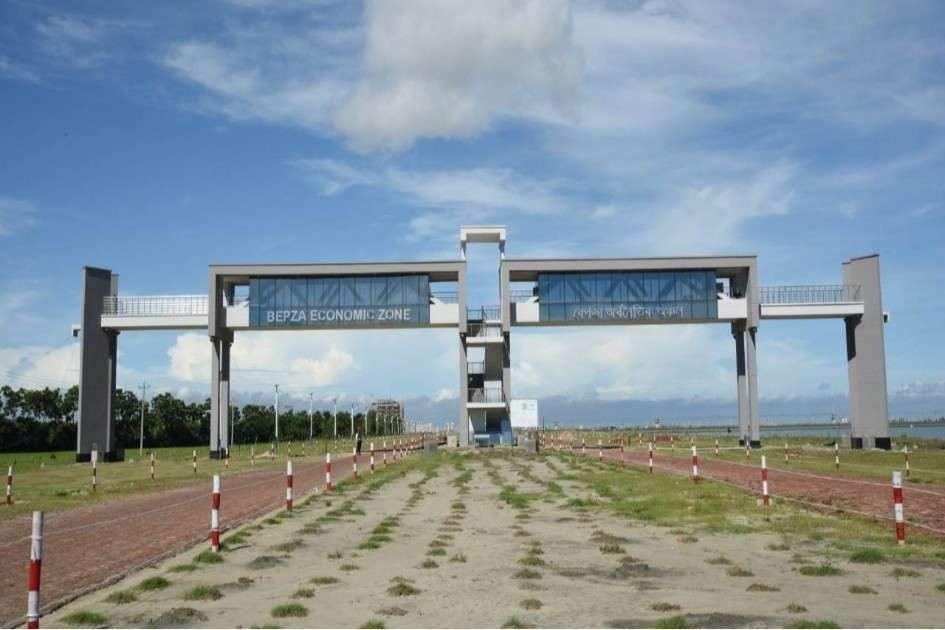

Bangladesh’s High Court has halted construction at the Mirsarai economic zone after a writ accused authorities of illegally clearing vast protected forests and mangroves, raising alarm over ecological destruction despite billions in investment commitments at the country’s largest industrial project.
Bangladesh’s High Court on September 09, 2025 (Tuesday), ordered an immediate halt to all further construction and development at the controversial Mirsarai Economic Zone, now renamed the National Special Economic Zone (NSEZ), after a writ petition accused authorities of illegally destroying thousands of acres of protected forest and coastal mangroves in Chattogram.
The incident came into light on September 17 The Legacy Attorneys, which filed the petition pro bono, issued a statement on September 17, 2025.
A two-judge bench comprising Justice Md Mozibur Rahman Miah and Justice Biswajit Debnath issued a Rule Nisi, asking the government to explain by October 7 why the massive industrial project should not be declared unlawful and void for violating the Forest Act of 1927.
The petition, filed by Supreme Court lawyer Kazi Akhtar Hosain, alleges that the establishment and expansion of the Mirsarai zone have razed large tracts of reserved forest and coastal greenbelt, causing “serious damage to ecology, biodiversity, and the lives of millions of people and other species.”
The writ names the environment ministry, the Forest Department, the Department of Environment, the Mirsarai Range Office, BEPZA and the project authorities of BEZA as respondents.
According to the Bangladesh Economic Zones Authority (BEZA), the zone has already attracted around $18 billion in investment commitments, including $3–4 billion from international companies. Land has so far been allotted to 155 investors, with 15 factories operational and 28 more under construction.
After hearing arguments from the petitioner and state counsel, the bench said it found a prima facie case under several grounds, particularly those detailing alleged deforestation and statutory violations.
Pending disposal of the Rule, the court directed the authorities to maintain the status quo for three months, effectively suspending any further construction or land development at the sprawling industrial zone, one of the largest in the country.
The petitioner sought cancellation of the entire project and restoration of the area “to its earlier position before the initiation of the industrial development.”
The High Court also instructed the petitioner to serve notices to all respondents within 48 hours.
The order was issued in the presence of the Chief Justice, Syed Refaat Ahmed. The case adds to growing national scrutiny over economic-zone expansions that environmentalists say have come at the cost of Bangladesh’s coastal forests, which act as vital natural barriers against cyclones and sea-level rise.
In a statement on September 17, 2025, The Legacy Attorneys, which filed the petition pro bono, welcomed the order, saying it marked an important step in holding authorities accountable for environmental harm.
“The Hon’ble Court issuing a Rule Nisi and halting further development ensures that no additional forest clearing can take place until the case is fully heard,” the firm said.
“This litigation is a vital step toward restoring the lost greenery of Mirsarai, protecting endangered wildlife habitats, and preserving ecological balance for future generations.”
Barrister Kazi Akhtar Hosain, Head of Chambers at The Legacy Attorneys, who argued the case assisted by Barrister Shahrukh Kabir Bhuiya, said the petition was prompted by investigative reporting published in The Climate Watch titled, “Mirsarai Economic Zone: A trade-off between development and environment destruction.”
“After seeing evidence of alarming forest loss linked to the NSEZ project, we felt compelled to intervene in the public interest,” he said.
The petitioner has sought cancellation of the entire project and restoration of the area “to its earlier position before the initiation of industrial development.”




