

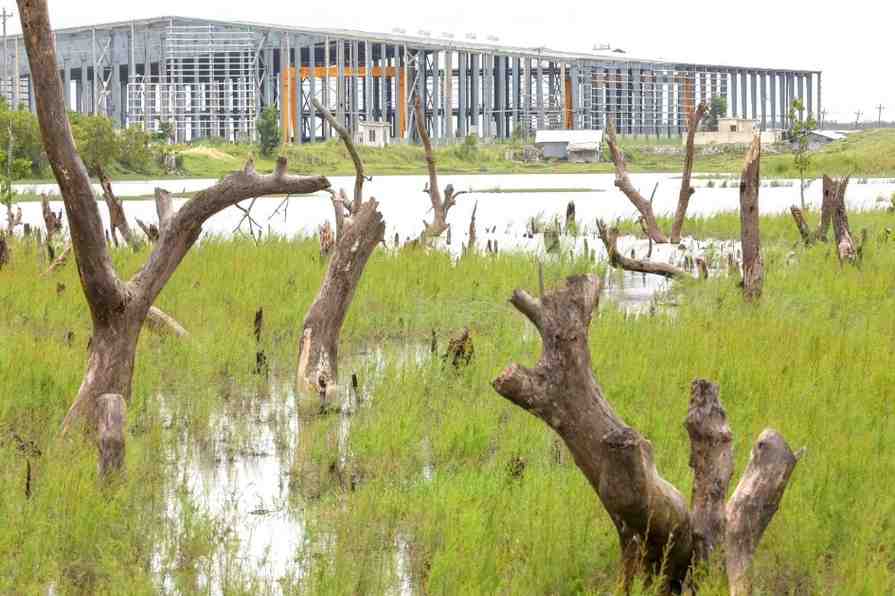



Widespread deforestation in Chattogram’s Mirsarai, South-eastern Bangladesh, has devastated traditional livelihoods. Crab collectors, herders and sheep farmers have lost their means of survival due to shrinking grazing lands and industrial expansion. Once-thriving communities now face food shortages, joblessness and climate-related threats.
Over 55 million trees have been razed since 2015 to make way for the much-hyped Mirsarai Economic Zone, recently renamed the National Special Economic Zone (NSEZ). This ambitious project is being developed by clearing 22,335 acres of “reserved forest” in Chattogram, including 853 acres of coastal mangroves.
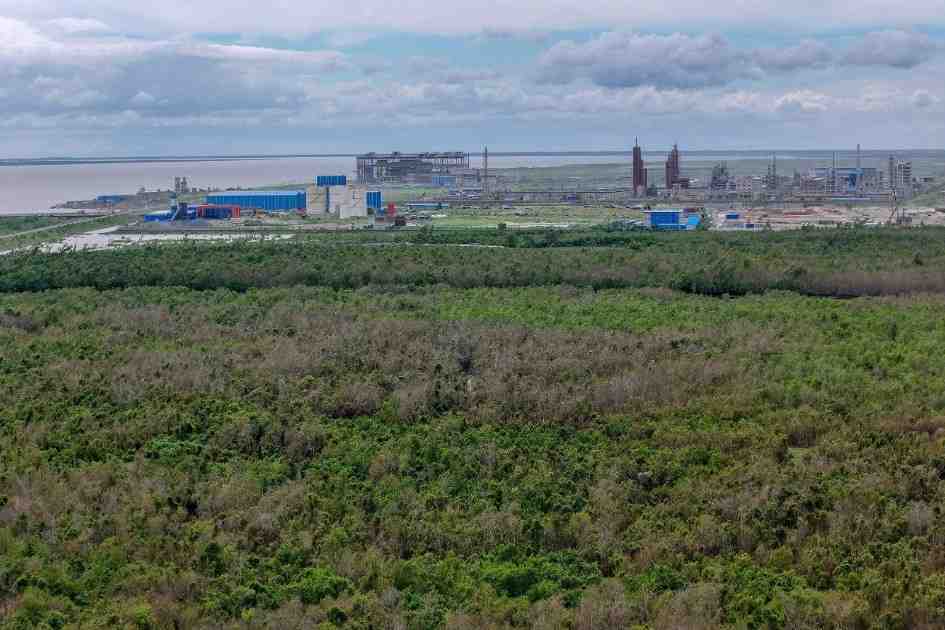
What once served as a thriving sanctuary for millions of birds from over 100 species and 5,000 spotted deer alongside countless reptiles, amphibians and mammals is now a sprawling industrial wasteland of dust, debris and half-finished factories.
The lush forest along the Bay of Bengal coast, developed by the Forest Department (DoF) from 1967 to 2014 with around 80 million (8,07,14,505) saplings at a cost of approximately $4.16 million (Tk 500 million), included species such as Keora, Gewa, Jhaw, Goran and Bain, forming a 22-kilometre-long natural barrier up to 5 km wide.
This green shield was intended to protect over half a million people from cyclones, tidal surges, and other disasters. That shield is now gone, with trees and resources plundered under a state-endorsed initiative.
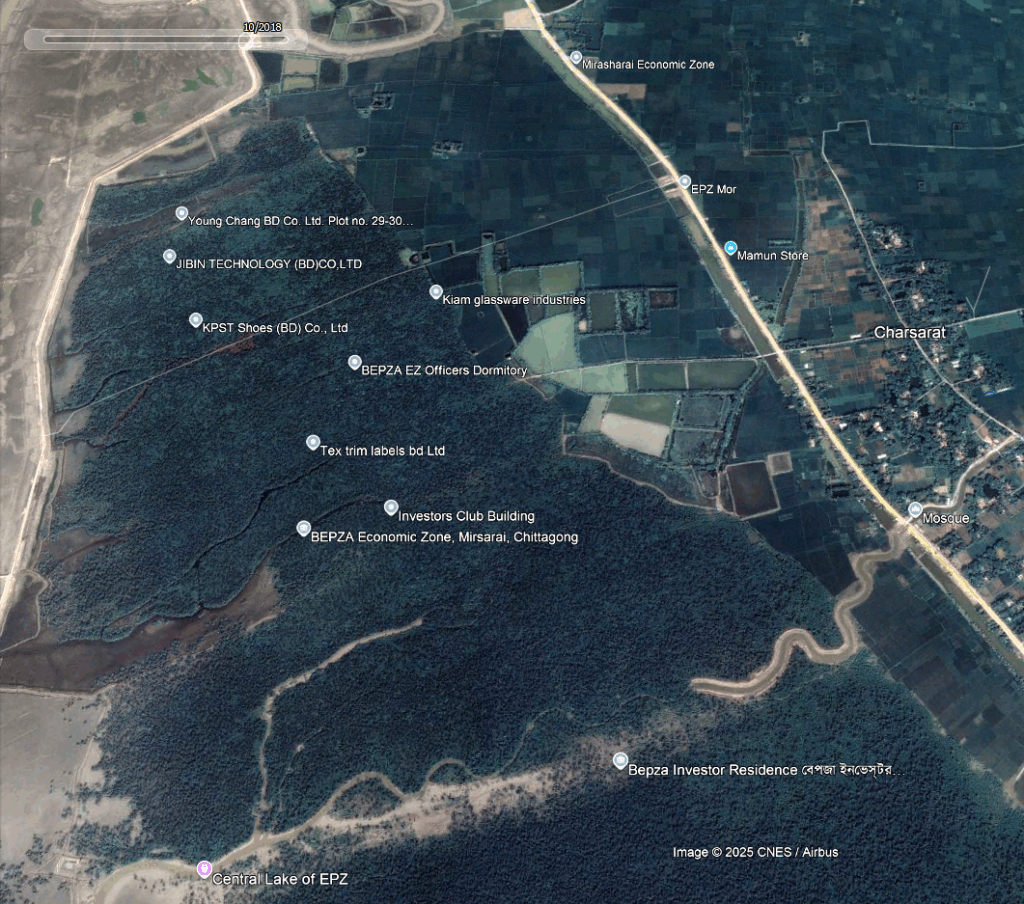

A recent field investigation found that the destruction began in 2016, as roads and factories replaced forestland. Bulldozers often operated by politically connected individuals were seen razing trees and setting up fish farms, openly flouting environmental laws that prohibit commercial use of reserved forest land.
Authorities reportedly plan to cut down another 10 million trees and verbally lease existing forests to local political leaders. These influential individuals were found bulldozing forests and developing fish farms, despite laws that ban such activities. Industries were also seen indiscriminately lifting sand from the Bay, as they require at least 10 feet of land fill.
Abdullah Al Mahmud Faruk, Project Director of the NSEZ, told “We need 10 million cubic meters of sand to fill 1,000 acres up to a height of 10 feet.”
Based on this, the entire 33,805 acre zone would require over 30 million cubic meters of sand most of which is being extracted directly from the Bay of Bengal channel, posing yet another environmental disaster.
Experts say the loss of one of the country’s most biodiverse mangrove forests is not only ecologically devastating, but also exposes serious gaps in planning, oversight and accountability.
The zone still lacks reliable access to gas, water and other essential facilities with water scarcity particularly deterring industries from establishing operations. Authorities have not been able to arrange a proper water supply and are currently extracting groundwater illegally. The alternative bringing water from the Meghna River, 132 km away is estimated to cost nearly four times more than the current rate supplied by BEZA.

Such widespread environmental destruction raises critical questions about the necessity of economic zones in Bangladesh, especially when many have already been abandoned due to a lack of investment. The NSEZ, for instance, has secured only $1.5 billion, falling 92% short of the total investment commitments pledged by investors.
Experts further stated that this is irreversible damage to forest, wildlife and coastal resilience and called for immediate action to save what remains of the forest and hold those responsible accountable.
The project was pushed through under the direct authority of the then government, marked as a “Prime Minister’s Special Project,” which effectively sidelined legal safeguards. All relevant information was kept strictly confidential from the public and journalists.
After several years of failed attempts, these correspondents filed an application under the Right to Information Act (RTI) following the regime change in August 2024. In response, the DoF revealed data on deforestation, biodiversity loss and their firm opposition to the project.
The documents show forest officials had strongly objected, warning that the 22-km greenbelt from Sitakunda to Feni was critical for coastal protection. Their warnings went unheeded.
A staggering 10% of Chattogram’s entire reserved forest and 50% of Mirsarai Upazila’s forest cover have been wiped out, raising questions about the trade-off between development and destruction.
According to Global Forest Watch, between 2001 and 2024, Bangladesh lost approximately 262,000 hectares (262 kha) of tree cover. Remarkably, the Chattogram region alone accounted for 246,000 hectares (246 kha) of this loss, representing 94% of the country’s total, primarily due to deforestation.
Researchers now say that two of the area’s three critical ecological habitats, the coastal mangrove forests and mudflats, have been nearly obliterated. Only the hill forests of Baraiyadhala National Park remain, though their future is uncertain.
“Since the Chattogram coast is already an industrial region, it is naturally exposed to chemical and air pollution. The destruction of such a vast and ancient forest will soon pose a serious threat to coastal life, biodiversity and public health,” said biodiversity and ecology researcher Pavel Partha. He warned that this could lead to increased disease outbreaks and health crises.
“This forest served as a natural protective barrier shielding the coast from cyclones and other disasters. With its destruction, this area becomes even more vulnerable to the growing pressures of climate-induced catastrophes,” he added.
How the destruction began
Following a report by the Assistant Commissioner of Land in Mirsarai recommending the declaration of 2,235 acres of land as a “reserved forest,” the Forest Settlement Officer and the Additional Deputy Commissioner of Chattogram declared the land as “Reserved Forest” in May 2013 under Section 20 of the Forest Act, 1927. The recommendation was sent to the Ministry of Environment, Forest and Climate Change (MoEFCC) for gazette notification.
While the legal process was underway, the Awami League government in 2014 launched a plan to establish 100 economic zones across the country to attract foreign investment. Government eyes soon fell on a large tract of forest land owned by the DoF, just 60 km from Chattogram Port and 5 km from the Dhaka, Chattogram Highway.
Divisional Forest Officer RSM Monirul Islam opposed the proposal in writing, citing a 2013 Supreme Court directive under Section 4 of the Forest Act prohibiting the leasing of notified forest land for non-forestry purposes. Chief Conservator of Forests Md Yunus Ali also wrote several letters urging the MoEFCC not to approve the project.
These warnings were ignored. Backed by the then local lawmaker Engineer Mosharraf Hossain and with the support of Prime Minister Sheikh Hasina, the project moved forward, acquiring 33,805 acres of land including the forest. The deforestation began in 2016. The foundation stone was laid on January 24, 2018.
Meanwhile, BEZA has felled trees from 18,235 acres. Even at a minimum value of Tk 200 per tree, this amounts to Tk 8400 million. However, the DoF did not receive a single penny though BEZA had promised compensation of just Tk 88.8 million.
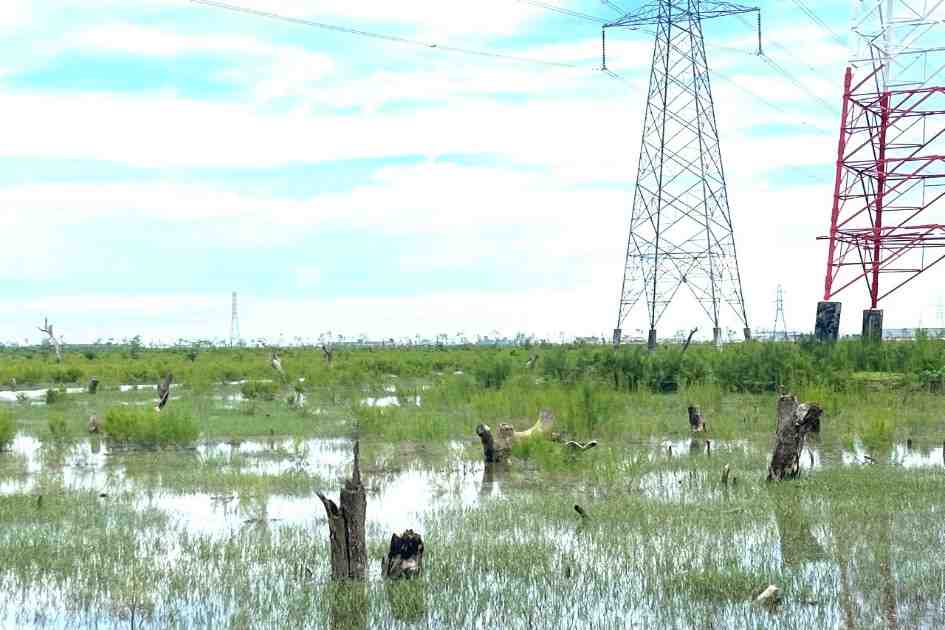
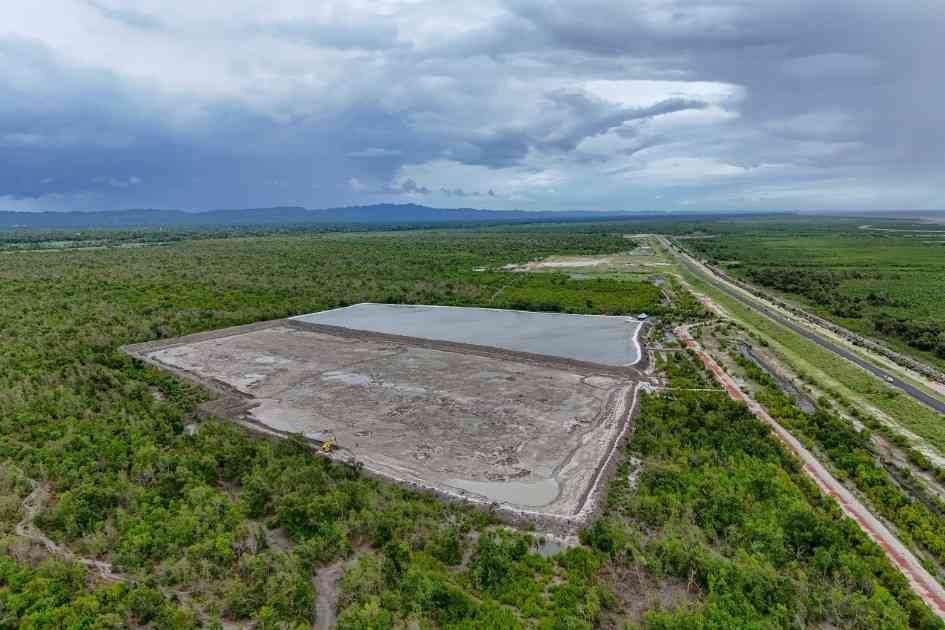
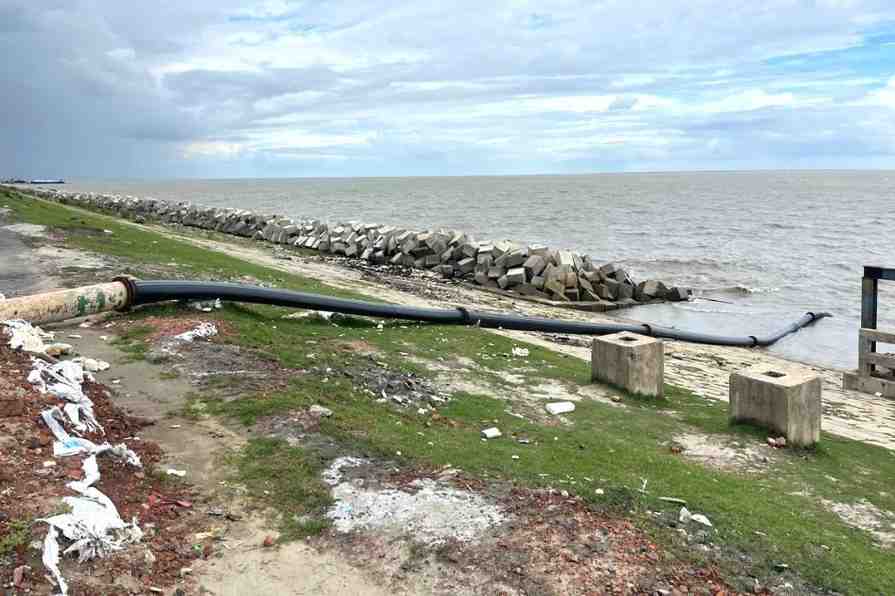
During a field visit, rows of factories were seen beyond the main entrance. While 15 units are operational, most are under construction. Large vacant plots remain scattered. From the main gate to the embankment about five kilometers no sign of the once-dense forest remains. Dredgers were seen extracting sand from the Sandwip Channel to fill in the cleared land.
Pavel Partha remarked, “Developing this economic zone by destroying forests clearly violates national environmental and biodiversity laws, the UN Convention on Biological Diversity (1992), and Article 23A of the Constitution.”
Adverse impact on biodiversity
On March 3, 2022, two spotted deer were found dead in Saherkhali, reportedly struck by vehicles transporting goods to the Economic Zone. The Forest Department and local residents have rescued numerous animals including spotted deer, vultures, fishing cats, the critically endangered slow loris, and various snake species on different occasions.
The Department of Environment (DoE) reported that due to a lack of food in their natural habitat, pythons and other snakes are increasingly entering human settlements and becoming trapped.
During the latest field visit, hundreds of birds were seen nesting on electric poles within the economic zone. Deprived of their natural habitats, many wild animals have strayed into nearby villages—some found dead, others hunted or injured.

A study titled “Baseline Survey of Existing Flora and Fauna in Mirsarai Forest” revealed alarming damage to biodiversity. The forest was home to over 5,000 spotted deer, 11 species of frogs, two species of turtles, seven species of snakes, 62 species of native birds, and 26 species of migratory birds.
Among these, the spotted deer population has suffered the most. Many were injured during tree-felling operations, while others died due to starvation. A significant number were hunted by poachers. Driven from their habitat, hundreds of deer wandered into villages, where many were slaughtered.
Although the DoF has not released official data, Mujahidul Islam, Chairman of the research organisation said ‘Naya Dalan’, which contributed to the zone’s feasibility study and master plan.”
“When tree felling began in 2017, deer were the worst victims. Local hunters set traps and sold venison openly. There are even allegations that BEZA officials and labourers involved in tree cutting indiscriminately killed hundreds of deer. Those that strayed into villages were brutally killed,” he added:
He added, “Around 3,000 deer have disappeared from the forest. About 2,000 remain, now confined to the remaining 3,000 acres of forest. However, the construction of embankments has prevented saline water from entering the forest, which has stopped the growth of grass the deer’s primary food source—causing a severe food crisis. The increasingly hostile environment has also reduced their reproductive ability, causing their numbers to decline further.”
“In addition to the deer, foxes, monkeys, monitor lizards and various snake species have also vanished. Freshwater has replaced saline water in canals, resulting in the disappearance of many fish, crabs and aquatic species. Millions of birds from hundreds of species have lost their nesting grounds. In short, a once-rich ecosystem has collapsed in just a decade,” he said.
Mujahid also alleged that when hundreds of deer were dying during the forest’s destruction, he and others urged the then-chairman of BEZA to rescue and relocate the deer to a more suitable forest. “He did not heed our request,” Mujahid said.
Admitting inaction to save wild animals, former BEZA Chairman Paban Chowdhury told, “We have visited the economic zone several times; I did not see any deer or animals. However, it is true buffalo and sheep lost grazing lands.”
Deforestation shifts professions
Shahadat Hossain, a resident of Shaherkhali, said, “In our village’s Barua Para, there are about 300 families. Most of them used to collect crabs from the canals running through the forest and sell them in the market. After the forest was destroyed, the entire community was left in crisis. Some people became day laborers, while others migrated to Chattogram city in search of new jobs.”
Abdur Rahim, a resident of Ichakhali on the coastal edge of Chattogram’s Mirsarai upazila, had been rearing sheep for three generations. Just a few years ago, he had over 700 sheep on his farm. During the day, he would graze them across the coastal char lands and mangrove forests.
Rahim earned $4,166–$5,000 (Tk 5–6 lakh) annually by selling sheep raised on this natural diet, which comfortably supported his family.
However, around 2017, large-scale deforestation and land grabbing began in Ichakhali and surrounding areas to establish the economic zone. As a result, grazing land began to shrink. Lacking sufficient grass, Rahim’s sheep began to die from starvation and malnutrition.
“Due to forest clearance and landfilling for industrial plots, food shortages for the sheep became severe,” Rahim said. “In 2022–23 alone, I lost around 250 sheep. The numbers have continued to drop, and now I have only 180 sheep left.”
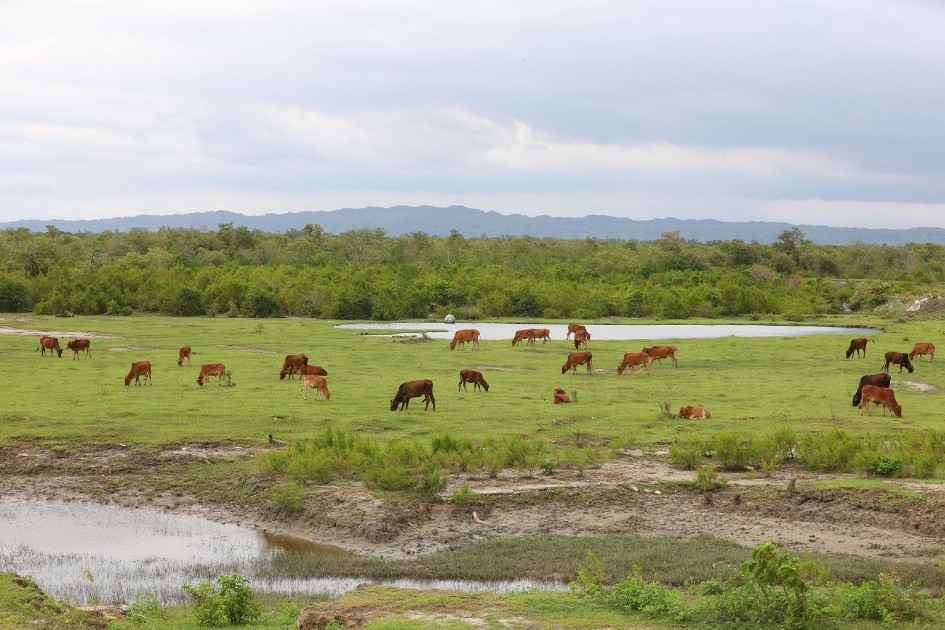
He added, “In our village, 10 families used to depend entirely on sheep farming. But the ongoing food crisis killed many sheep, and everyone eventually gave up the trade. If more factories keep coming up here, I won’t be able to continue this profession either.”
The stretch from Ichakhali to Shaherkhali in Mirsarai was once famous for buffalo herding. Until a few years ago, 5,000–7,000 buffalo roamed the area freely. Nearly 200 families relied entirely on buffalo farming, producing and selling curd and sweets made from buffalo milk to earn a living.
But as industrial development advanced, buffalo herds also declined. Due to the loss of grazing land and food shortages, many herders were forced to abandon their traditional livelihoods and seek other work.
Abdul Motaleb, one of the few remaining herders, said, “I once had 70 buffaloes. Over the past five years, I have lost most of them due to food shortages. Now I have just 15 left.”
Due to Chattogram’s status as a coastal industrial zone, the region already faces significant chemical pollution and air contamination. The destruction of such a vast and ancient forest in this context poses a grave threat to coastal life and biodiversity, warned biodiversity and ecology researcher Pavel Partha.
He stated, “With its destruction, the region will become even more vulnerable to recurring climate-induced disasters.”
Dr. Ikbal Sarwar, Professor of Geography and Environmental Science at the University of Chittagong, emphasized,
“A forest plays a crucial role in regulating the geographical setting, environment, and climate of its surrounding area. If a forest is destroyed in a short span by cutting down 100 million trees, the consequences will be catastrophic—beyond our imagination.”
He added, “In the short term, temperatures in and around the forest area will rise significantly. Rainfall will decline alarmingly. Local residents will begin to suffer from various health issues.”
In the long run, he said, “The climate of at least 40 square kilometers around the area will be permanently altered, severely affecting agriculture, livelihoods, and the overall economy.”
Belayet Hossain, Divisional Forest Officer (DFO) of the Chattogram Coastal Forest Division, said the Bangladesh Economic Zones Authority (BEZA) could have established the economic zone without destroying the forest. “There is a significant amount of vacant private land in the area. The government could have acquired that land for the project, as it has done for other economic zones in the past,” he said. He added, “On April 8 this year, we formally requested BEZA to return 4,104 acres of forest land where no infrastructure has yet been developed. We remain hopeful of a positive response.”
Missed carbon trade opportunity: $53.6 million/year
Experts stress that forests do more than support biodiversity they regulate climate, reduce pollution and provide measurable economic value.
Dr. Kamal Hossain, supernumerary professor at the Institute of Forestry and Environmental Sciences, University of Chittagong, said: “Studies in Maheshkhali’s hilly forests found that forests contribute $6,000 per hectare per year through carbon sequestration, biodiversity, and climate regulation. Mangroves absorb even more carbon than typical forests. So, Mirsarai’s mangroves were even more valuable.”
Using this estimate, the now-destroyed 22,335-acre (8,934-hectare) mangrove forest would have contributed about $53.6 million (Tk 643 crore) annually in ecosystem services—including carbon trading.
According to the European Commission – Blue Carbon Assessment Tools and the IPCC Third Assessment Report, each acre of mangrove sequesters 10–15 tons of CO₂ annually. Under the EU Emissions Trading System (EU ETS), the per-ton price is $71–$100.
Based on these figures, Bangladesh could have earned at least $16 million annually from carbon trading without destroying the environment or biodiversity.
This lost opportunity could have supported Bangladesh’s participation in global carbon markets, funding conservation and sustainable development, while boosting coastal resilience.
Influential individuals target remaining forest
Driving north along a newly paved two-lane road built on the embankment, remnants of the forest are still visible along a 10-kilometre stretch dry stumps of thousands of felled trees standing like monuments to a vanished ecosystem.
Between the industrial plots lie barren lands submerged in knee-to-waist-deep water. From afar, it’s hard to imagine that this was once a vibrant forest. But up close, the dry stumps of trees bear silent witness to the destruction. Perched atop them, colourful birds wait patiently for prey in the still waters below.
In Ichakhali, just outside the embankment, a small patch of forest survives. The air is alive with the chirping of thousands of birds. But even this last remnant of nature is under threat. Rows of fish enclosures have already sprung up beside it. Locals allege that influential individuals cleared forestland or grabbed land from the coastal char to build these enclosures.
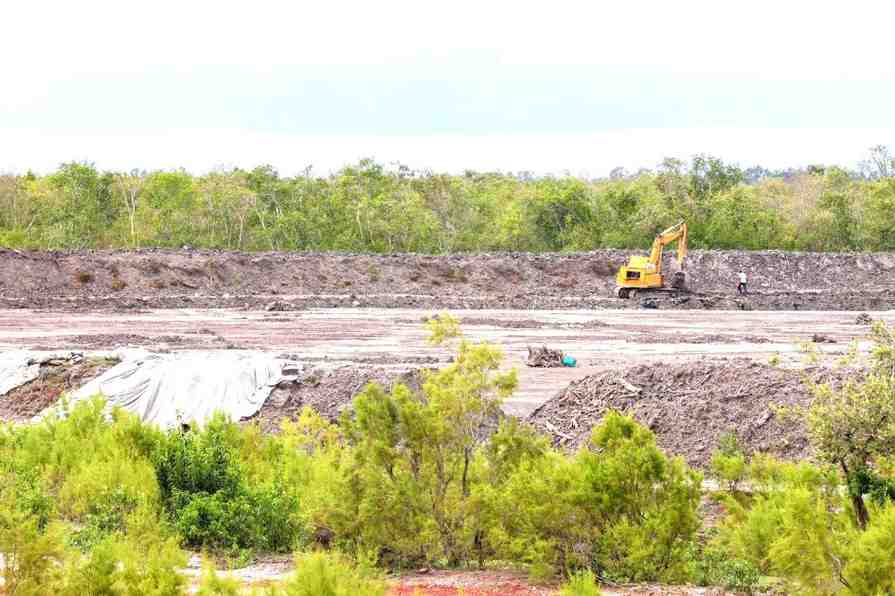
Heading south along the embankment, a stretch of forest remains in Shaherkhali. According to the DOF, about 3,300 acres are still survived there. But as one approaches the area, large excavators can be seen clearing forest and digging two massive ponds, each about 2 acres in size.
Sources within the Forest Department confirmed that Nurul Amin, former chairman of Mirsarai Upazila, is behind the excavation, aiming to use the land for fish farming.
Speaking to The Climate Watch on condition of anonymity, a forest official said: “With support from some BEZA officials, influential political leaders are cutting down forest trees and digging ponds for fish cultivation. These farms have no legal lease only verbal agreements. Since we no longer control these lands, we can’t take any action.”
The official warned that if this continues unchecked, all remaining forestland will be lost. When contacted, Nurul Amin denied any involvement in razing forest.
What BEZA says
Abdullah Al Mahmud Faruk, Project Director of the NSEZ, told TBS that once land is allocated, it is the responsibility of the companies to clear the trees.
“We have conducted an Environmental and Social Impact Assessment. If we manage to bring in surface water, we will stop extracting groundwater,” he said.
He admitted that the project has faced resistance from local and politically influential individuals who have occupied forestland to build fish farms, mosques, and other structures.
Asked about the felled trees, he said: “We don’t know whether the companies turn them into firewood or use them otherwise. They paid us compensation based on tree calculations.”
Faruk also mentioned plans to establish new coastal forests along the embankment and said, “There have been no gross irregularities on our part.”
TBS sent multiple follow-up questions seeking clarification on the forest loss, enforced tree felling, and biodiversity destruction. Instead of answering directly, Abdul Quader, Public Relations Officer of BEZA, provided the following statement:
“NSEZ has secured about $18 billion in investment commitments, including $3–4 billion from international investors. Around 155 investors have been allotted land, with 15 factories operational and 28 under construction. Investment sectors include RMG, steel, electronics, food processing, and chemicals, showing a healthy mix of domestic and foreign investment.”
“The NSEZ is expected to contribute an additional $15–20 billion in annual exports and 1–1.5% of national GDP growth when fully functional. It will promote industrial diversification, reduce dependency on RMG, and generate over 1.4 million direct jobs. It will also stimulate regional development in Chattogram through housing, SMEs, and training facilities.”
“The zone is equipped with a 230 kV grid line with a substation, three 33 kVA distribution substations, 200 mmcfd gas with one CGS and three DRS, and a 100 MLD Water Treatment Plant.”
“BEZA has initiated infrastructure projects including a 30 km road and storm drainage network in zones 2A and 2B, a Skill Development Centre, Childcare and Healthcare Centres, an Emergency Response Centre, Investor Club, CETP, and a solar power plant with World Bank support. Further development will include land preparation, gas networks, boundary walls, access roads, and power supply infrastructure to meet investor needs.”
When asked again about the fate of the destroyed forest and biodiversity, Faruk reiterated:
“We don’t know whether the companies will turn them into firewood or use them otherwise. They paid us compensation based on tree calculations.”
Experts demand urgent environmental safeguards
Environmental experts have called for urgent measures to preserve the remaining forest and take strict action against those responsible for approving and executing such ecologically damaging projects. They stressed that future development initiatives must take into account environmental sustainability, biodiversity and long-term impacts.
Experts also recommended stricter enforcement of environmental laws, mandatory Environmental Impact Assessments (EIAs) by independent bodies and transparent public consultations before approving large-scale development projects. They emphasized the need for a robust monitoring mechanism and punitive measures against agencies or individuals found violating environmental regulations.
Dr. Kamal Hossain, supernumerary professor at the Institute of Forestry and Environmental Sciences, said the damage already done is irreparable. “To mitigate the loss, at least 40% of the affected area should be reforested. Tree plantations should be established along and around the embankment,” he said. “Additionally, new coastal afforestation projects should be initiated on the seaside of the embankment to protect the shoreline from rising sea levels.”




