

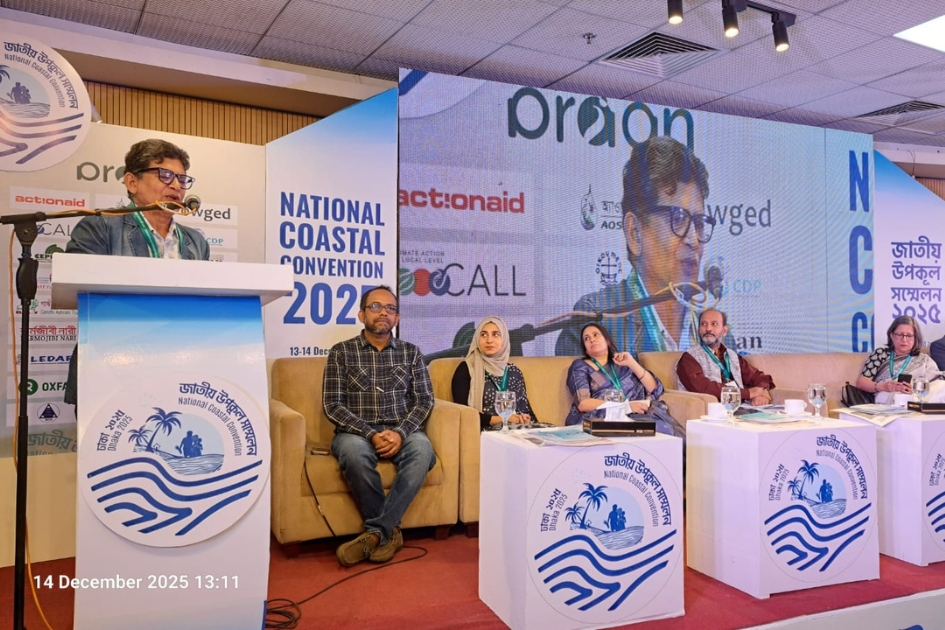



Bangladesh’s coastal region faces extreme climate risk, says Hossain Zillur Rahman, as leaders urge sustainable development, community governance and climate-resilient planning after the first National Coastal Conference in Dhaka Sunday.
Bangladesh’s coastal region bears the heaviest burden of climate vulnerability as the country stands on the frontline of global climate risk, said Hossain Zillur Rahman on Sunday (December 14), urging environmentally sustainable development and stronger community-based governance for the coast.
Rahman, Chair of the Power and Participation Research Centre PPRC and former Adviser to the Caretaker Government, made the remarks while delivering the keynote address at the closing ceremony of the first National Coastal Conference held at the Bangladesh Military Museum auditorium in Bijoy Sarani, Dhaka.
He said the coast is often described as the “primary battlefield” of disaster management but stressed that this is not its only identity. The coastal zone is the only region where new horizons of agriculture have emerged and it is also a major hub of the blue economy and international connectivity, making it a key driver of Bangladesh’s national economy.
The two-day conference brought together farmers women government and non-government representatives coastal-based organizations and national and international stakeholders. Rahman said the gathering created a new platform to connect long-standing local capacities with ongoing efforts in disaster preparedness response and climate change adaptation.
At the closing session a Coastal Declaration was presented based on discussions and recommendations from participants. The declaration called for comprehensive surveys to determine the actual extent of the coastline and coastal areas and for integrated data on freshwater resources agricultural land fisheries and other natural resources.
It also demanded environmentally sound development planning through land zoning based on land classification mandatory and rigorous environmental impact assessments for all development projects and recognition of the positive roles of local fishers farmers women and youth through empowerment of community-based co-management of natural resources.
Other key demands included protection of groundwater levels in salinity-affected areas conservation of freshwater sources development of surface freshwater reservoirs special programs for community-based water management and the establishment of locally accessible climate funds Loss and Damage funds and green financing mechanisms that reflect the risks and needs of coastal communities.
The declaration urged the current interim government and the future government to be formed after the next national election to give due consideration to these demands and to work towards sustainable and environmentally friendly coastal development in line with the vision of a green and carbon-neutral Bangladesh.
Held from December 13 to 14 the National Coastal Conference featured parallel sessions on climate resilience biodiversity conservation and community leadership sustainable natural resource management for coastal communities sustainable livelihoods social protection inclusive community building just transition innovation social equity financial frameworks and conflicts related to natural resource governance.
Speakers and panelists included Dr Mohammad Emdad Ullah Mian Secretary of the Ministry of Agriculture Md Enayet Ullah Director General Climate Change of the Bangladesh Water Development Board Md Jahidul Kabir Deputy Chief Conservator of Forests Rezaul Karim Chowdhury Executive Director of COAST Foundation Sunzida Sultana Additional Executive Director of Karmojibi Nari Md Abdullah Al Mamun Assistant Director of the Sustainable and Renewable Energy Development Authority and Dr Kazi Maruful Islam Professor at the University of Dhaka.
At the inaugural session Syeda Rizwana Hasan Adviser to the Ministry of Environment Forest and Climate Change the Ministry of Water Resources and the Ministry of Information and Broadcasting attended as the chief guest.
Organized by the Participatory Research and Network PRAAN in collaboration with 26 national and international organizations the conference brought together more than 300 participants in person. Participants included representatives of development organizations working across 19 coastal districts on agriculture environment and ecology food security community capacity building fishing communities informal workers and disaster risk. Academics researchers students and communities affected by multiple coastal crises were also actively represented.




