

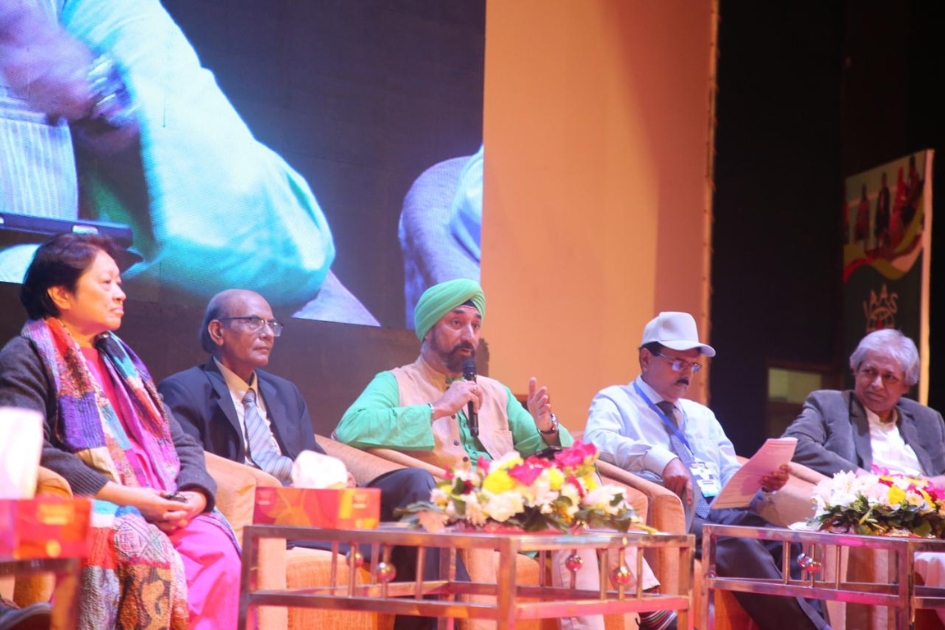



At a Dhaka climate justice assembly, nearly 2,000 delegates urged scrapping fossil fuel plans, cancelling the energy master plan, ending capacity payments and accelerating a just renewable transition for Bangladesh.
Civil society groups and climate-affected communities in Bangladesh have called for the immediate cancellation of the country’s Integrated Energy and Power Master Plan, saying it deepens reliance on imported fossil fuels and worsens climate economic and social risks.
The demand was made at the close of the third Climate Justice Assembly 2025 where nearly 2,000 delegates adopted an eight-point People’s Declaration for Climate Justice, Ecological Protection and Peoples’ Rights.
The two-day assembly held on December 13 and 14 at Sher-e-Bangla Agricultural University in Dhaka brought together 1,945 representatives from coastal haor char and Barind regions including fisherfolk farmers indigenous peoples women youth professionals and students.
In the declaration participants said the Integrated Energy and Power Master Plan along with large-scale industrial initiatives such as the Maheshkhali-Matarbari Development Initiative prioritise coal and liquefied natural gas based power generation despite Bangladesh’s extreme climate vulnerability and mounting financial pressure from fuel imports.
“These plans are fundamentally misaligned with Bangladesh’s climate realities,” said Sharif Jamil member secretary of the assembly’s organising committee and coordinator of Waterkeepers Bangladesh. “They promote expensive imported coal and LNG increase capacity payments and undermine a people-centred renewable energy future.”
The assembly demanded an immediate halt to all new fossil fuel based power plants cancellation of the IEPMP and the MIDI master plan and a time-bound roadmap to phase out existing fossil fuel projects.
Participants also called for an end to capacity payments to idle power plants and proposed a “no energy no payment” policy arguing that capacity charges are draining public resources while electricity demand projections remain overstated.
The declaration urged the government to redirect national energy planning towards renewable energy systems including solar power with battery storage and smart grids supported by adequate national budget allocations and international climate finance.
Delegates stressed that climate finance should be provided as grants not loans and framed as reparations for historical emissions by industrialised countries. They called for the urgent operationalisation of the Loss and Damage Fund and increased resources for adaptation in climate-vulnerable countries such as Bangladesh.
The assembly highlighted growing climate impacts across the country including river erosion salinity intrusion cyclones floods air and water pollution deforestation and forced displacement. Participants said fossil fuel expansion and unplanned industrialisation are accelerating these impacts while undermining livelihoods and ecosystems.
Strong demands were raised for the protection of the Sundarbans and other mangrove forests restoration of polluted rivers strict action against industrial pollution and accountability for land grabbing and corruption linked to energy and infrastructure projects.
Harjeet Singh strategic advisor to the Fossil Fuel Non-Proliferation Treaty Initiative said Bangladesh could play a leadership role at a critical moment. “Climate justice is not only about debt or mass extinction nor is it just an issue between countries,” he said. “It is also about inequalities within countries and the development models we choose. This is no longer only about greenhouse gas emissions but about rejecting destructive development pathways rooted in Global North models. Strong national regional and South-South cooperation is essential and people and nature must be at the centre of every action.”
MS Siddiquie co-convenor of the Climate Justice Assembly said past objections to projects such as Rampal had been validated by their impacts. “Young people are eager to learn and must be meaningfully involved in government decision-making processes,” he said adding that Bangladesh’s commitment to international human rights instruments provides grounds to pursue legal avenues and accountability for pollution.
The Climate Justice Assembly was organised by Dhoritri Rakkhay Amra with national co-organisers including Brighters Brotee CPRD COAST Foundation CRESL Mission Green Bangladesh OAB Foundation and Waterkeepers Bangladesh. Regional and global partners included APMDD the Fossil Fuel Non-Proliferation Treaty Initiative Fossil Free Japan and LDC Watch.
Organisers said the People’s Declaration would be formally submitted to the government and development partners as a policy alternative to fossil fuel centred energy planning calling for a just renewable-based energy transition that protects people ecosystems and public finances.




