

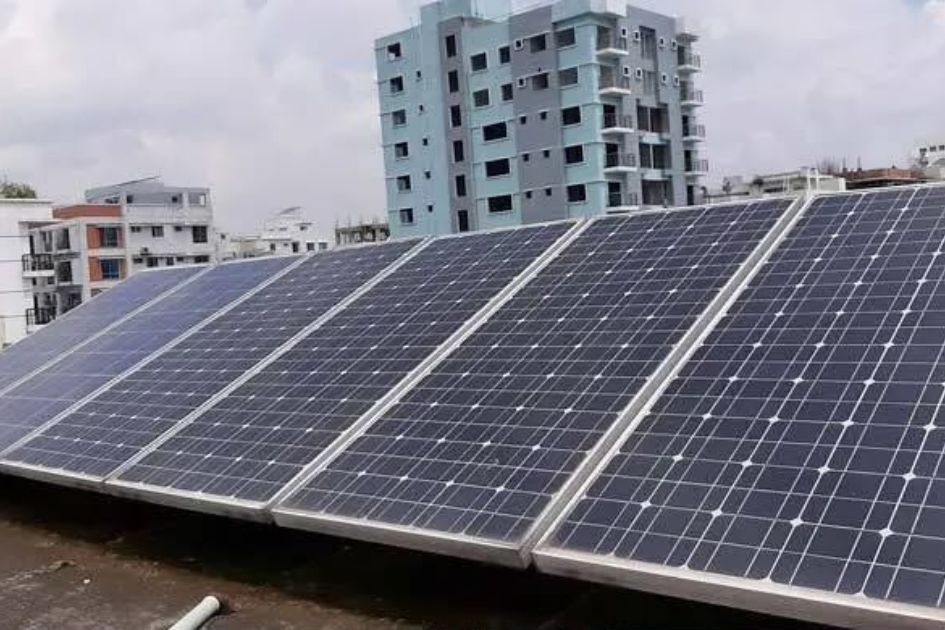



Bangladesh’s proposed renewable energy roadmap combines solar expansion, grid modernisation and regulatory reform while highlighting the need for investment, transparent governance and stronger institutional capacity to deliver long-term energy security and climate resilience.
Bangladesh is preparing one of its most ambitious energy transformations as it moves to increase the share of renewable energy in its national electricity mix to 20 percent by 2030 through rooftop solar, a move that could reshape the country’s energy security, investment landscape and climate response.
Against the backdrop of rising global energy uncertainty and intensifying climate risks, Bangladesh’s renewable energy transition represents a critical test of how a developing economy can balance economic growth, affordable electricity, energy independence and decarbonisation.
The proposed five-year renewable energy roadmap aims to expand clean energy capacity to around 14,000 megawatts (MW) by 2030 through large-scale solar projects, rooftop solar systems, wind power, floating solar, waste-to-energy and other renewable technologies.
For Bangladesh, one of the world’s most climate-vulnerable countries, renewable energy is not only an emissions reduction strategy but also part of a broader climate justice agenda. Millions of people across the country are already experiencing the impacts of floods, cyclones, river erosion, sea level rise and extreme weather events.
However, experts and civil society leaders warn that achieving the target will require more than policy commitments. Effective implementation, investment mobilisation, transparent governance, institutional capacity, grid readiness and meaningful participation of citizens, workers and communities will determine whether Bangladesh can turn its renewable energy ambition into reality.
Bangladesh’s renewable energy landscape
According to the Sustainable and Renewable Energy Development Authority (SREDA), Bangladesh’s government agency responsible for promoting renewable energy, the country currently has 1,806.8 MW of installed renewable energy capacity, representing around 5.57 percent of its total installed electricity capacity of 32,457 MW.
Solar power dominates the renewable energy sector with 1,513.71 MW of installed capacity, followed by hydropower at 230 MW and wind power at 62 MW. Biogas and biomass contribute a very small share of renewable generation.
Although renewable capacity has expanded, its contribution to actual electricity generation remains limited due to challenges including weather-dependent generation, limited energy storage, weak grid integration and operational constraints.
The new roadmap seeks to address these challenges by combining renewable deployment with grid modernisation, energy storage, demand management, improved regulations and private sector investment.
Government pushes energy reform alongside clean energy growth
The government’s renewable energy push comes as authorities review previous power sector policies, including costly power purchase agreements and financial obligations that have placed pressure on public finances.
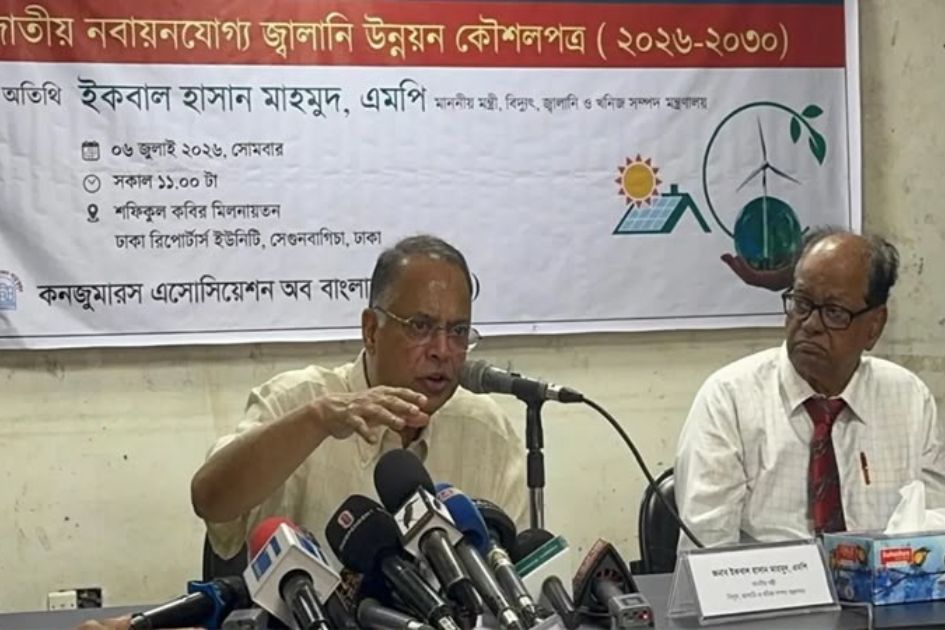
Speaking at a citizen dialogue organised by the Consumers Association of Bangladesh (CAB), a national consumer rights organisation, in Dhaka, Power Minister Iqbal Hasan Mahmud Tuku said the government was moving away from previous policies that, according to him, prioritised private interests over public welfare.
“The majority of projects under the previous government prioritised group interests rather than public interest,” Minister Tuku said at the dialogue.
He said nearly 80 percent of Bangladesh’s electricity generation capacity is connected to the private sector and that some previous power purchase agreements had created financial pressure on the government. He added that the country is facing outstanding liabilities of approximately Tk 56 billion due to high-cost electricity contracts.
The minister reaffirmed the government’s commitment to renewable energy expansion, saying Bangladesh plans to generate 10,000 MW of solar power within the next five years while encouraging private sector investment, particularly in rooftop solar development.
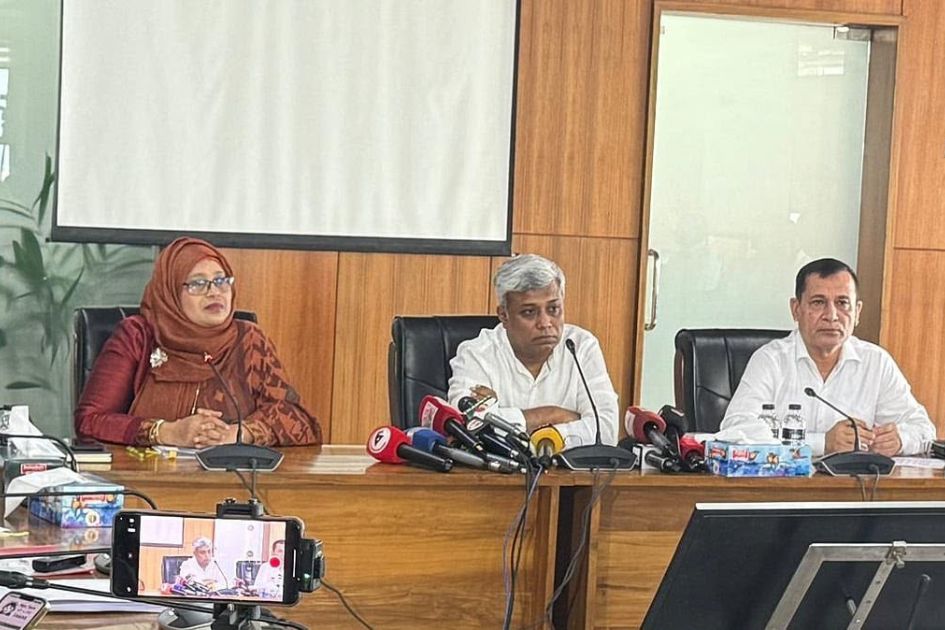
Meanwhile, State Minister for Power, Energy and Mineral Resources Anindya Islam Amit said the government was reviewing existing power agreements to protect national interests while maintaining contractual obligations.
Speaking to journalists in Dhaka, Amit said previous agreements did not sufficiently safeguard state interests but acknowledged that sovereign contracts cannot be cancelled unilaterally.
“As these are sovereign contracts, it is not possible to unilaterally cancel them. Therefore, we have initiated efforts to renegotiate tariffs of various power plants through discussion,” Amit said.
Energy experts said future investments must be supported by transparent procurement systems, predictable regulations, fair tariff structures, easier access to finance and strong oversight to ensure that clean energy development serves public interests.
Scaling up renewable capacity and attracting investment
Under the proposed roadmap, Bangladesh will need to add between 10,000 and 12,000 MW of renewable energy capacity within the next four years.
The strategy places the largest emphasis on rooftop solar, targeting 5,500 MW from rooftop systems, 4,500 MW from large-scale solar projects and around 500 MW from wind, waste-to-energy, floating solar, agricultural solar systems and other renewable sources.
The government plans to expand rooftop solar installations on government buildings, industrial facilities, future development projects, garages, bridges and other suitable infrastructure.
Industrial rooftops are expected to play an important role because they provide significant solar potential without increasing pressure on agricultural land.
To achieve the target, Bangladesh will need billions of dollars in investment, requiring international climate finance, concessional lending, blended finance mechanisms, private capital and stronger public-private partnerships.
The government has already introduced tax incentives to reduce the cost of solar equipment and encourage private sector participation.
SREDA Renewable Energy Division member Ashraful Alam said the strategy would provide the overall framework for renewable energy development, followed by detailed implementation plans.
“After the strategy is finalised, detailed work plans will be prepared covering project planning, financing mechanisms, implementation responsibilities and investment models,” he said.
Energy security, financial reform and system modernisation
Bangladesh’s renewable energy transition is closely connected with energy security and economic stability. Dependence on imported fossil fuels has exposed the country to global fuel price volatility, foreign currency pressure and rising electricity generation costs.
Energy analyst Shafiqul Alam, country lead of the Institute for Energy Economics and Financial Analysis (IEEFA), said integrating renewable energy with broader power sector planning was a positive step.
He said clean energy growth must move together with demand management, energy efficiency, consumer behaviour and modern electricity planning.
Experts also caution that Bangladesh must avoid creating new financial burdens or stranded assets while ensuring affordable and reliable electricity access for consumers.
A modern electricity grid, battery storage systems, improved transmission networks and stronger institutional capacity will be essential to integrate large amounts of renewable power into the national system.
Energy democracy and a just transition
Sohanur Rahman, Executive Coordinator of YouthNet Global, said Bangladesh’s energy transition must focus not only on technology and investment but also on people, rights and participation.
“Renewable energy is not only about adding megawatts to the grid; it is about transforming the energy system in a way that is affordable, inclusive and accountable. Energy democracy means ensuring that communities, workers and ordinary citizens have a meaningful role in shaping the country’s energy future. A just transition requires decent employment opportunities, protection for vulnerable communities and shared benefits from the move towards clean energy,” he said.
He said renewable energy development should create green jobs, strengthen community participation and ensure that climate-vulnerable groups and workers are not left behind.
The strategy also highlights the importance of environmental and social safeguards, including protecting agricultural land, wetlands and biodiversity while prioritising rooftop solar, degraded land use and community-based renewable solutions.
The road ahead
The government has identified 2026 and 2027 as preparation years focused on policy support, land assessment, investment planning, tender processes, financing arrangements, grid studies and regulatory improvements.
The major implementation challenge will come between 2028 and 2030, when renewable projects must move from the planning stage to large-scale operation.
Experts warn that delays in securing land, arranging finance, improving grid capacity and streamlining approvals could threaten the country’s renewable energy target.
For international investors, Bangladesh presents significant opportunities in solar energy, storage technologies and clean infrastructure. However, long-term confidence will depend on predictable policies, transparent procurement systems, reliable regulations and effective management of financial and market risks.
Bangladesh’s renewable energy ambition will ultimately depend on whether it can move from policy commitments to practical delivery. The success of the transition will not only be measured by the number of megawatts added to the grid but also by whether clean energy creates economic opportunity, strengthens energy independence and builds a fairer, more resilient future for communities across the country.




