


Discussions focused on technical collaboration for the Teesta Master Plan, Padma Barrage project and Bangladesh Delta Plan 2100, highlighting knowledge exchange to strengthen long-term climate resilience and sustainable water governance.
The Netherlands, one of the world’s leading countries in delta management and flood resilience, has expressed interest in deepening cooperation with Bangladesh on sustainable water resources management, river development and the application of advanced technologies to address growing climate and water-related challenges.
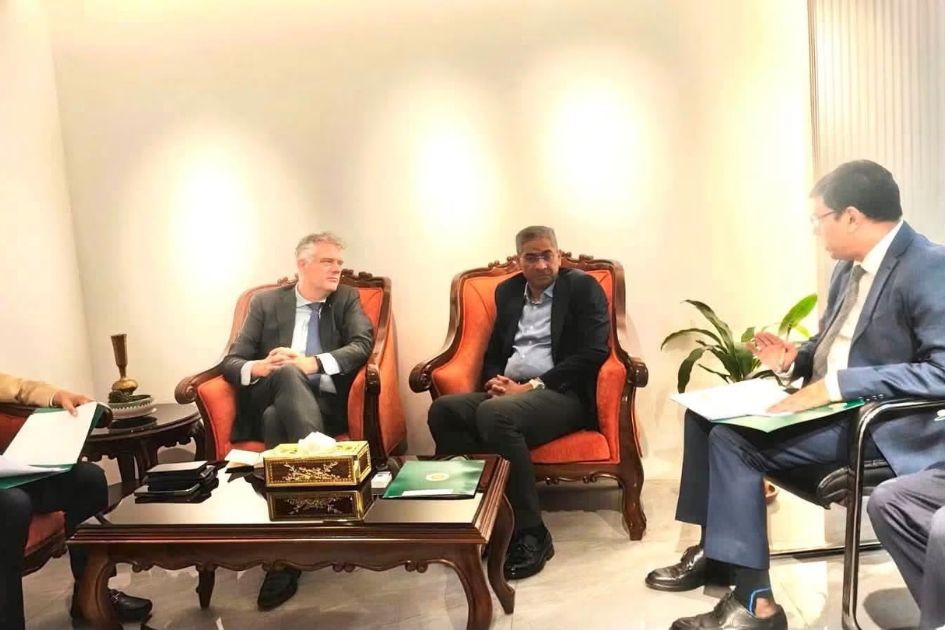
The interest was conveyed during a high-level meeting held at the Secretariat in Dhaka on Monday, where a visiting Dutch delegation discussed possible areas of collaboration with officials from Bangladesh’s Ministry of Water Resources.
The Dutch delegation was led by Ambassador Joris van Bommel and included Senior Policy Adviser Dr. Shiblee Sadik and water expert Niltje Kallen. The Bangladesh side was represented by Bangladesh’s Minister of Water Resources Shahiduddin Chowdhury Annie, State Minister Farhad Hossain Azad and senior officials of the ministry.
During the meeting, both sides discussed integrated water resources management, river development strategies, climate adaptation and the use of modern technologies to strengthen Bangladesh’s water systems. The Dutch delegation highlighted the Netherlands’ decades of experience in delta planning, flood protection, sediment management and adaptive water governance, expressing interest in sharing technical knowledge and expertise with Bangladesh.
The discussions included possible technical cooperation for major water sector initiatives, including the Teesta Master Plan and the proposed Padma Barrage project. The Netherlands expressed interest in supporting Bangladesh through knowledge exchange, technical expertise and capacity-building initiatives related to sustainable and climate-resilient water management.
The Teesta Master Plan focuses on improving river management, reducing erosion risks, enhancing irrigation potential, supporting navigation and protecting the livelihoods of communities dependent on the river system. The proposed Padma Barrage project is aimed at strengthening long-term water management, irrigation systems and river regulation.
The meeting also highlighted the importance of the Bangladesh Delta Plan 2100, the country’s long-term integrated development strategy designed to build a safe, climate-resilient and prosperous delta. The plan focuses on the sustainable management of rivers, water resources, ecosystems, land use and climate risks while ensuring economic growth and improved livelihoods for future generations.
As one of the world’s largest delta countries, Bangladesh faces increasing challenges from flooding, river erosion, sea-level rise, salinity intrusion, changing river flows and extreme weather events. The Netherlands, with its extensive experience in managing the Rhine-Meuse-Scheldt delta, has been a key knowledge partner in global delta management and shares similar challenges related to water security and climate adaptation.
For millions of people living in Bangladesh’s riverine and coastal regions, effective water management is closely connected with livelihoods, food security, ecosystem protection and climate resilience. The meeting emphasized the importance of combining scientific expertise, local knowledge and community-based approaches to develop sustainable solutions.
Reflecting on the longstanding relationship between Bangladesh and the Netherlands, State Minister Farhad Hossain Azad recalled the April 1979 visit of the late President Ziaur Rahman to the Netherlands, describing it as an important milestone that contributed to expanding cooperation in agriculture, trade and water management.
Both sides expressed interest in further strengthening bilateral cooperation through technical consultations, joint research, innovation and knowledge-sharing initiatives to support Bangladesh’s efforts in building climate-resilient rivers, wetlands and water systems.




