




Bangladesh is expanding its climate response through adaptation planning, emissions cuts, long-term strategies and a framework for transparent carbon market participation.
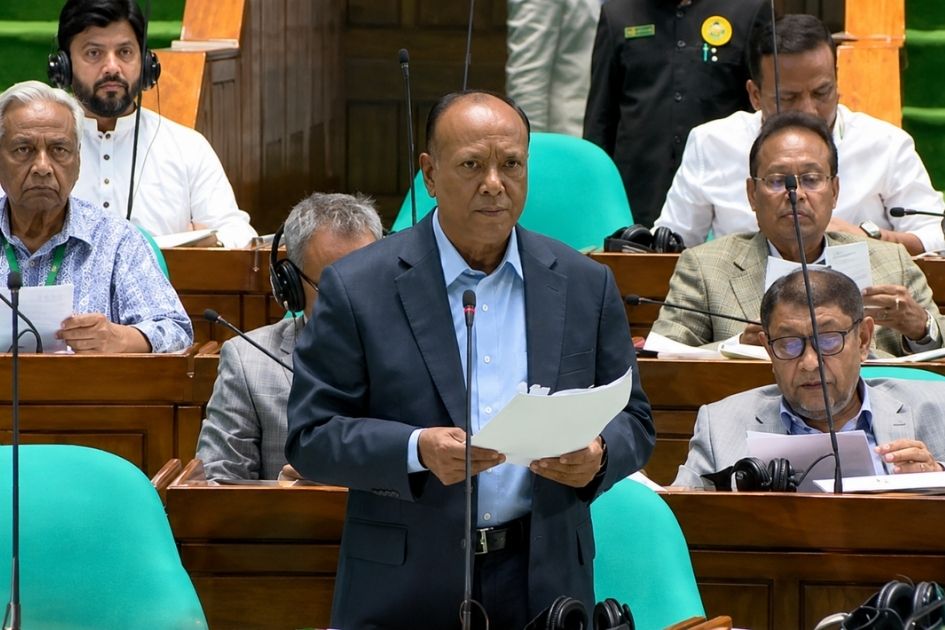
Bangladesh ranks 13th globally among the countries most vulnerable to climate change, with rising temperatures driving growing risks of heat-related illnesses and deaths, Environment, Forest and Climate Change Minister Abdul Awal Mintoo told parliament on Sunday (30 August).
“Global warming is increasing rapidly due to climate change, resulting in a rise in heat-related illnesses and deaths worldwide,” Mintoo said in a written response to a question from Cumilla-10 MP Md Mobasher Alam Bhuiyan during parliament’s question-and-answer session.
Citing the Global Climate Risk Index 2026, the minister said Bangladesh ranks 13th among the countries most at risk from climate change.
The government has formulated a National Adaptation Plan (NAP) under the United Nations Framework Convention on Climate Change (UNFCCC) to address the impacts of climate change, Mintoo said.
Bangladesh has also prepared and submitted its Third Nationally Determined Contributions (NDC 3.0) to the UNFCCC to reduce greenhouse gas emissions, he added.
Under NDC 3.0, Bangladesh has set an unconditional target of cutting greenhouse gas emissions by 6.39 percent by 2035, equivalent to 26.74 million metric tonnes of CO₂ equivalent, through its own capacity.
Subject to receiving international support, the country aims to achieve a further conditional reduction of 13.92 percent, equivalent to 58.23 million metric tonnes of CO₂ equivalent, the minister said.
Mintoo said work had also begun on formulating Long-Term Low Emission Development Strategies (LT-LEDS), led by the Ministry of Environment, Forest and Climate Change, to reduce emissions over the long term.
The government has also formulated an integrated carbon market framework to ensure Bangladesh’s participation in carbon markets is organised and transparent, he said.
Through the framework, the government plans to expand Bangladesh’s participation in international and voluntary carbon markets, implement high-quality environmentally sound projects and increase foreign investment and climate finance through carbon credit trading.




