

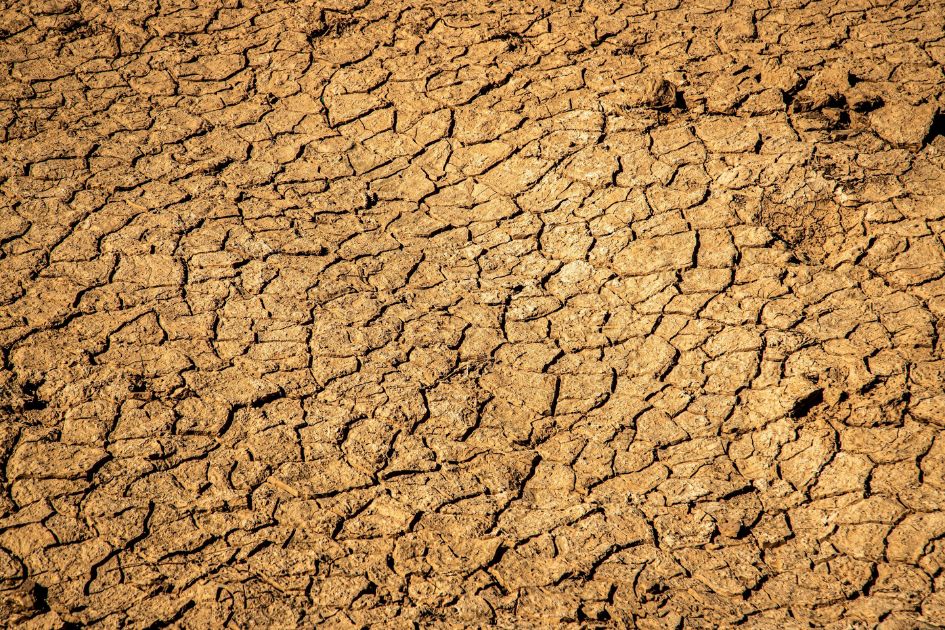



An AI study warns climate change could push over 1.1 billion people into food crises by 2100, but rapid emissions cuts and sustainable policies could halve global hunger risks significantly.
An artificial intelligence study has warned that climate change could expose more than 1.1 billion people to severe food crises by the end of the century, though decisive global action could dramatically reduce the toll.
The findings come as hunger is already surging worldwide. In 2025 alone, more than 295 million people experienced hunger and starvation driven by conflict, displacement, climate shocks and economic instability.
The new research, led by a quantitative ecologist who studies environmental pressures using data and computer models, suggests the situation could worsen sharply if greenhouse gas emissions remain high. According to the model, over 1.1 billion people alive today and those yet to be born will face at least one episode of severe food insecurity by 2100.
More than 600 million of those affected are expected to be children.
The model was developed using food insecurity data from the Famine Early Warnings Systems Network alongside historical and projected temperature and rainfall data. Unlike many forecasting tools, it did not rely heavily on detailed socioeconomic data such as income or policy trends, which are often unavailable or difficult to predict decades ahead.
Researchers combined monthly temperature data from the US National Oceanic and Atmospheric Administration with precipitation data from the Climate Hazards Centre at the University of California. These were integrated with demographic and economic projections to estimate future exposure to food crises.
The results show a steep rise in food insecurity in recent years. The number of people exposed to severe food shortages nearly tripled from 50 million in 2011 to almost 150 million by 2020.
Looking ahead, the cumulative impact could be severe. By 2100, more than 1.16 billion people are projected to have experienced at least one famine-level crisis. Much of this burden is expected to fall on regions with both worsening climate impacts and rapid population growth, particularly in central Africa.
Children are expected to bear the brunt. The study estimates that more than 600 million children will experience their first food crisis before the age of five, while over 200 million newborns could face such risks within their first year of life.
Africa is projected to be one of the hardest-hit regions. In 2099 alone, more than 170 million people across the continent could face severe food crises, including starvation. This figure is roughly equivalent to the combined population of Italy, France and Spain.
Hotspots are expected to expand across eastern and central Africa, particularly in the Horn of Africa and parts of the Sahel, forming vast contiguous areas of high vulnerability.
Asia is also expected to experience significant impacts, though Africa is likely to face a wider geographic spread of crises.
Despite the grim projections, the study highlights a clear pathway to reduce suffering. If global industries and governments aggressively cut fossil fuel use and expand green energy, the number of people exposed to food crises could be more than halved.
Under a sustainable development scenario, as many as 780 million people could be spared from hunger by 2100. Annual exposure to food crises could also fall significantly, dropping from an average of 89 million people between 2005 and 2015 to around 42 million by the end of the century.
Africa in particular could see rapid improvements after 2050 if conflicts are reduced and emissions decline, giving the continent greater potential than Asia to lower food insecurity through sustainable development.
Researchers stress that climate change is a major driver of food insecurity, but policy choices will determine how severe the crisis becomes. They warn that failure to act or continued mismanagement of the climate crisis could lead to catastrophic consequences.
The study also underlines that food security is not just about increasing production. Resilient food systems must be able to withstand floods, droughts and other climate shocks, while ensuring that all members of society play a role in food production.
While climate change will challenge every region, experts say coordinated global efforts focused on equity, peace and adaptation can strengthen resilience. However, with time running short, they warn that urgent action is needed now to secure a stable food future for coming generations.
This report is by Giovanni Strona, The Conversation, edited by Gaby Clark and reviewed by Andrew Zinin.




