




Experts urge Bangladesh to reform its battery recycling sector, warning that unsafe lead processing is poisoning children, damaging the environment and exposing informal workers to serious health risks.
Bangladesh is moving toward a market-based regulatory overhaul, including battery tracking systems, financial incentives and stronger enforcement, as experts warn of a deepening public health and environmental crisis driven by unsafe lead-acid battery recycling.
The warning comes amid concerns over the rapid expansion of battery-powered transport and weak waste management systems. Around 80 percent of used lead-acid batteries in the country are currently processed in informal and often illegal facilities, raising serious risks of lead exposure and environmental contamination.
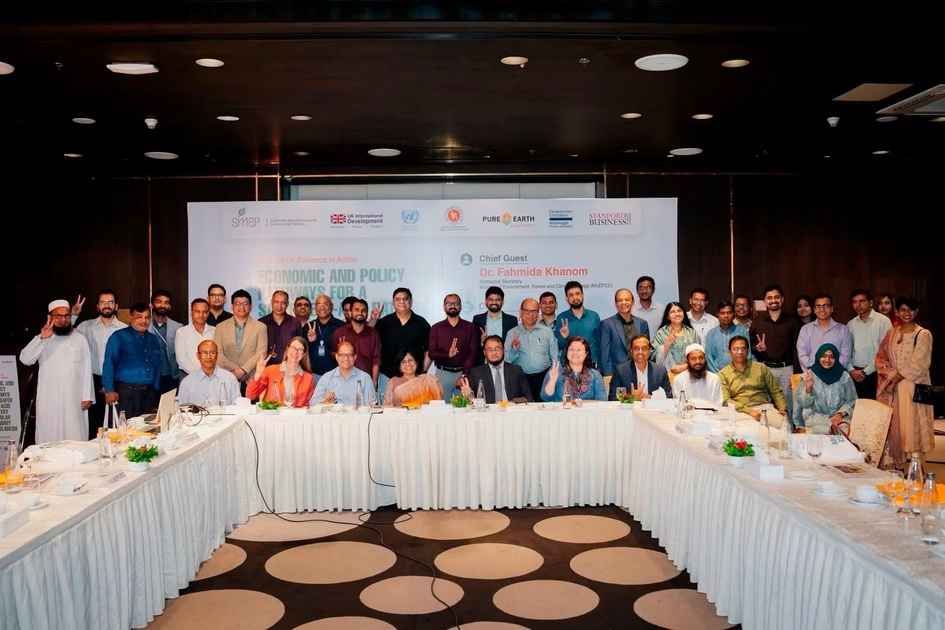
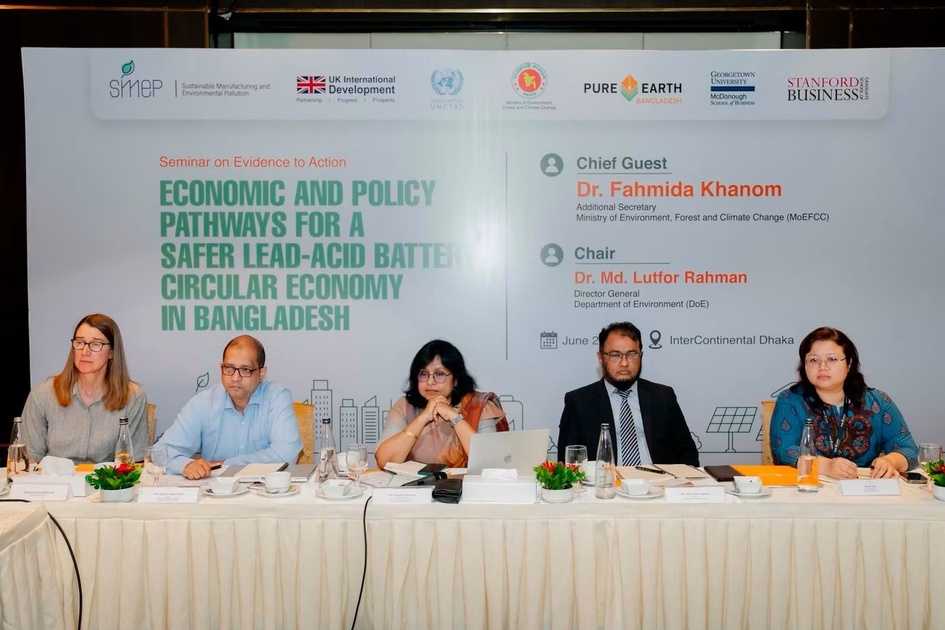
The issue was discussed at a seminar titled “Evidence to Action: Economic and Policy Pathways for a Safer Lead-Acid Battery Circular Economy in Bangladesh”, where researchers presented new findings and policy recommendations aimed at restructuring the sector.
Experts said the challenge is closely linked to the country’s fast-growing electric three-wheeler and e-rickshaw industry, part of a broader global shift toward low-cost electric mobility in developing countries. While demand for lead-acid batteries has surged, end-of-life management systems have failed to keep pace.
Informal recyclers dominate the sector largely because they avoid taxes, environmental compliance costs and regulatory requirements, making formal operators less competitive.
“Because consumers lack reliable information about battery durability and performance, manufacturers have limited incentives to invest in producing longer-lasting batteries,” said Prof. Erica Plambeck of Stanford University while presenting a policy study.
She described the situation as a “market failure” driven by information gaps that prevent consumers from distinguishing between high- and low-quality batteries.
Retail practices further deepen the problem. A survey of 261 battery retailers by Pure Earth Bangladesh found that only one recommended a lead-free lithium alternative, while most promoted brands offering higher commissions. Battery lifespan claims frequently did not match real-world performance.
Experts said this lack of transparency encourages consumers to choose cheaper, short-lived batteries, increasing the volume of hazardous waste entering informal recycling chains.
To address the crisis, researchers recommended establishing a fully traceable formal recycling system supported by improved monitoring, accountability and market transparency. A key proposal is the introduction of a smelting fee on new batteries, with revenues directed toward certified recycling facilities using cleaner technologies.
Such a system would enable regulators to better track lead flows, identify illegal recycling operations and strengthen enforcement across the sector.
The study also called for tariff reforms, including higher duties on lead imports and reduced tariffs on safer and longer-lasting battery technologies. However, experts cautioned against the unregulated influx of low-quality second-life lithium batteries, warning that weak standards could introduce new safety and environmental risks.
Public health impacts remain severe. An estimated 36 million children in Bangladesh suffer from elevated blood lead levels, making it one of the countries most affected by childhood lead poisoning. According to UNICEF, this silent emergency causes irreversible damage, including reduced IQ, learning disabilities, stunted growth and behavioural and developmental problems.
Mitali Das, Country Director of Pure Earth Bangladesh, said Bangladesh is among the world’s most affected countries by lead exposure, with 38 percent of children under five showing elevated blood lead levels.
Lead exposure is also estimated to cost Bangladesh around $29 billion annually, nearly 8 percent of GDP, through healthcare burdens and lost productivity.
Das identified informal battery recycling as a major source of contamination, with around 200,000 tonnes of lead waste generated annually and significant environmental leakage during unsafe processing.
Experts at the seminar described lead pollution as a silent crisis, warning that its long-term effects often remain hidden while steadily damaging child development and public health.
Fahmida Khanom, Additional Secretary at the Ministry of Environment, Forest and Climate Change, said the government is preparing a national policy framework and action plan on lead pollution, which will soon be submitted to the cabinet.
She said district administrations have already been instructed to monitor informal recycling operations and gradually bring them under regulation.
Khanom proposed forming a multi-agency working group involving the National Board of Revenue, Department of Environment, local government bodies and industry representatives to review taxation policies, import controls and incentives.
She also called for dedicated technical groups on awareness, battery labelling and traceability systems. A QR code-based tracking mechanism, she said, could allow regulators and consumers to access information on battery lifespan, usage history and recycling status.
“Without traceability, it will be difficult to create an accurate inventory of the total lead entering, leaving and circulating within the country,” she said.
Officials from the Department of Environment said evidence-based policymaking, stronger monitoring and coordinated stakeholder action will be essential to reduce lead pollution and build a safer circular economy for batteries in Bangladesh.
In a reaction, Sohanur Rahman, Executive Coordinator of YouthNet Global, told The Climate Watch that the findings highlight how the battery recycling crisis is not only an environmental challenge but also a just transition issue for Bangladesh’s informal economy.
He noted that thousands of informal workers depend on battery collection, dismantling and recycling for their livelihoods, and any reform must ensure that this workforce is not excluded or economically displaced during the transition to safer systems.
“Transitioning away from hazardous recycling must go hand in hand with alternative livelihoods, skills development and social protection for informal workers who currently sustain this sector,” he said.
He added that a just transition approach must also consider transport-linked communities and small traders who depend on battery-based mobility systems, ensuring reforms do not unintentionally deepen inequality.
He further stressed that youth engagement is essential in designing transparent circular economy systems, particularly in areas such as digital traceability, consumer awareness and the adoption of safer technologies.




