

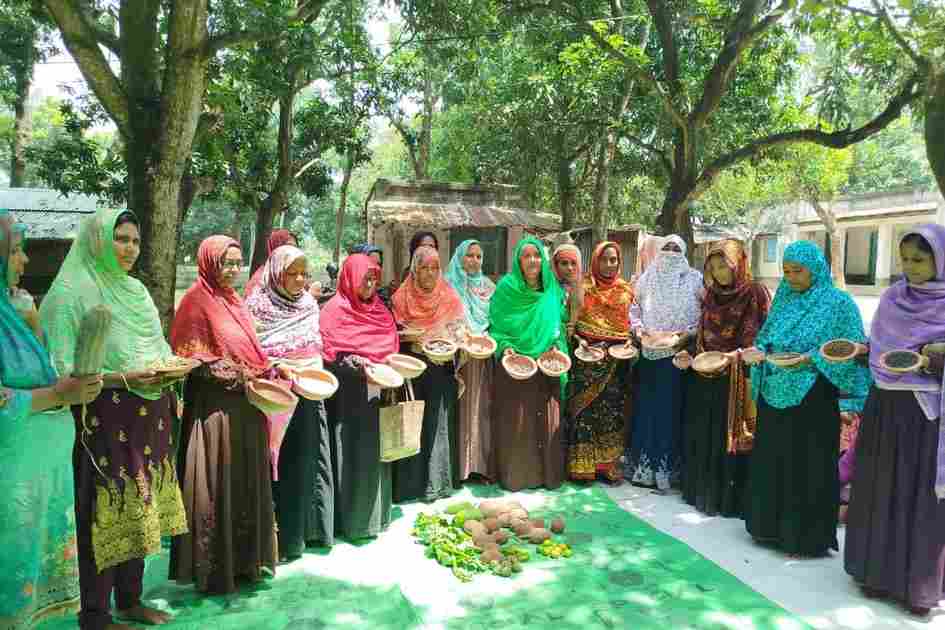



A community seed bank in Paba now preserves 198 local varieties, as farmers seek union-level support for agroecology, seed exchange and safer farming.
Women farmers in northwestern Bangladesh have called for stronger support for local seed production, community seed banks and agroecological farming practices to protect food sovereignty and build climate-resilient agriculture.
The demands were raised on today, August 16, 2026, at a community advocacy meeting on agroecology, food sovereignty, drought and climate-resilient agriculture at the Bilnepalpara Agroecology Learning Center in Darshanpara Union of Paba Upazila in Rajshahi.
The meeting was organised by grassroots women of the Green Coalition, with support from development research organisation BARCIK. Forty-five women and men farmers practising safe agriculture took part, sharing their experiences of producing safe food through local seeds, farmers’ own knowledge and locally available materials.
They also displayed seeds of different local varieties of vegetables and crop plants.
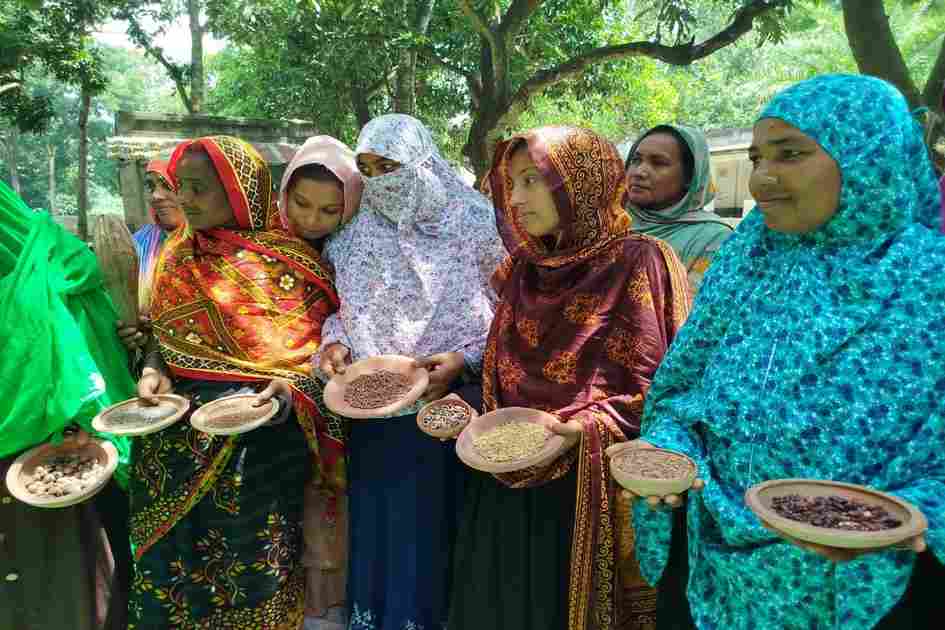
The advocacy meeting, moderated by farmer Sultana Begum, heard from Mahmuda Begum of Bildharmapur, who said: “Three years ago, I had seeds of only one variety of sweet pumpkin. Now, through seed exchange, I am preserving five varieties of sweet pumpkin and six varieties of bean seeds.”
Sultana Begum, who runs the ALC, said: “Our ALC centre has seeds of 198 local varieties of vegetables, crops and medicinal plants. We produce, preserve and exchange seeds ourselves. We also exchange experiences on organic fertiliser and organic pest management.”
Panna Begum of Dighipara said farmers use organic pest control made from neem leaves, ash, bishkathali, mahogany seeds and extracts from the bark and leaves of plants to control insects.
Shukila Begum, an elected woman member of the local Union Parishad, Bangladesh’s lowest tier of local government, said local seeds should be protected.
“Vegetable crops grown from local seeds face fewer diseases and pest attacks, taste better and the seeds remain within our reach. These seeds need to be protected,” she said.
“Because of GMO and hybrid seeds, our seed rights are shrinking,” she added, calling on the government to protect locally preferred seed varieties.
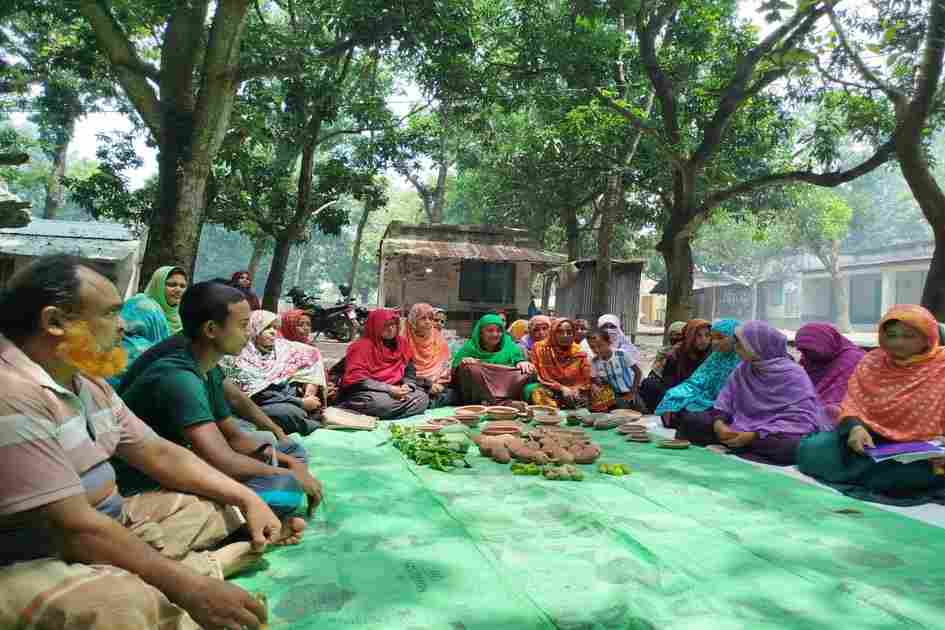
Abdus Salam, an elderly farmer from Bill Nepalpara village, said government support for community- and union-based local seed production and preservation could help reduce the large amount of money spent on importing seeds and fertiliser from abroad.
“Farmers themselves can produce and use organic fertiliser and organic pest control with local materials,” he said.
Participants said farmers should not have to buy toxic substances for their fields when necessary agricultural resources are available close to home. They called for an end to the unrestricted sale of harmful pesticides and for the expansion of safe agriculture.
The meeting was told that the Bilnepalpara Agroecology Learning Center and community seed bank currently preserve 198 seed varieties. They include 83 varieties of vegetables, 40 varieties of rice, 30 varieties of medicinal plants, 15 varieties of fruit and 30 varieties of rabi crops.
Participants said the seeds are being produced seasonally in 35 model homestead gardens in Darshanpara Union. Surplus seeds are deposited at the ALC and exchanged with other women and men farmers.
Women farmers displayed seeds they had produced themselves and demanded protection of their seed sovereignty. They also called for a halt to indiscriminate pesticide sales inside villages.
Participants said seeds are farmers’ own assets and the foundation of food sovereignty. They called for expanding local seed production, preservation and exchange systems and for controlling the use and unrestricted sale of harmful chemical pesticides.
A BARCIK anthropologist and regional coordinator said farmers often do not know what harm different toxic substances can cause, yet highly hazardous pesticides are being handed to them.
“As a result, farmers, producers, consumers and the environment are being seriously harmed,” he said, adding that the situation must be stopped immediately.
Atiqur Rahman Atiq, president of the Barendra Youth Forum, and Touhidul Islam, programme officer of BARCIK, were also present.
The meeting demanded increased government support for local seed production and preservation at union level, expansion of community seed banks, recognition of farmers’ local knowledge and agroecological practices and regulation of the use and unrestricted sale of harmful chemical pesticides.




