

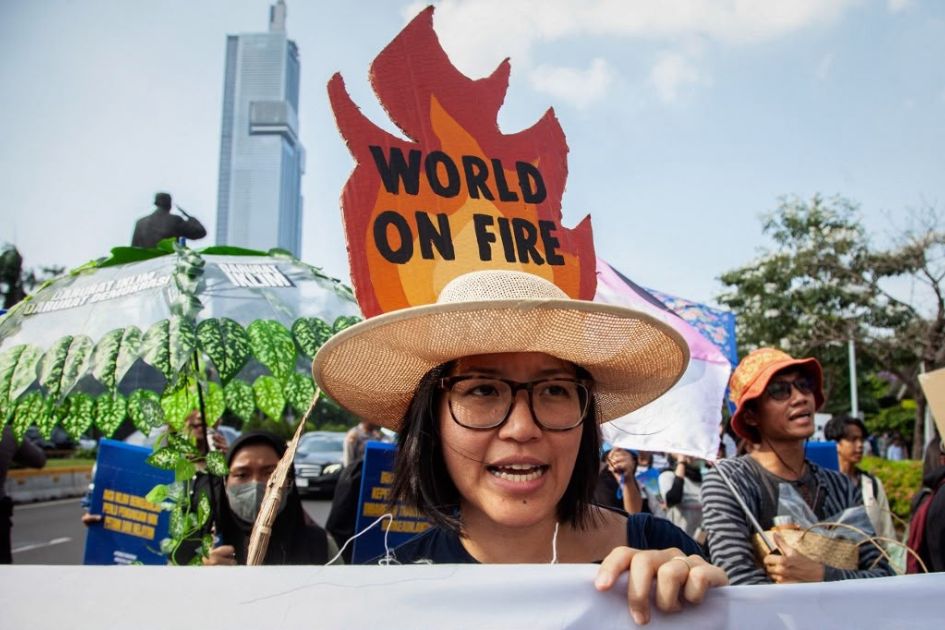

A regional analysis warns that legal intimidation, gender-based violence and weak enforcement of environmental protections continue to undermine women leading community efforts to defend ecosystems and Indigenous rights across Southeast Asia.
Amid intensifying climate change, biodiversity loss and pollution across Southeast Asia, women protecting forests, rivers, coastlines and community lands are facing growing threats, not only from environmental destruction but also from intimidation, criminalization and legal harassment.
Women Environmental Human Rights Defenders (WEHRDs) are standing at the frontline of protecting ecosystems and defending community rights, yet their work is increasingly challenged by powerful economic and political interests when it conflicts with extractive development models.
A recent analysis by environmental lawyer and policy expert Prilia Kartika Apsari, published by the Heinrich Böll Foundation’s Southeast Asia Regional Office on 9 July 2026, highlights the disproportionate risks faced by WEHRDs across the region. The analysis examines how women who challenge environmentally harmful projects are often targeted through legal pressure, public attacks and other forms of intimidation.
“Women environmental human rights defenders are not only protecting ecosystems; they are defending the rights of communities whose survival depends on nature. Yet they continue to face intimidation and legal challenges because their work questions powerful interests,” said Prilia Kartika Apsari, environmental lawyer and author of the analysis.
Many of these defenders come from Indigenous and local communities where women have historically played a critical role in protecting forests, rivers, biodiversity and traditional knowledge. Their work is closely connected to climate justice, as they safeguard ecosystems while representing communities that often contribute the least to climate change but experience its most severe impacts.
Women face gender-specific risks while protecting the environment
The analysis draws on ecofeminist perspectives to examine how both nature and women are often marginalized under extractive systems. It argues that the dominant growth paradigm, which prioritizes Gross Domestic Product (GDP) expansion over ecological well-being, has contributed to the undervaluing of environmental protection work and the voices of women leading community-based conservation efforts.
Women environmental defenders face unique and gendered risks, including sexual harassment, gender-based violence, online abuse, surveillance, social stigma and exclusion from decision-making spaces. These challenges add additional barriers for women who are already confronting environmental destruction, displacement and climate vulnerability.
Across Southeast Asia, legal systems are used to silence environmental defenders
Across Southeast Asia, environmental defenders increasingly face Strategic Lawsuits Against Public Participation (SLAPPs), where legal systems are used to intimidate activists, drain community resources and discourage public opposition to harmful projects.
In Indonesia, despite existing safeguards against abusive lawsuits, environmental defenders continue to face criminalization. The resistance of the “Wadon Wadas” collective in Central Java and the advocacy of Mama Aleta Baun in East Nusa Tenggara demonstrate the risks faced by women mobilizing communities to protect land, forests and Indigenous rights.
In Thailand, the struggle of the Khon Rak Ban Kerd Collective in Loei Province became a landmark case highlighting the pressure faced by communities opposing mining activities. Villagers experienced multiple defamation lawsuits after challenging gold mining operations. Although legal reforms have provided courts with greater authority to dismiss bad-faith lawsuits at an early stage, activists continue to face challenges in accessing justice.
In the Philippines, environmental defenders have access to important legal mechanisms, including the Writ of Kalikasan, which recognizes the constitutional right to a balanced and healthy ecology. However, legal protections have not eliminated threats against activists. The abduction of coastal defenders Jonila Castro and Jhed Tamano in 2023 highlighted the continuing risks faced by those defending environmental rights.
Beyond Southeast Asia, similar challenges are visible in Bangladesh, where climate-affected communities, environmental activists and women leaders continue to advocate for the protection of natural resources, pollution control and climate resilience amid increasing environmental pressures.
“Environmental defenders across Asia are protecting the shared future of communities and ecosystems. Their voices must not be silenced through intimidation or legal harassment. Climate justice requires recognizing defenders, especially women and young people, as leaders in environmental decision-making,” said Sohanur Rahman, Executive Coordinator of YouthNet Global.
ASEAN environmental rights commitment faces implementation challenge
The adoption of the ASEAN Declaration on the Right to a Safe, Clean, Healthy, and Sustainable Environment in October 2025 represented an important political commitment toward recognizing environmental rights. However, experts caution that implementation remains the key challenge.
The analysis calls for stronger regional mechanisms, including the establishment of a dedicated regional focal point to monitor and support the protection of Indigenous communities and WEHRDs.
It also emphasizes the need for binding domestic legislation that transforms regional commitments into enforceable protections and prevents the misuse of legal systems against environmental defenders.
Experts call for a shift from growth-focused development to environmental justice
Experts argue that Southeast Asia must move beyond development models focused primarily on economic growth and adopt an eco-centric approach that recognizes the intrinsic value of ecosystems, community rights and environmental justice.
The protection of environmental defenders, they say, requires not only stronger laws but also a fundamental shift in how governments recognize the relationship between people, nature and development.
Protecting women defenders is a test of climate justice
“No child’s future should be held hostage by toxic pollution, and no defender should be criminalized for protecting it,” the analysis concludes.
As Southeast Asia seeks pathways toward a sustainable future, the protection of Women Environmental Human Rights Defenders will determine whether environmental commitments remain declarations on paper or become meaningful protections for the people safeguarding the planet.
Ensuring safety, legal recognition and support for women environmental defenders is essential not only for advancing human rights but also for achieving climate justice and building a resilient future for communities across the region.




