

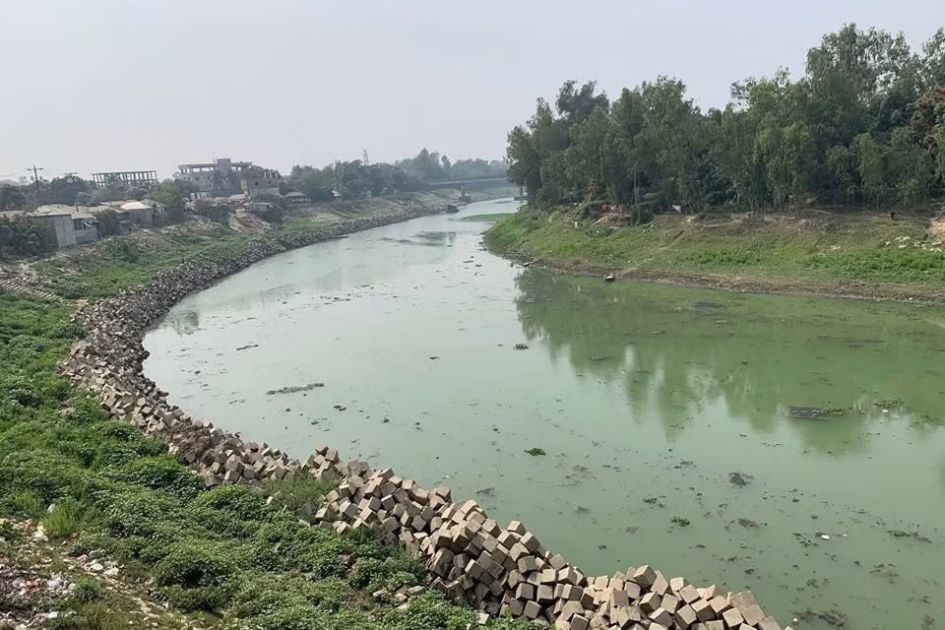



A public hearing in Bogura brought together affected communities, officials and environmental groups, highlighting legal disputes, accountability concerns and calls for stronger enforcement to restore two ecologically important northern rivers.
Environmental activists, local communities and civil society representatives have called for urgent action to restore the polluted Karatoya and Phuljhor rivers in northern Bangladesh, warning that industrial contamination, illegal encroachment and weak enforcement of environmental regulations are threatening ecosystems, livelihoods and public health.
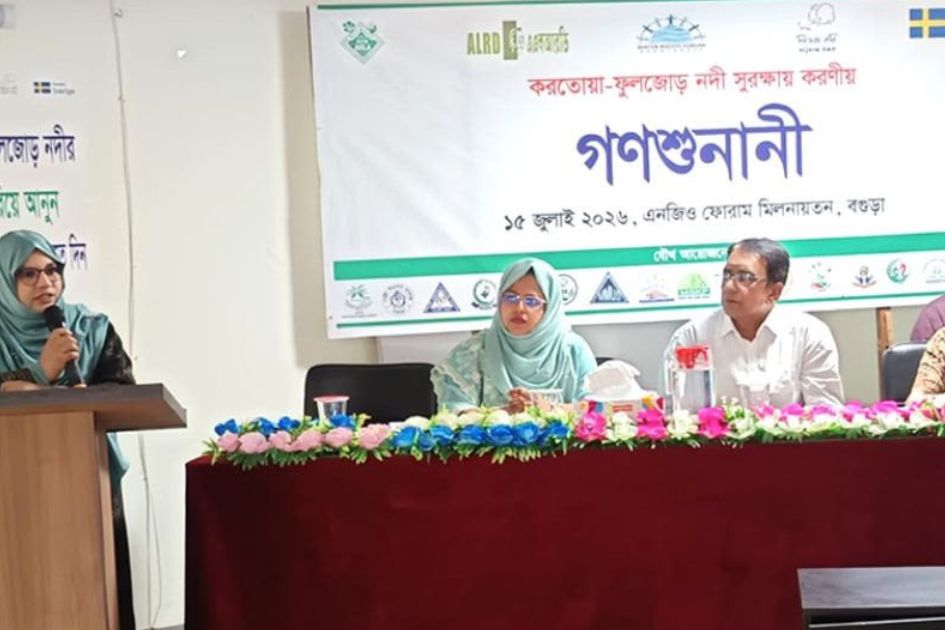
The demands were raised at a public hearing held in Bogura on Wednesday, where riverbank communities, farmers, fish farmers, environmentalists, academics, government officials and development organisations gathered to discuss the growing ecological crisis surrounding the two rivers.
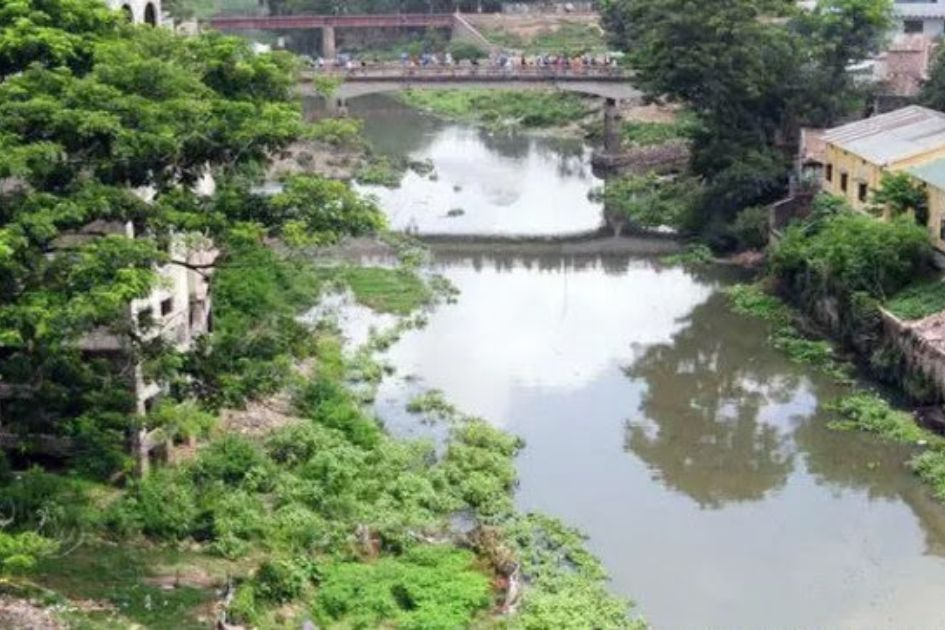
The Karatoya and Phuljhor rivers are closely connected with agriculture, fisheries, biodiversity and the daily lives of thousands of people in Bogura and Sirajganj. Participants said restoring these waterways is not only an environmental priority but also essential for climate resilience, as healthy rivers help communities cope with flooding, water insecurity and changing weather patterns.
Environmental campaigners said the situation reflects a wider challenge across South Asia, where rivers supporting millions of people are facing increasing pressure from industrial expansion, weak regulatory enforcement and climate-related stress.
The hearing, titled “Addressing Encroachment, Pollution and Protecting the Karatoya and Phuljhor Rivers”, called for the removal of illegal river occupations, prevention of untreated industrial discharge, restoration of natural river flow and stronger implementation of existing environmental laws.
The event was chaired by Khushi Kabir, coordinator of Nijera Kori and chairperson of the Association for Land Reform and Development (ALRD). Bogura City Corporation Administrator M.R. Islam Swadhin attended as the chief guest, while Additional Deputy Commissioner (Development and Human Resource Management) Jyoti Bikash Chandra joined as a special guest.
Representatives from the Department of Environment, the Bangladesh government’s environmental regulatory agency, the Bangladesh Water Development Board, the government agency responsible for water resources management, environmental organisations, local government bodies and affected communities participated in the discussion.
At the beginning of the hearing, a documentary was screened highlighting pollution in the Karatoya and Phuljhor rivers, the decline of aquatic biodiversity and the impacts on public health, agriculture and livestock.
Phuljhor River Becomes Centre of Pollution Dispute
The Phuljhor River has become a major environmental flashpoint in northern Bangladesh amid growing public protests over alleged industrial contamination linked to SR Chemical Industries Ltd.
The company is linked to businessman and politician Golam Mohammad Siraj, widely known as G.M. Siraj, founder of SR Group. He is a prominent political figure who previously served as a lawmaker for Bogura-6 and was recently elected as a Member of Parliament from the Bogura-5 constituency under the Bangladesh Nationalist Party (BNP).
The company’s connection with a politically influential family has drawn additional public attention as communities demand transparency, accountability and effective regulatory oversight over alleged environmental impacts.
Local residents and environmental activists allege that untreated toxic effluents from SR Chemical Industries have entered the river system, damaging aquatic biodiversity, affecting agricultural activities and threatening community health.
Activists argue that allegations involving industrial facilities linked to influential individuals require transparent investigation and strong enforcement of environmental regulations to maintain public confidence.
However, SR Chemical Industries Ltd has denied the allegations, stating that its Effluent Treatment Plant (ETP) is fully operational and that the company follows national environmental regulations. The company has maintained that it does not discharge untreated waste into the river and that its industrial operations comply with environmental requirements.
Karatoya River Crisis and Allegations of Encroachment
Alongside pollution concerns, activists have raised alarm over the deteriorating condition of the Karatoya River, blaming what they describe as years of inaction by government agencies and inadequate enforcement for allowing pollution and illegal occupation of river land.
Environmental campaigners and local communities have alleged that weak monitoring and delayed action by authorities have enabled multiple forms of encroachment, contributing to the shrinking of the river’s natural flow and ecological decline.
The NGO Thengamara Mohila Sabuj Sangha (TMSS) has also faced allegations from the Bogura District Administration and environmental activists over alleged encroachment and pollution of the Karatoya River.
According to findings cited by authorities and activists, TMSS was identified as having occupied 16.97 acres of river land. The organisation has faced calls for accountability and restoration of illegally occupied river areas.
Environmental activists say restoring the Karatoya River requires transparent investigations into all alleged encroachments, regardless of the identity or influence of those involved, alongside effective enforcement of river protection laws.
Legal Action and Accountability Questions
The pollution dispute has also moved into the legal arena.
The Bangladesh Environmental Lawyers Association (BELA) has filed a writ petition concerning alleged pollution caused by SR Chemical Industries and Majumdar Products, which activists say has affected the Phuljhor, Karatoya and Bangali rivers.
Following an initial hearing, the High Court issued a rule seeking explanations from relevant government agencies and the companies over alleged failures to prevent environmentally harmful activities.
The court also sought clarification on why necessary measures should not be taken under Bangladesh’s Environment Conservation Act to prevent further pollution and protect the rivers.
The legal intervention has renewed discussions about enforcement of Bangladesh’s environmental laws, particularly regarding industrial compliance with effluent treatment requirements, monitoring systems and regulatory accountability.
BELA Chief Executive Syeda Rizwana Hasan, speaking virtually at the hearing, said government initiatives for restoring the Karatoya River were welcome but stronger action was needed against those responsible for illegal occupation and pollution.
She said authorities should consider removing the Khulshi sluice gate if it was found to be affecting the river’s natural flow.
Communities Raise Alarm Over Pollution Impacts
Presenting a keynote paper, ALRD official Sanjida Khan Ripa said the rivers had gradually deteriorated due to household waste, industrial pollution and illegal occupation.
She said that while domestic waste was initially a major concern, industrial discharge and encroachment had worsened the situation over time.
Residents, activists and speakers at the hearing alleged that industrial waste from SR Chemical Industries and Majumdar Agro Products had contributed to severe environmental degradation in the river systems.
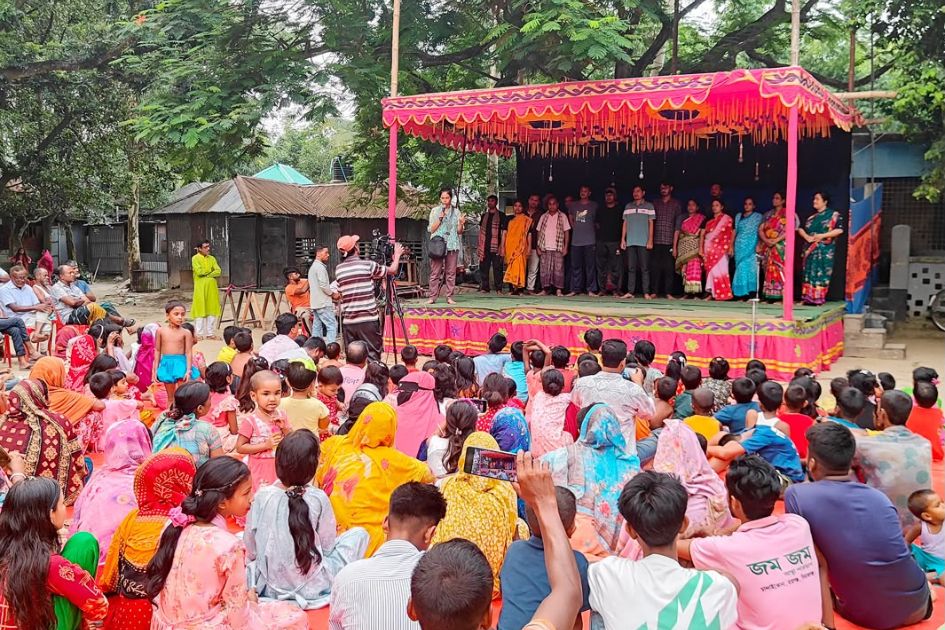
According to the report presented at the hearing, field visits conducted in April across four locations in Bogura and Sirajganj found evidence of pollution affecting river ecosystems and surrounding communities.
Local residents alleged that black, foul-smelling waste from nearby industries had entered the rivers, damaging aquatic life and affecting their ability to use river water for agriculture and daily needs.
They claimed that fish, snails, crabs and other aquatic species had declined significantly in several areas. Some residents also reported health concerns, including skin diseases, breathing difficulties, asthma, headaches and other respiratory problems.
Community members further alleged that industrial emissions had damaged household structures and vegetation in surrounding areas, creating long-term environmental and health concerns.
Young River Activist Highlights Challenges Facing Environmental Defenders
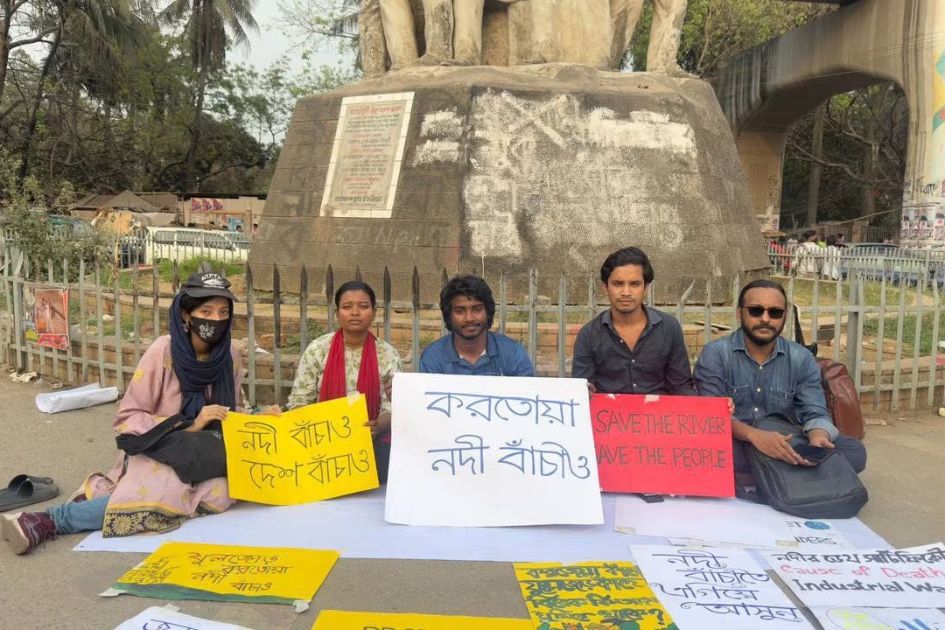
At the hearing, Faysal Biswas, a member of YouthNet Global and a young environmental activist from Sirajganj, highlighted challenges faced by those campaigning for river protection.
“After joining the movement to protect the river, I was targeted with a false extortion case,” he alleged.
Biswas has been involved in campaigns demanding protection of the Phuljhor, Karatoya and Bangali rivers from industrial pollution. He has also participated in efforts to restore local waterways, including the Keshorkhali canal in Sirajganj.
Environmental groups said the case reflects broader concerns faced by environmental defenders worldwide, who often experience pressure, intimidation and legal challenges while advocating for ecosystem protection and community rights.
Rights groups have increasingly raised concerns about legal harassment and pressure faced by environmental defenders, particularly those challenging pollution, resource exploitation and environmental degradation.
Authorities Promise Stronger Monitoring and Restoration Measures
Bogura City Corporation Administrator M.R. Islam Swadhin said protecting the Karatoya and Phuljhor rivers from pollution and illegal occupation was a collective responsibility.
“The Karatoya River flowing through Bogura and the Phuljhor River along the Sherpur border must be protected from illegal occupiers,” he said.
He called for preventing industrial and municipal waste from entering rivers, restoring natural water flow and improving urban waste management systems.
He also said the city corporation would work to remove illegal structures and promote appropriate technologies to prevent industrial waste discharge.
ALRD Executive Director Shamsul Huda stressed that industries must ensure their effluent treatment plants remain operational at all times.
“Regular monitoring is essential, and a dedicated task force should be formed to ensure compliance,” he said.
The Bangladesh Water Development Board informed the hearing that a project worth around Tk 1,100 crore had been approved for the re-excavation of the Karatoya River.
“River Is Our Life, We Want Our River Back”
Farmers and fishers who attended the hearing described how pollution and encroachment have affected their livelihoods and relationship with the rivers.
“River is our life, river is our mother. We want our river back,” said Sirajganj farmer Kabir Hossain.
Participants said the Karatoya and Phuljhor rivers are not only waterways but also sources of livelihood, cultural identity and ecological balance for communities across northern Bangladesh.
In his closing remarks, Khushi Kabir said river destruction through pollution and encroachment could not continue.
“Existing laws must be properly implemented and polluters must be held accountable. Protecting the Karatoya and Phuljhor rivers requires joint action from the government, administration and communities,” she said.
Residents and activists said the fight to restore the Karatoya and Phuljhor rivers is not only about protecting waterways but also about defending the right of communities to clean water, a healthy environment and a sustainable future.




