

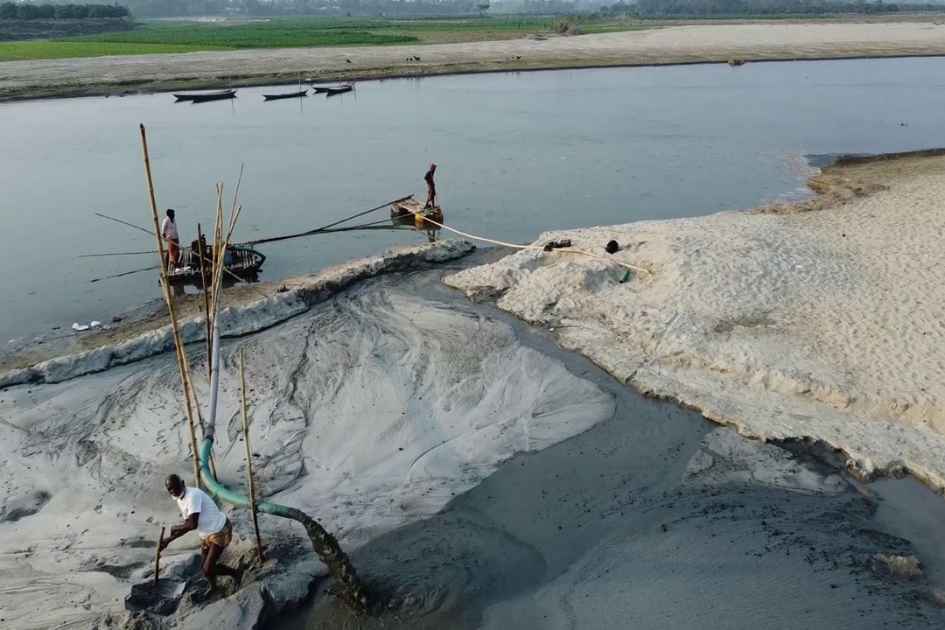



A new UNEP report warns soaring global sand extraction for construction is harming ecosystems, threatening biodiversity and increasing climate risks, particularly for vulnerable coastal and delta regions such as Bangladesh.
The world is consuming sand at a dangerously unsustainable rate, threatening ecosystems, biodiversity and the livelihoods of millions of people, according to a new report released by the United Nations Environment Programme (UNEP).
The report, titled Sand and Sustainability: An Essential Resource for Nature and Development, warns that global demand for sand used in buildings and infrastructure could rise by up to 45 percent by 2060 due to rapid urbanisation, population growth and expanding infrastructure development.
UNEP said around 50 billion tonnes of sand are currently extracted every year, far exceeding the natural rate at which sand is replenished through geological erosion processes that develop over hundreds of thousands of years.
The agency described the widening imbalance as the “sand gap” and cautioned that excessive extraction is accelerating environmental degradation in rivers, deltas, coastlines and marine ecosystems worldwide.
Beyond its role in construction, sand is essential for maintaining ecological balance and supporting biodiversity. Sand ecosystems provide habitats for fish, turtles, birds, crabs and countless other species while also helping protect shorelines from erosion, sea-level rise and storm surges.
The report stressed that sand is vital for food security, water systems, fisheries and tourism, particularly for climate-vulnerable coastal communities.
“Sand is sometimes referred to as the unrecognized hero of development, but its essential role in sustaining the natural services on which we depend is even more overlooked,” said Pascal Peduzzi, Director of UNEP Global Resource Information Database Geneva (UNEP/GRID-Geneva).
“Sand is our first line of defence against sea level rise, storm surges and salinization of coastal aquifers, all hazards exacerbated by climate change,” he added.
The UNEP report introduces the distinction between “dead” and “alive” sand.
Once extracted and transformed into concrete, asphalt or glass, sand becomes “dead” because it is permanently removed from natural ecosystems. In contrast, “alive” sand in rivers, deltas and coastal areas continues to regulate river flows, filter water, prevent coastal erosion and sustain biodiversity.
UNEP warned that demand for both forms of sand is now in direct competition, creating growing pressure between infrastructure development and ecosystem protection.
The report also highlighted findings from UNEP’s Marine Sand Watch initiative, which revealed that nearly half of dredging companies globally are operating within Marine Protected Areas (MPAs), accounting for around 15 percent of total dredged volumes.
UNEP called for stronger environmental governance, transparent extraction permits, effective impact assessments and long-term monitoring to ensure protected marine areas do not become de facto extraction zones.
The report urged governments and industries to fully integrate biodiversity concerns into sand governance and develop national roadmaps for responsible sand management.
Environmental experts say the issue is particularly important for low-lying and climate-vulnerable countries like Bangladesh, where rivers, deltas and coastal ecosystems are already under severe pressure from climate change, erosion and unregulated extraction activities.
“Sand is not just a construction material; it is part of our ecological survival. Unregulated extraction is destroying rivers, wetlands and coastal resilience, especially in climate-vulnerable regions like Bangladesh,” said Sohanur Rahman, Executive Coordinator of YouthNet Global.
Prepared by 27 international experts, the report concludes that early and coordinated action on sand sustainability remains both possible and cost-effective, but failure to act could intensify environmental degradation, supply shortages and social conflict around the world.




