

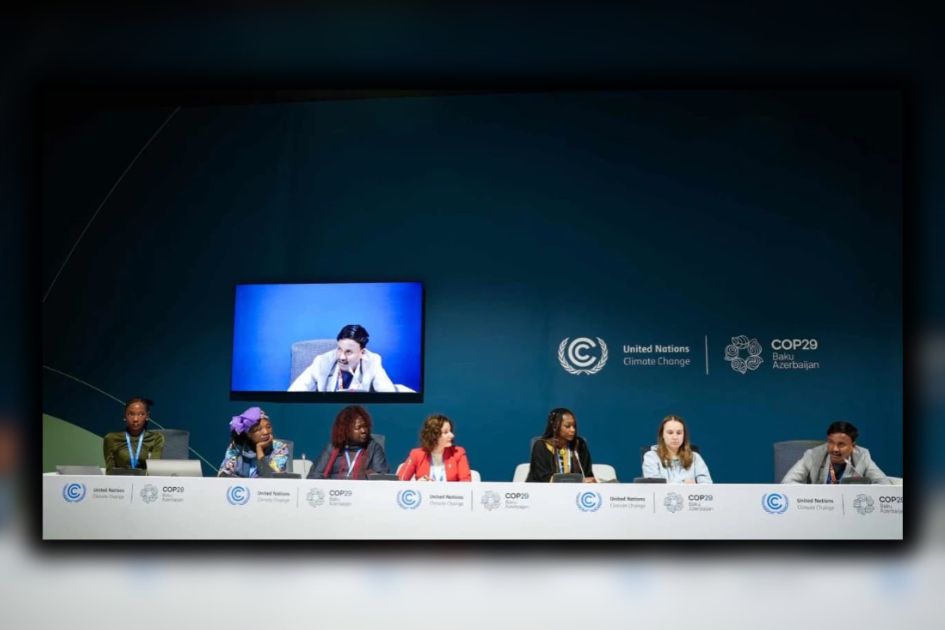



As COP31 approaches, global climate policy is placing greater emphasis on men and boys, linking gender norms, power, care and accountability to a truly just transition.
Ahead of COP31, gender policy is shifting from calling men “allies” to asking what they must change for a truly just transition.
Climate policy can transform energy systems without transforming the power relations around them.
A coal plant can close. A solar industry can grow. New green jobs can emerge. Yet the same old assumptions can remain about who controls land and money, who makes decisions, who provides for the family and who performs unpaid care.
That is the harder transition.
It is why the role of men and boys is becoming a more visible part of the international climate and gender agenda.
For years, climate policy largely framed gender through the disproportionate vulnerability of women and girls, while men were often treated as decision-makers or potential allies. That approach is now evolving. The emerging agenda is beginning to examine men’s roles, behaviours, institutional authority and the expectations attached to masculinity.
A genuinely just transition cannot simply replace fossil fuels with renewable energy while leaving those relationships untouched.
From allies to accountability
The shift has emerged through successive UN climate decisions.
At COP27 in Egypt in 2022, governments reviewed progress on the UNFCCC Gender Action Plan and encouraged Parties and relevant organisations to fully engage men and boys as agents and beneficiaries of change and as strategic partners and allies in advancing gender equality.
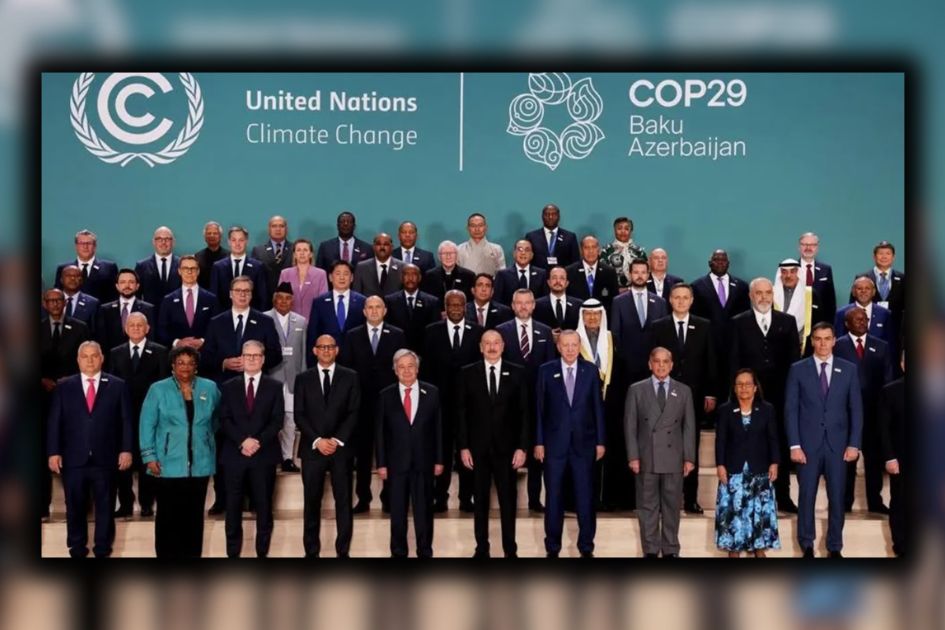
COP29 in Baku in 2024 extended the enhanced Lima Work Programme on Gender for another decade and launched the process for a new Gender Action Plan. It again called for men and boys to be engaged as agents and beneficiaries of change and as strategic partners and allies.
The significance is not simply that men were mentioned.
It is that men and boys were increasingly being positioned as participants in the transformation itself. They can benefit from gender equality, help drive change and must also examine the social and institutional structures in which they operate.
At COP30 in Belém, governments adopted the Gender Action Plan for 2026 to 2034, establishing a nine-year framework with 27 activities and 98 deliverables. It connects gender with climate finance, data, participation, implementation and just transition, while giving greater attention to the role of men and boys in advancing gender equality and climate action.
But the test is no longer whether men appear in international agreements.
It is whether that language changes institutions, budgets, programmes and behaviour.
Why masculinity belongs in the climate transition
This is not an argument that men are inherently responsible for climate change, or that all men benefit equally from existing systems.
Masculinities vary across class, age, geography, culture and livelihood. Men can also experience severe economic and social consequences from climate disruption.
The issue is the gendered distribution of institutional authority and social expectations.
Men remain overrepresented in many institutions governing energy, land, finance, infrastructure and natural resources. That does not mean every man has power. It means that many institutions making decisions about production, investment, land use and resource allocation remain shaped by male-dominated structures.
At household and community level, men may also be expected to act as providers, protectors and decision-makers.
Climate disruption can intensify those expectations.
When crops fail, livelihoods disappear or families are displaced, men can face enormous pressure to provide income and protect households. Women, meanwhile, often absorb additional unpaid care, household responsibilities and risks to safety.
A gender-transformative climate policy has to recognise both realities.
It should not simply ask women to become more resilient or men to become better allies. It should examine how responsibility, care, authority and resources are distributed, and how harmful expectations around masculinity can change.
A transition can change technology without changing social relations. It can create green jobs without changing who has access to them. It can build climate-resilient infrastructure without changing who participates in decisions over land, water and resources.
That would be a technological transition, but not necessarily a just one.
Bangladesh brings the question home
This is where the international debate becomes tangible.
In Bangladesh, climate disruption intersects with agriculture, fisheries, migration, household income, unpaid care, disaster response and local governance. Floods, cyclones, river erosion and salinity can transform livelihoods and household responsibilities almost overnight.
For men expected to provide and protect, the collapse of traditional livelihoods can become a crisis of both income and identity.
For women, the same crisis can mean more unpaid care, greater responsibility for household survival and heightened exposure to safety risks.
Bangladesh’s Climate Change and Gender Action Plan has recognised the importance of engaging men in addressing gender inequality. The next step is to examine more directly how gender norms themselves shape climate vulnerability, adaptation and access to resources.
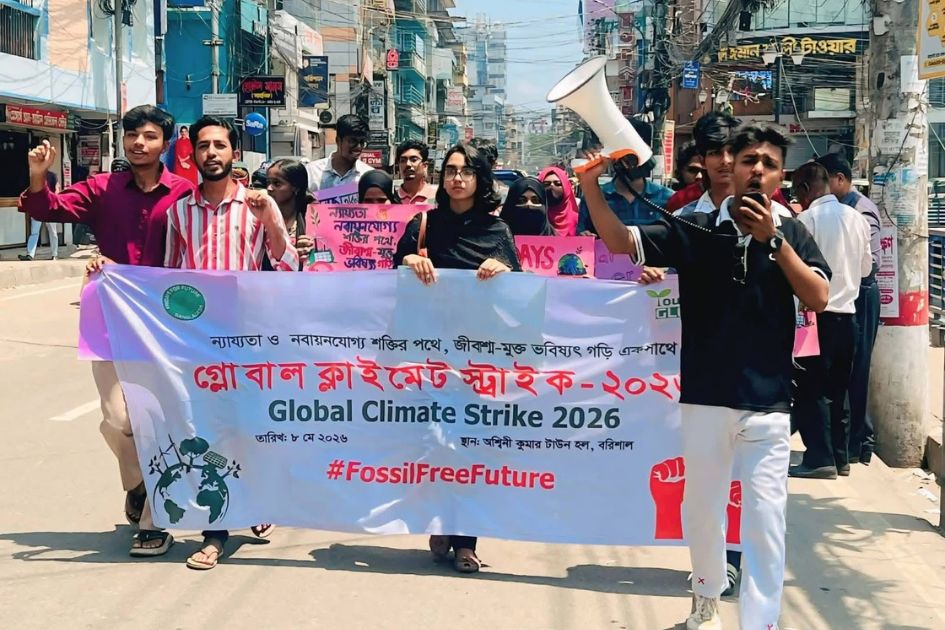
YouthNet Global’s EcoMen initiative offers one practical response.
The initiative engages young men and boys in discussions on gender equality, environmental stewardship and climate justice, including dialogue with policymakers, feminists and women’s rights activists.
Its purpose is not simply to recruit male supporters for women’s empowerment.
It is to create space for men and boys to examine their own roles in care, resource use, environmental stewardship and decision-making, while questioning the social norms that shape those roles. It also brings local knowledge and community experience into the conversation.
For Sohanur Rahman, Executive Coordinator of YouthNet Global and a member of the MenEngage Alliance’s Environment and Climate Justice Working Group, the connection is fundamental.
“The patriarchal norms that perpetuate social inequality are the same ones driving environmental exploitation,” he says.
The point is that gender inequality and environmental exploitation are not separate problems. Both can be reinforced by systems built around hierarchy, control and extraction.
EcoMen takes that argument further. As Rahman puts it, “EcoMen doesn’t just use the entry point of helping women or simply planting trees, it also challenges male power and privilege.”
That makes engaging men a question of power, not simply participation.
Men need space to examine how expectations around being providers, protectors and decision-makers can reinforce unequal access to resources and authority. At the same time, climate policy must recognise that many men are themselves exposed to economic insecurity, dangerous work and social pressure as climate impacts intensify.
A just transition that changes technologies and jobs but leaves these power relations untouched risks reproducing old inequalities inside a new economy.
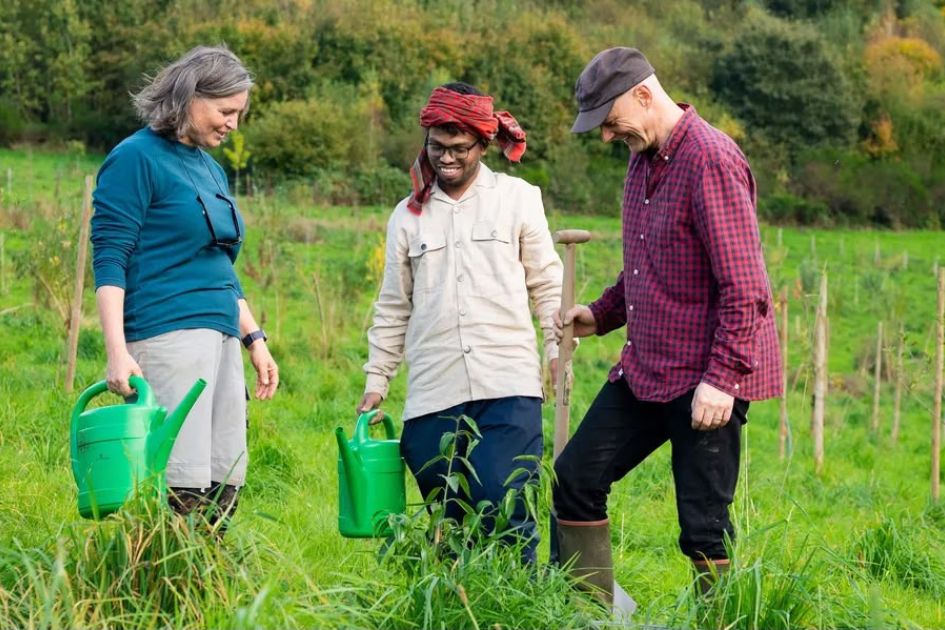
NDC 3.0: turning language into policy
The same shift is beginning to appear in national climate plans.
The UNFCCC’s 2025 synthesis of 64 new NDCs found that 89 per cent included information related to gender, while 80 per cent said gender would be taken into account in implementation. Seventy per cent also considered just transition in preparing their new climate plans.
The figures do not represent all countries. The synthesis covers the 64 NDCs submitted within the reporting period. But it shows how gender and just transition are becoming more embedded in national climate planning.
Some NDC 3.0 processes are also beginning to address men’s and boys’ roles more explicitly.
Tanzania’s NDC 3.0 includes strategies to engage men and boys as allies, promote gender-transformative dialogue and strengthen women’s leadership and participation in climate governance and decision-making. The measures are linked to gender-responsive governance, disaggregated data and climate finance.
Angola’s NDC 3.0 takes a different approach by recognising that climate change affects men and boys differently according to their social and economic roles. It identifies risks including boys leaving school during drought-related livestock migration and heightened occupational risks for men working in fishing, mining and construction.
These examples do not represent a common model. They show an emerging recognition that gender-responsive climate policy must consider not only women’s structural disadvantages but also the gendered roles, expectations and risks affecting men and boys.
Bangladesh’s NDC 3.0 incorporates Gender Equality, Disability and Social Inclusion principles and places just transition at the centre of its low-carbon development pathway. It identifies women, youth and vulnerable workers among those who need protection and equitable access to the benefits of the transition.
The next step is to connect that commitment more explicitly with positive masculinities, care, environmental stewardship and equitable participation in decision-making.
The Rio Convention connection
The argument extends beyond the UN climate process.
The UNFCCC is one of three Rio Conventions that emerged from the 1992 Earth Summit, alongside the Convention on Biological Diversity and the United Nations Convention to Combat Desertification.
Their mandates are distinct, but their implementation increasingly meets in the same places: farms, forests, wetlands, rivers, coastlines and communities whose livelihoods depend on healthy ecosystems.
People do not experience climate change, biodiversity loss and land degradation as separate policy categories.
A farming household can face drought, declining soil fertility, biodiversity loss and falling income at the same time. A coastal community can confront salinity, storms, ecosystem degradation and livelihood insecurity simultaneously.
Gender norms influence who manages natural resources, who performs unpaid care, whose knowledge is recognised and who participates in environmental decisions.
The Belém Gender Action Plan calls for greater coherence between the UNFCCC and the Rio Conventions. CBD COP17, to be held in Yerevan, Armenia, from October 19 to 30, 2026, will be an important moment for advancing implementation of the Kunming-Montreal Global Biodiversity Framework.
For Bangladesh and other climate-vulnerable countries, greater coherence among the three conventions is not institutional housekeeping. Adaptation, ecosystem restoration, biodiversity conservation, land management and just transition increasingly overlap on the ground.
The same communities are implementing all of them.
From backlash to transformation
The political environment, however, is increasingly contested.
Resistance to gender equality initiatives often draws on traditional ideas about family roles, authority, masculinity and social order. That resistance can become particularly strong when gender-transformative policies begin to challenge who controls resources, who performs care and who participates in decision-making.
That is why gender-transformative climate policy is ultimately about changing relationships of power.
Inviting men into a climate programme is relatively easy.
Asking them to examine care responsibilities, resource use, privilege, decision-making and harmful expectations of masculinity is considerably harder.
Success therefore cannot be measured only by the number of men attending workshops or appearing in policy documents. It must also be measured through changes in institutional practices, access to resources, care responsibilities and decision-making.
What COP31 must deliver
COP31 in Antalya, Türkiye, from November 9 to 20, 2026, will provide an early test of whether the Belém Gender Action Plan can move from framework to implementation.
A high-level event is mandated on how Parties engage women and girls, men and boys as agents of change for socially just transitions. The process also includes an in-session dialogue on Gender Day.
But another round of speeches will not be enough.
Governments should arrive with evidence.
They should be able to show how men and boys are being engaged beyond symbolic participation, how women’s leadership and decision-making are being strengthened, how gender-responsive finance is reaching national and local programmes and whether climate policies are changing institutional practices.
They should also be able to demonstrate measurable results.
Who is gaining access to green jobs? Who controls resources? Who carries unpaid care responsibilities? Who participates in decision-making? Who benefits from climate finance? What has changed in the institutions that shape these outcomes?
The same accountability should extend across the Rio Conventions.
Climate, biodiversity and land degradation are interconnected in the landscapes where people actually live. A farmer, fisher or coastal household does not experience these challenges according to the institutional boundaries of international conventions.
When the green transition changes society
The Belém Gender Action Plan gives the UNFCCC a framework. NDC 3.0 takes the conversation into national implementation. Bangladesh provides a lived test of whether these ideas can reach communities. CBD COP17 offers another opportunity to connect gender, biodiversity, livelihoods and ecosystem stewardship across the Rio Convention system.
The next phase should be about delivery.
That means predictable finance reaching national programmes, local organisations and affected communities. It means better gender- and age-disaggregated data. It means measuring changes in care responsibilities, access to resources, participation in decision-making and institutional practices.
It means protecting women environmental defenders and recognising local and Indigenous knowledge as knowledge, not merely consultation.
It also means engaging men and boys in ways that go beyond symbolic participation.
Men should be part of changing harmful norms around care, power, resource use and environmental stewardship. Women and marginalised groups must simultaneously have greater space, safety, authority and access to resources.
For Bangladesh, this is not simply an international policy debate. It is a question of what kind of society emerges from climate disruption and the transition that follows.
The green economy should not reproduce the inequalities of the old economy.
A climate transition should not only change what society produces and consumes. It should change how power, responsibility and care are shared.
The question is no longer simply whether men and boys have a seat at the table.
It is what happens when “engaging men” stops meaning inviting them into the room and starts meaning asking them to change what they do once they are there.




