

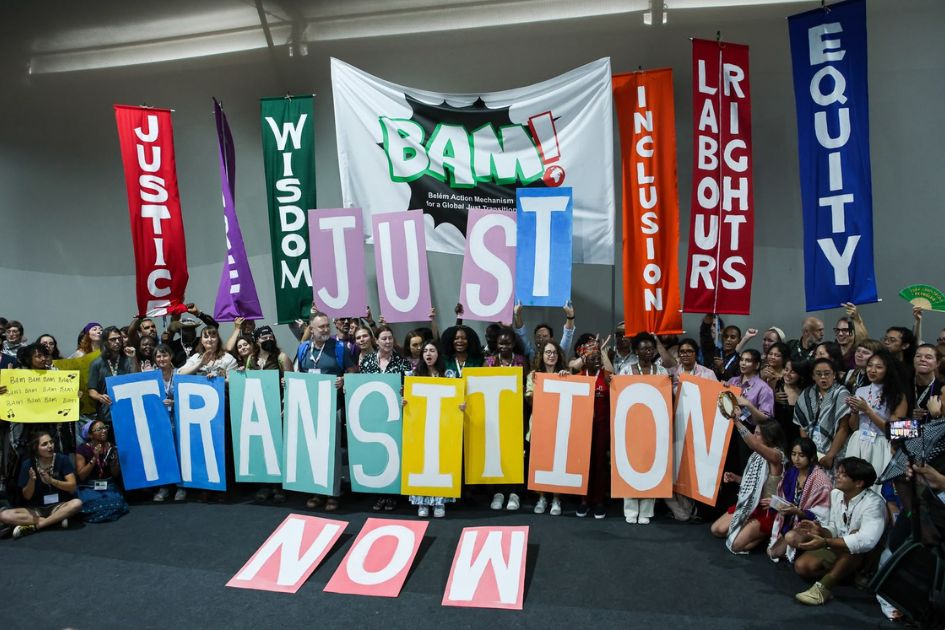



The Baku dialogue highlighted how finance, technology, skills and trade rules will shape whether developing economies can compete in the emerging low-carbon industrial economy.
High capital costs, technology gaps and tougher green trade rules threaten to widen the competitiveness divide as countries race to decarbonise industry.
Developing countries risk being pushed to the margins of the emerging green industrial economy unless they gain better access to affordable finance, technology and global markets, participants warned as a two-day UN climate dialogue concluded here on Friday.
The Sixth Dialogue under the UAE Just Transition Work Programme, held alongside the Fourth UNFCCC Climate Week on Sept 10-11, examined how countries can cut industrial emissions while protecting jobs, competitiveness and development.
At the heart of the discussions was a growing concern that the global green industrial shift could create a new economic divide. Countries with deep financial resources, advanced technology and strong industrial capacity are better positioned to capture investment and emerging markets, while developing economies often face the much higher cost of transforming existing industries.
A new competitiveness divide
For developing economies, the challenge is twofold: they must clean up emissions-intensive industries that remain vital to jobs, exports and public revenues while simultaneously investing in the technologies, infrastructure and skills needed for the industries of tomorrow.
High borrowing costs, debt pressures and limited fiscal space can make that transformation prohibitively expensive. Even technically sound green projects may struggle to attract investment when the cost of capital is too high or when governments lack the resources to provide incentives and supporting infrastructure.
Participants stressed that technology alone cannot deliver a just industrial transformation. Affordable finance, technology transfer, capacity building, worker training, trade and investment must advance together.
International market rules are also becoming increasingly important. New environmental standards and carbon-related requirements could raise the cost of accessing major export markets for producers that lack the resources to upgrade quickly.
At the same time, carbon leakage could shift emissions-intensive production to countries with weaker climate regulations rather than reducing emissions globally.
The result could be a new form of industrial inequality: countries unable to finance the green shift risk losing export markets just as investment and demand move towards cleaner production.
Bangladesh’s garment industry under pressure
Bangladesh’s garment and textile industry illustrates the dilemma.
The sector is central to the country’s export economy and provides livelihoods for millions of workers. But manufacturers face growing pressure to reduce emissions, improve energy efficiency, cut waste and meet increasingly demanding environmental expectations in international markets.
Going green, however, is not simply a matter of installing cleaner machinery.
Factories need substantial capital for energy-efficient equipment, renewable energy and cleaner production systems. Workers need new skills as production technologies change. Smaller manufacturers face particular difficulties because they often have less access to finance, technology and technical expertise.
The transition therefore carries both an environmental and an economic risk. If Bangladeshi producers cannot afford to meet emerging green standards, they could lose competitiveness in markets that are increasingly rewarding lower-carbon production.
A just transformation in the sector will require investment in clean energy and production alongside worker protection, reskilling, decent employment, social dialogue and targeted support for smaller manufacturers.
Bangladesh consequently captures a central tension in the Baku discussions: developing countries must modernise their industries fast enough to remain competitive, but they cannot simply absorb the full cost of a transformation driven by global market expectations.
South Africa’s steel test case
South Africa’s iron and steel industry presents a different but equally important challenge.
The sector is emissions-intensive, yet it remains strategically important for employment, industrial supply chains and economic development. Moving towards green steel could eventually strengthen South Africa’s position in emerging low-carbon markets, but reaching that point requires major investment in clean energy, technology, infrastructure and production capacity.
The transition therefore cannot be separated from industrial policy.
Governments need to manage emissions reductions in existing industries while creating conditions for new green industries, markets and decent jobs to emerge. Without adequate finance and international cooperation, the cost of decarbonisation could weaken industries before alternative economic opportunities are ready to replace them.
The experiences of Bangladesh and South Africa show that industrial decarbonisation is not a single technological exercise. It is an economic transformation affecting workers, companies, supply chains, trade and national development strategies.
Policy and money matter as much as technology
The Baku dialogue also highlighted the importance of strong domestic laws, predictable policies and capable institutions.
National climate commitments will have limited impact if countries lack the policies and investment conditions required to translate them into industrial change.
Participants emphasised the need to connect NDC implementation with employment, industrial competitiveness and broader development objectives. This means climate policy must work alongside industrial, trade, energy, labour and investment policies rather than operating in isolation.
Technology and innovation remain essential, but they cannot overcome structural financial barriers on their own.
Access to affordable international finance, skills, infrastructure, technology and markets will determine which countries can turn the green shift into an economic opportunity and which are forced to bear the costs without capturing its benefits.
The emerging Just Transition Mechanism could provide an important platform for strengthening international cooperation around these challenges.
A test for the global climate transition
The Baku discussions exposed a broader fault line in the global climate process.
Developing countries are being asked to modernise emissions-intensive industries while competing for investment, technology and access to rapidly expanding green markets. If they carry a disproportionate share of the financial and social costs, while richer economies capture much of the investment, technology and market value created by the transition, existing economic inequalities could deepen.
That is why a just industrial transformation must go beyond reducing emissions.
It must enable developing economies to build competitive industries, protect workers, create decent jobs, strengthen domestic value chains and move into emerging green markets.
For the Global South, the measure of success will be whether climate action allows developing economies to participate in and benefit from the new low-carbon industrial economy, rather than leaving them to finance the transition while others capture its biggest opportunities.
A truly just green industrial transition must therefore cut emissions while expanding competitiveness, decent work and shared prosperity across the global economy.




