

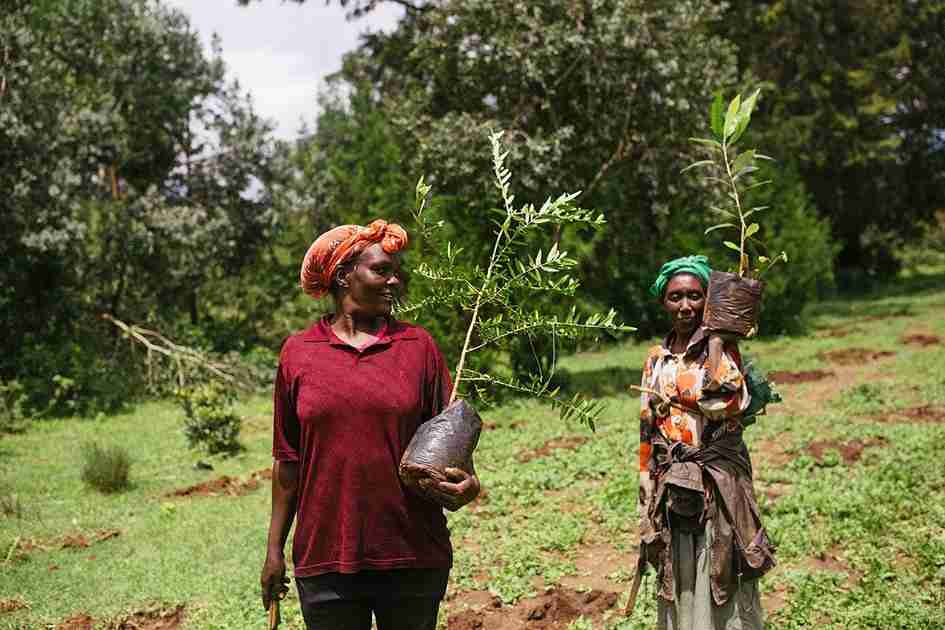



Kenya’s ambitious tree plantin drive is boosting cover, but experts warn natural forests continue to decline, exposing gaps in protection, enforcement and long-term ecological sustainability despite restoration gains.
Even as Kenya accelerates ambitious tree planting campaigns, a stark reality is emerging: the country is still losing its natural forests.
Marking the International Day of Forests, new analysis highlights a growing contradiction. Tree cover is increasing, but indigenous forests, vital for biodiversity and water systems, continue to degrade.
Over the past two decades, Kenya has made notable gains. Forest cover has reached about 8.8 percent, while overall tree cover has surpassed 12 percent, bringing the country closer to its constitutional target.
These gains are driven by strong public campaigns, including a national plan to plant 15 billion trees alongside community-led restoration efforts that have expanded tree planting into schools, farms and local landscapes.
But experts warn that rising tree numbers do not necessarily mean healthier forests.
“Tree cover is not the same as forest quality,” said Job Mwangi, an Advocate of the High Court of Kenya and Advocacy Manager at the Green Belt Movement, noting that plantation forests and farm forestry are increasing while natural forests continue to shrink.
Historically, Kenya lost around 33,000 hectares of forest each year between 1990 and 2015. Although the rate has slowed, thousands of hectares continue to disappear annually, with an additional 22,000 hectares converted to other land uses every year.
Mwangi said the problem lies not just in deforestation, but in how forests are treated.
Kenya continues to view forests as land reserves for infrastructure and development projects. Proposed road construction through sensitive ecosystems like the Aberdare Range and plans affecting urban forests such as Karura have raised alarm.
Equally controversial are plans to clear parts of Ngong Road Forest to build a road linking Bomas of Kenya to a new stadium ahead of the 2027 Africa Cup of Nations.
“These small losses add up. They gradually destroy already fragile ecosystems,” Mwangi said.
Despite having strong forest protection laws, enforcement remains inconsistent, often weakened by political and economic pressures. Illegal logging, charcoal production and encroachment continue in key forest areas.
At the same time, rising demand for land, timber and energy is placing additional strain on forests, with the country facing a significant wood supply deficit.
Mwangi stressed that Kenya must shift its focus from simply planting trees to protecting existing forests.
“Planting trees is visible and popular, but protecting forests requires tougher decisions, long-term commitment and strict enforcement,” he said.
Calls are growing for a strict ban on excising protected forests, especially critical water towers and urban green spaces.
As Kenya pushes forward with its restoration agenda, the message is clear: without stronger protection, today’s gains could easily be reversed.




