




Record earnings at TotalEnergies have renewed scrutiny of major fossil fuel projects, corporate accountability and the growing international debate over climate justice, community rights and financing a fair energy transition.
As households face rising energy costs and climate-vulnerable communities experience worsening climate impacts, TotalEnergies‘ latest multi-billion-dollar profit report has intensified debate over who benefits from the fossil fuel economy and who bears its environmental and social costs.
French energy giant TotalEnergies announced a net profit of $5.4 billion for the second quarter of 2026, more than double that of the same period in 2025. The company described the period as its strongest quarter in nearly three years, supported by higher oil prices, stronger refining margins and increased petroleum trading activity.
The company’s adjusted net income rose 68% year on year to $6.03 billion, compared with $3.58 billion a year earlier. Sales increased to $61.77 billion from $49.63 billion, while cash flow excluding working capital climbed 48% to $9.8 billion.
Net income attributable to shareholders reached $5.44 billion, while first-half adjusted net income increased 47% to $11.42 billion.
TotalEnergies’ refining and chemicals segment recorded one of its strongest performances, with adjusted operating income rising to $1.8 billion from $389 million a year earlier, driven by higher refining and petrochemical margins as well as strong trading activity.
The company’s European refining margin indicator increased to $13.50 per barrel, compared with $4.70 previously.
Its exploration and production business also performed strongly, with adjusted net operating income rising 64% to $3.23 billion as average realized liquids prices reached $91.60 per barrel.
However, oil and gas production declined by 4% to 2.395 million barrels of oil equivalent per day due to disruptions linked to the ongoing Middle East conflict. TotalEnergies estimated that the crisis reduced quarterly production by around 210,000 barrels of oil equivalent per day, including shutdowns in Qatar and export challenges through the Strait of Hormuz.
Excluding these disruptions, the company said production grew by more than 4%, supported by projects in Brazil, the United States, Angola and Libya.
The company’s integrated LNG business recorded a 22% decline in adjusted operating income to $807 million due to weaker gas trading performance and lower production in Qatar. Integrated Power profit declined 7% to $533 million, despite a 28% increase in net electricity production to 14.8 terawatt-hours.
TotalEnergies maintained its 2026 investment target at $15 billion after investing $7.93 billion during the first half of the year. The company’s board approved a second interim dividend of €0.90 per share, representing a 5.9% year-on-year increase, and authorized up to $1.5 billion in share buybacks for the third quarter.
The company expects energy prices to remain elevated, with oil prices staying above $80 per barrel amid uncertainty surrounding access through the Strait of Hormuz. It also forecast European gas prices at $16-20 per million British thermal units and average LNG selling prices above $11.50.
EACOP: Africa’s longest crude oil pipeline under scrutiny
The strong financial performance has drawn renewed attention to TotalEnergies’ role in the East African Crude Oil Pipeline (EACOP), one of Africa’s largest fossil fuel infrastructure projects currently under development.
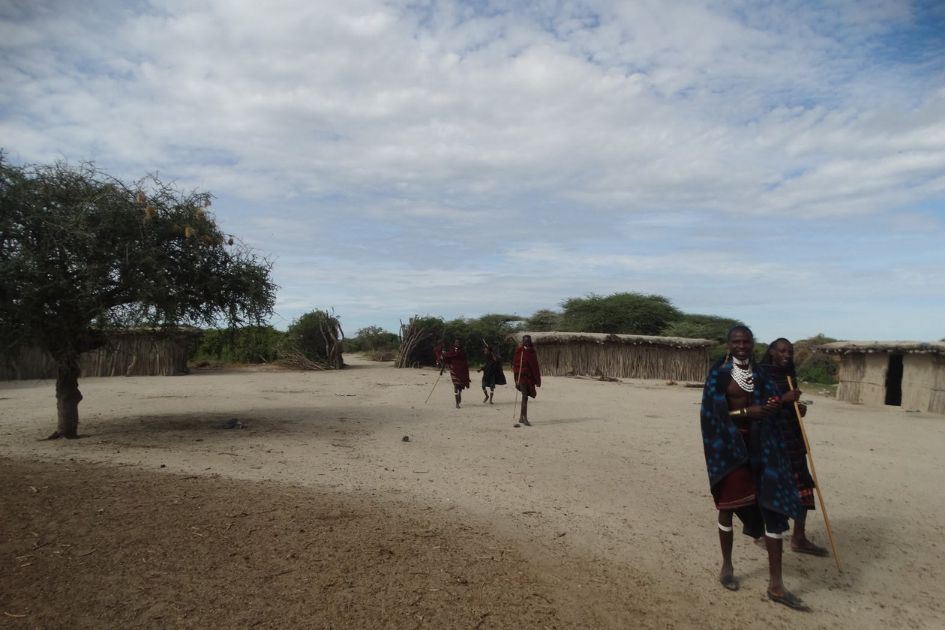
EACOP, described by environmental campaigners as a major fossil fuel expansion project, has faced criticism over land acquisition, biodiversity risks, climate impacts and concerns raised by affected communities.
The 1,443-kilometre heated pipeline is designed to transport crude oil from Uganda’s Lake Albert oilfields to the marine export terminal at the Port of Tanga in Tanzania.
The project, estimated to cost around $5 billion, is designed to transport Uganda’s waxy crude oil through a temperature-controlled system. It stretches approximately 296 kilometres through Uganda and 1,147 kilometres through Tanzania, crossing multiple districts and regions.
The pipeline is operated through a joint venture involving TotalEnergies, which holds a 62% stake, alongside Uganda National Oil Company with 15%, Tanzania Petroleum Development Corporation with 15% and China’s CNOOC with 8%.
The project is expected to have the capacity to transport up to 230,000 barrels of crude oil per day, with commercial exports projected to begin in 2026.
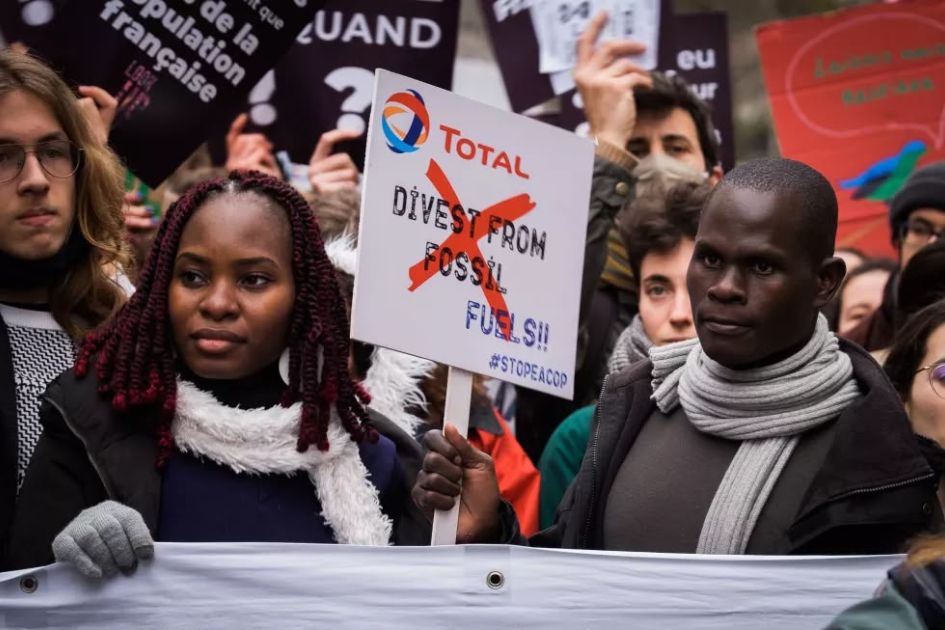
Supporters argue that EACOP could generate government revenue, employment opportunities and economic development for Uganda and Tanzania.
However, local communities, environmental groups and human rights organizations have raised concerns over displacement, compensation processes, ecosystem risks and impacts on cultural heritage.

— Kayinga Muddu Yisito, Network Coordinator, Community Transformation Foundation Network (COTFONE), Uganda. He advocates for the rights of Project-Affected Persons (PAPs) impacted by the East African Crude Oil Pipeline (EACOP). Photo: GreenFaith X handle
Some communities along the pipeline route have reported that compensation arrangements have not adequately addressed their losses. Indigenous communities in Uganda and Tanzania have also raised concerns that ancestral lands and burial sites are being disturbed during construction, with some families saying financial compensation is insufficient to relocate graves and preserve cultural traditions.
Who benefits and who pays?
The debate surrounding TotalEnergies’ profits reflects a wider global discussion about inequality in the fossil fuel economy.
Critics argue that while energy companies continue to generate extraordinary profits during periods of market instability, ordinary people often experience the consequences through higher transportation costs, electricity bills, food prices and climate-related disasters.
The issue is not only about corporate earnings, but also about how the economic benefits and environmental costs of fossil fuel dependence are distributed.
Climate-vulnerable countries have increasingly called for stronger responsibility from major fossil fuel producers, arguing that those who have contributed significantly to global emissions should provide greater support for climate adaptation, loss and damage and a fair transition to clean energy.
The challenge of a fair energy transition
Energy experts argue that moving away from fossil fuels must also address energy security, affordability and access, especially in developing economies.
A just transition requires investment in renewable energy, green jobs, resilient infrastructure and technologies that can support economic development while reducing environmental harm.
For many developing countries, the challenge is balancing immediate energy needs with long-term climate commitments.
Global tax debate and fossil fuel responsibility
The debate is gaining momentum as governments continue negotiations under the United Nations framework for a global tax convention.
Climate justice advocates are calling for international tax systems that ensure major corporations, particularly highly profitable fossil fuel companies, contribute fairly to addressing the climate crisis.
They argue that record profits from fossil fuel production should not exist alongside rising living costs, growing climate vulnerability and communities facing displacement from energy projects.
The principle of “polluter pays” has become central to these discussions, with advocates arguing that those who have gained the most from fossil fuel extraction should contribute more toward addressing its social and environmental consequences.
As countries negotiate new approaches to global taxation, the central question remains: Can the world achieve a fair energy transition while allowing those who have benefited most from fossil fuels to avoid responsibility for the costs associated with climate change?
For climate-affected communities, economic success cannot be measured only by corporate profits, but also by whether development protects people, ecosystems and future generations.




