

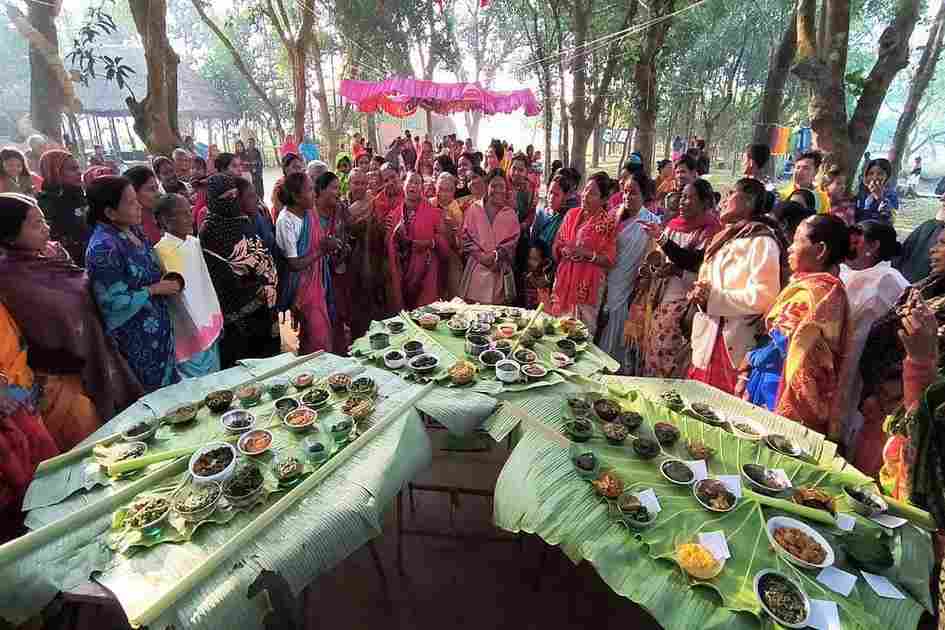

Women in Sonapatila, Thakurgaon, revive the Shak Pitari winter festival, showcasing 80+ wild greens to promote traditional food knowledge, nutrition awareness, biodiversity conservation and community ties.
On a chilly winter morning, women of Sonapatila village gather by the local pond, carrying colorful bowls and sacks filled with freshly foraged greens. They have come to participate in the annual “Shak Pitari” festival, a celebration of wild vegetables that were once central to Bengali meals.
The Shak Pitari festival highlights the importance of preserving traditional foods, local knowledge and sustainable practices. It reminds the world that small communities hold valuable lessons in health, culture and environmental stewardship, far beyond this village in northern Bangladesh.
Organized by the local NGO Gidri Bauli with support from the British Council, the festival encourages women to collect naturally growing greens from fields, ponds and thickets. These are cooked, arranged on banana leaves and displayed in an open-air exhibition. The event blends cultural heritage, nutrition education and community engagement, attracting participants from the village and nearby areas.
This year, over 80 varieties of greens were showcased, including lesser-known species such as olshak (amaranth), beeto, kalekasunde, nimpatta and helencha. Traditionally, these greens were consumed at the end of the monsoon and during seasonal changes to prevent illness, reflecting centuries-old Ayurvedic knowledge. Many varieties were collected from uncultivated areas, highlighting the importance of preserving local biodiversity.
Children also participated by painting colorful illustrations of the greens and labeling them with their nutritional and medicinal benefits. “We used the greens around us to make these paintings,” said Puja Barman, a sixth-grade student. “It helps people understand their importance and health benefits.”
Women from neighboring villages brought their own recipes. Lipi Rani from Boithpara village explained, “Shak used to be the first dish in Bengali lunches, especially for guests. Over time, city life has distanced people from these greens. This festival revives the tradition and reconnects us with our roots.”
After the exhibition, villagers sat on straw mats along the pond to share hot rice with the prepared greens. Elderly participant Kulsuma Begum said, “Today we ate sixteen types of greens with lentils and rice. It was delicious.” The communal meal brought together people of all ages and religions, reinforcing social bonds and shared cultural identity.
The festival also features music, recitations and performances highlighting the cultural significance of each green. It offers a platform for villagers to educate younger generations about the health benefits and culinary uses of these plants, ensuring the knowledge is passed down.
Salma Jamal, Research and Planning Director at Gidri Bauli said, “The festival began four years ago to reconnect the community with naturally growing greens disappearing due to herbicide use. Each year participation grows and the festival has become a platform for celebrating culture, nutrition and biodiversity.”




