

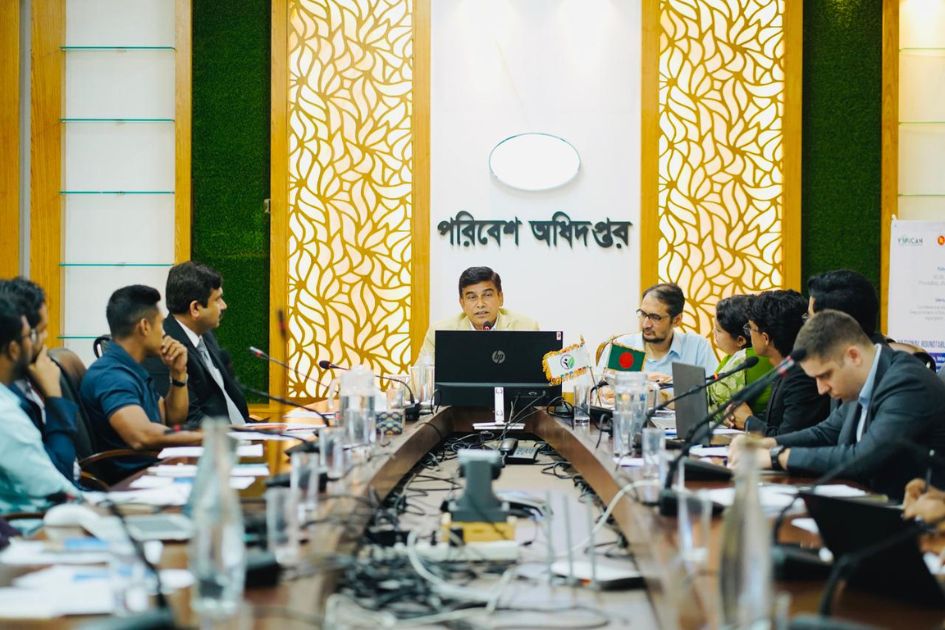



State Minister Forhad Hossain Azad says work on the Teesta Master Plan will begin soon, highlighting climate resilience, water security and integrated policy action at a national climate roundtable in Dhaka.
The government will begin implementing the long-awaited Teesta Master Plan in the near future, State Minister for Water Resources Forhad Hossain Azad MP said on Thursday, emphasizing the need for integrated action to strengthen climate resilience, ensure water security and advance sustainable development in Bangladesh.
He made the remarks while addressing the National Roundtable on Climate Resilience, Water Security and Sustainable Development in Bangladesh: Policy Priorities, Climate Finance and Future Roadmap, held at the Department of Environment auditorium in Agargaon, Dhaka.
The roundtable was organized by the Young Climate Action Network (YOUCAN) in collaboration with the Department of Environment, with support from the Ministry of Water Resources and in partnership with Nirapad Alliance.
Speaking as the chief guest, Forhad Hossain Azad MP said Bangladesh has established itself as a leading voice on climate action at the global level. However, he noted that the country continues to face significant challenges related to water security, river management, climate adaptation and disaster risk reduction.
He said the government is prioritizing river restoration, canal re-excavation, expanding access to safe drinking water and promoting climate-resilient water management systems to address emerging environmental challenges and safeguard future generations.
The state minister also highlighted the importance of the Farakka Agreement and discussed ongoing progress on the Padma Barrage and Teesta projects. Reaffirming the ministry’s commitment to addressing climate challenges, he said sustainable water resource management remains a key national priority.
Addressing the event, Mirza Shawkat Ali, Director of the Department of Environment, said Bangladesh is moving forward with the implementation of its National Adaptation Plan (NAP) and Nationally Determined Contributions (NDCs). He stressed the need for stronger coordination among government ministries, institutions, development partners and other stakeholders to ensure the effective implementation of climate commitments.
Mirza Shawkat Ali also emphasized the importance of science-based planning, evidence-driven policymaking and strengthening local government institutions to enhance climate resilience and environmental governance across the country.
Speaking on behalf of the organizers, Yudhishtir Chandra Biswas, Founder and Executive Director of the Young Climate Action Network (YOUCAN), underscored the importance of ensuring meaningful youth participation in climate-related decision-making processes.
He said young people are among those most affected by climate change and must be recognized as active partners in shaping solutions. He called for greater collaboration among government institutions, development partners, civil society organizations, researchers and youth leaders to accelerate progress on climate resilience, water security and sustainable development.
The roundtable brought together senior government officials, representatives from United Nations agencies, development partners, researchers, environmental experts, media professionals, civil society representatives and youth climate leaders from across Bangladesh.
Discussions focused on the evolving climate risk landscape in Bangladesh, including water scarcity, declining groundwater levels, increasing salinity intrusion in coastal areas, climate finance challenges and disaster risk reduction. Participants also highlighted the importance of strengthening early warning systems and expanding local adaptation initiatives.
Speakers noted that although Bangladesh contributes only a minimal share of global greenhouse gas emissions, it remains one of the countries most vulnerable to climate change. With a significant proportion of the population living in climate risk-prone areas, participants stressed the urgent need to strengthen adaptation measures, increase climate finance flows and prioritize the sustainable management of water resources.
The roundtable concluded with a call for stronger inter-ministerial coordination, enhanced policy coherence, improved climate finance effectiveness and accelerated implementation of climate adaptation measures. Participants also emphasized the importance of a unified and integrated policy framework to strengthen climate resilience and water security nationwide.
Organizers announced that the key recommendations emerging from the dialogue will be compiled into a Policy Consensus Statement, which will be submitted to policymakers, development partners and relevant stakeholders to help inform future climate and water governance initiatives in Bangladesh.




