

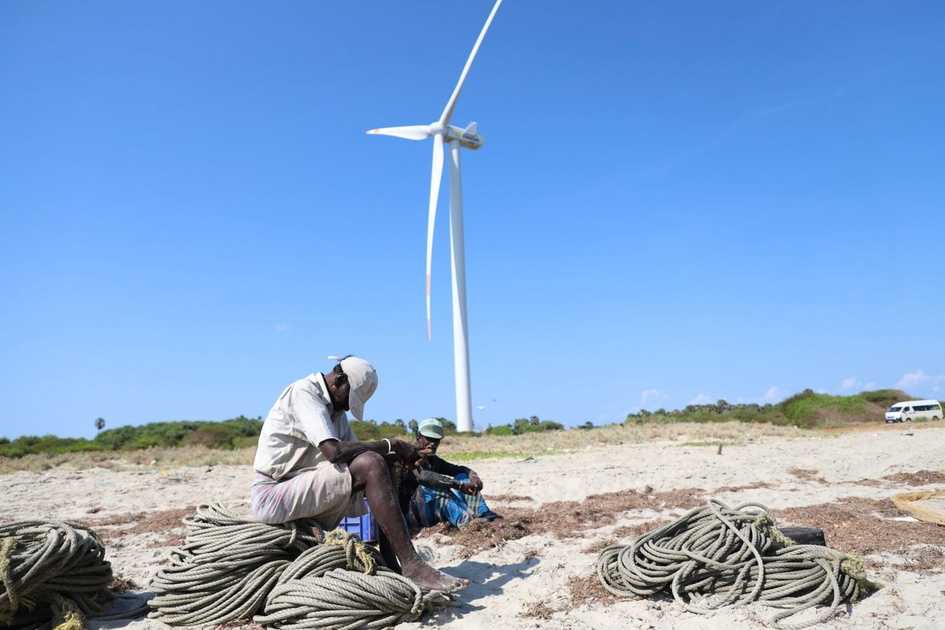



Sri Lanka weighs wind energy expansion against ecological risks in Mannar as conservationists warn of bird impacts while courts restore protection for vital mangrove ecosystems and coastal fishing communities livelihoods.
Sri Lanka’s efforts to expand renewable energy and protect its natural ecosystems are under scrutiny as the newly commissioned 50-megawatt wind power project on Mannar Island raises environmental concerns while recent legal action has led to the reinstatement of protection for a major mangrove reserve. Both developments illustrate the delicate balance between sustainable development, biodiversity conservation and community well-being.
Environmental Concerns
“The Mannar wind farm sits in one of our most sensitive ecological zones and its impact on migratory birds could be significant,” said Anura Perera, spokesperson for the Wildlife and Nature Protection Society of Sri Lanka. “We urge the government to ensure all environmental safeguards are fully implemented.”
Mannar lies along the Central Asian Flyway, a major migratory bird corridor and is home to protected areas including the Vankalai Sanctuary, Vedithalativu Nature Reserve and Adam’s Bridge Marine National Park. WNPS has noted that some turbines were installed in zones considered high risk for bird populations and argued that the project lacked legally required approvals under the National Environmental Act and the Coast Conservation and Coastal Resource Management Act. The society also warned of increased flooding risks affecting local fishing communities.
Renewable Energy Ambitions
“The Mannar wind farm is a key step toward Sri Lanka’s net-zero carbon goal,” said Minister of Energy Kumara Jayakody. “It will strengthen renewable energy capacity while providing tangible benefits to local communities.”
Developed by Hayleys Fentons Limited, the wind farm is scheduled for completion in March 2027 and is expected to generate 207 million kilowatt-hours annually. Mannar has long been recognized as a high-potential hub for wind energy. A similar 250-megawatt project proposed by India’s Adani Group was abandoned following local opposition, prompting debates over whether political considerations influenced environmental objections.
Just Transition Considerations
Experts emphasize the need for a Just Transition to ensure clean energy projects benefit local communities. “Renewable energy should not come at the cost of livelihoods or biodiversity,” said Dr. Mala Amarasinghe, a senior academic at the University of Kelaniya. “In Mannar, it is critical to protect fishing communities, reduce flood risks and monitor wildlife impacts as part of the transition to low-carbon energy.”
Global Context and Mitigation Strategies
Countries worldwide have implemented strategies to minimize environmental impact while advancing wind energy. Norway has reduced bird fatalities by 70 percent through painting one rotor blade black and studies in the United States show wind turbines cause far fewer bird deaths per unit of electricity than fossil fuel projects.
Mangrove Protection and Restoration
In a related development, the government has reinstated legal protection for the Vidattaltivu Nature Reserve following a Supreme Court challenge. “This decision is a significant win for mangrove conservation,” said Nimshi Hirimbura, head of the legal department at the Environmental Foundation Limited. “But we must continue monitoring and protecting these ecosystems.”
Vidattaltivu, one of Sri Lanka’s largest and most ecologically valuable mangrove reserves, was partially de-gazetted in 2024 to allow aquaculture development. Conservation groups challenged the move in court, leading the government to restore full protection. Additional mangrove areas in the Puttalam district, covering approximately 55 hectares, were also declared protected on World Mangrove Day.
“Mangrove restoration must be site-specific,” said Sevvandi Jayakody, professor at Wayamba University. “Planting mangroves in unsuitable areas can harm the ecosystem instead of helping it. Protecting existing mangroves is always the priority.”
Looking Ahead
Together, the Mannar wind farm and mangrove conservation efforts illustrate the challenges Sri Lanka faces in achieving renewable energy targets, protecting biodiversity and ensuring a Just Transition for local communities. “We have an opportunity to show that economic development and ecological protection can go hand in hand,” said Dr. Amarasinghe. Balancing these goals will be crucial for meeting the country’s ambition of 70 percent renewable energy by 2030 and net-zero emissions by 2050.




