




Civil society says procedural disputes, World Bank constraints and limited pledges have left the fund unable to meet $2.8 billion in start-up requests from developing countries seeking climate support.
The Fund for Responding to Loss and Damage ended its ninth board meeting in Manila with key funding approvals delayed, drawing criticism from civil society groups who said the outcome left vulnerable communities without urgent climate finance.
The ninth meeting of the Board of the Fund for Responding to Loss and Damage, or FRLD, was held in Manila from July 8 to 10. In a response issued on July 13, the Fill The Fund campaign said the meeting concluded with a largely procedural package and failed to resolve key operational elements.
The Board deferred the approval of urgent funding requests under the Barbados Implementation Modalities start-up phase, known as BIM, as well as the operationalisation of the Fund’s new Country Support System, or CSS.
A Stage 1 Resource Mobilisation Strategy, RMS 1, was adopted. The Board also decided that the Co-Chairs would present a proposal at the tenth Board Meeting, B10, on the elements and timeline for the FRLD’s first replenishment process, including options for fast-tracking it.
RMS 1 aims to position the FRLD strategically, ensure the rapid conversion of pledges into contribution agreements and encourage new contributions to the Fund.
Civil society groups said the strategy was important to help ensure that the FRLD does not run out of money in 2027. But they warned that, without fundraising targets, clear timelines for the first replenishment or a long-term resource mobilisation strategy, it remains unclear how the Fund will reach the scale required to meet the needs of developing countries, already estimated at no less than USD 400 billion a year.
Under the BIM, 176 funding requests from 119 developing countries had been received by the June 15 deadline, with a combined total request of USD 2.8 billion, more than 11 times the USD 250 million initially allocated to the BIM.
Four funding requests, from Haiti, Jamaica, Nigeria and Côte d’Ivoire, had been prepared for consideration by the Board. But the Board chose not to discuss or consider them in Manila.
The Fill The Fund campaign said this was due, among other things, to a lack of clarity over whether sufficient decisions had been taken to ensure that money could be disbursed in accordance with the trustee and hosting agreement between the FRLD and the World Bank.
The campaign said the situation provided “yet another confirmation” that the FRLD’s set-up and World Bank regulations are seriously curtailing the operationalisation of the Fund and its ability to innovate.
Instead, the Board requested the FRLD Secretariat to present an initial start-up package of proposals for consideration at B10. It also allocated an additional USD 92 million to the BIM financing phase, with a view to testing and refining the approval process.
Civil society groups welcomed the additional money but said the commitment represented the outer limits of what the FRLD can currently afford, given the shortage of money in the FRLD trust fund.
Some initial pledges, made more than three years ago, remain outstanding or have been only partially fulfilled. The USD 342 million now allocated to the BIM will still cover only 12 percent of the USD 2.8 billion requested, funding at most approximately 22 requests at an average of USD 15 million per request.
“As a direct result of the lack of funding, communities on the frontlines of the climate crisis in the Global South will continue to be denied the support they urgently need to respond to loss and damage,” the campaign said.
The Board also decided to move B10 from October to December 15-18, 2026, citing the heavy workload the FRLD Secretariat will face in assessing and approving funding requests. Civil society groups said the move would further delay urgent support from reaching the ground.
The Board also failed to make meaningful progress on several other critical issues, the campaign said.
Project preparation and technical support under the CSS, set at only USD 250,000 per country per year within an initially approved allocation of USD 7.5 million, could not be launched.
The campaign said this was due, among other things, to developed countries’ refusal to agree that the Co-Chairs of the Board should sign agreements for approved CSS funding requests, rather than requiring them to undergo the lengthy fiduciary compliance procedures associated with the World Bank, as trustee, signing such agreements.
It described the issue as another problem arising from the World Bank’s hosting of the FRLD.
Developed countries also pushed for a third funding criterion on complementarity and coherence, which many developing-country Board members fear could severely restrict access to the CSS.
The Board also failed to consider and adopt the active observer policy and guidelines on consultative forums, leaving it unclear how observers will be able to engage meaningfully in the work of the FRLD.
The campaign said the importance of the issue was underscored by the systematic exclusion of observers from discussions, with more than half of the B9 meeting taking place in closed sessions.
In adopting the Board’s 2026 work programme, the Board failed to expedite work to establish small-grants and rapid-access modalities under the FRLD.
Civil society groups said this would delay the Fund’s ability to respond urgently after climate change-intensified extreme events, such as cyclones, and would mean communities have to wait even longer to access support directly from the FRLD.
Many of the setbacks are compounded by ongoing and unresolved challenges surrounding the World Bank’s role as interim host of the FRLD Secretariat and as trustee, the campaign said.
It said civil society had warned that such an arrangement would impede the new Fund’s ability to innovate and accelerate the delivery of finance.
The campaign also said the meaningful participation of civil society was severely restricted throughout the week because of multiple closed-door sessions dealing with purportedly “sensitive” issues, many of them related to the World Bank.
It said the Manila meeting “merely agreed on a process” for addressing critical gaps in the establishment of the FRLD, pushing a large agenda to December even as developing countries repeatedly raised urgent concerns about the severe lack of funding, not only for immediate start-up requests but also for addressing the broader loss and damage finance gap.
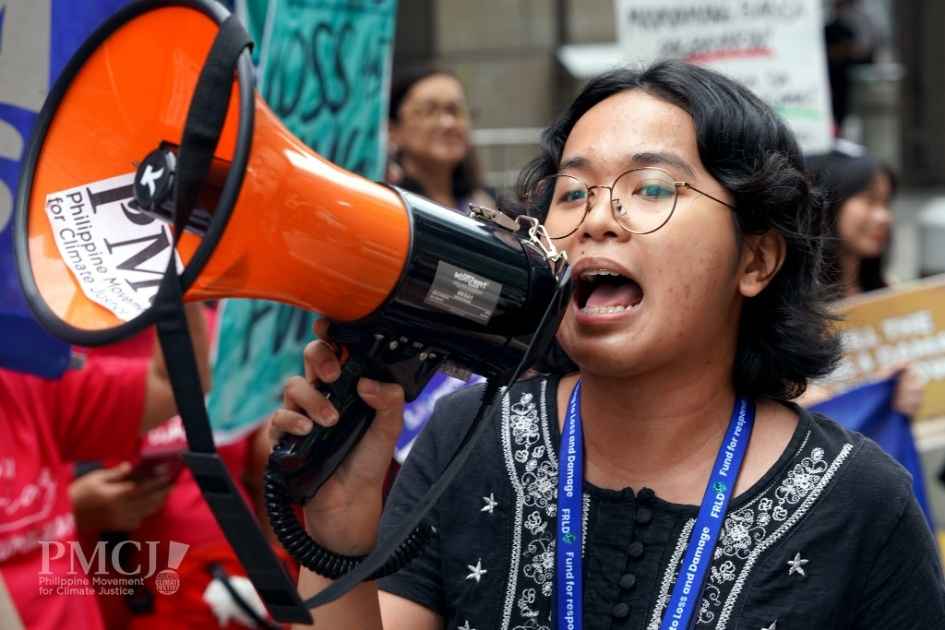
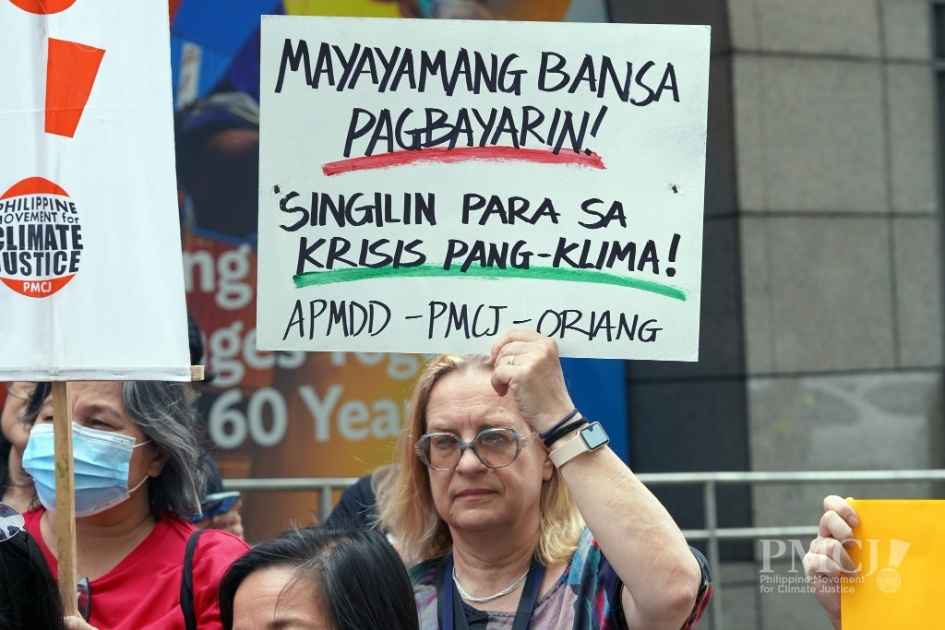
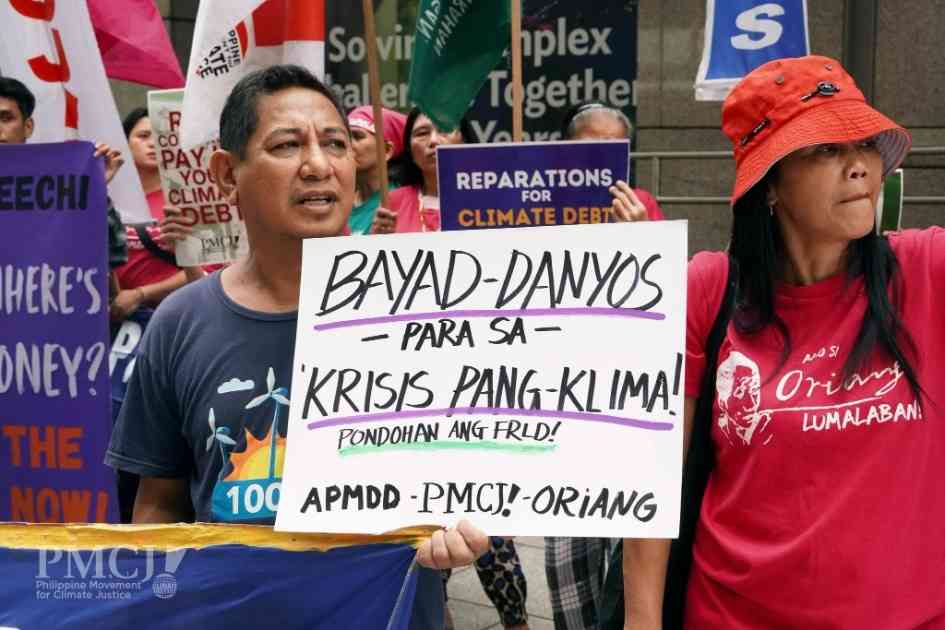
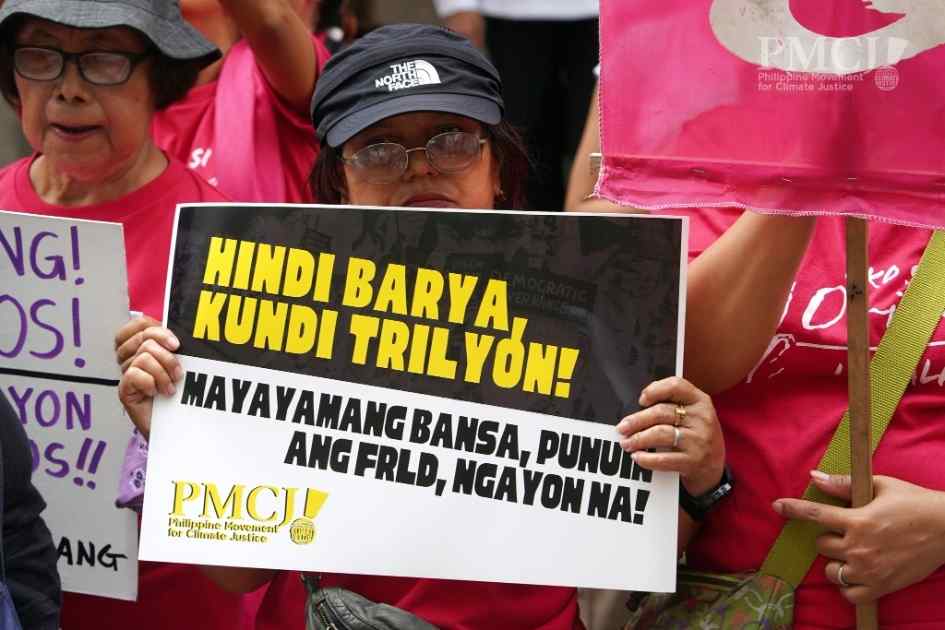
A protest was held at the ninth board meeting.
“The outcome of the ninth board meeting of the Fund for responding to Loss and Damage (FRLD) is a bitter disappointment for frontline communities. While developing nations are facing the astronomical costs of climate disasters, the Fund is drowning in its own bureaucracy,” said Harjeet Singh, Global Convenor of the Fill The Fund campaign and Founding Director of the Satat Sampada Climate Foundation.
“We are confronting a staggering $2.8 billion demand just in the start-up phase against a paltry $342 million in the bank, yet the Board chose to kick the can down the road, delaying both urgent funding approvals and the critical first replenishment of the FRLD. The painfully slow pace of making this Fund fully operational is a grave injustice to those losing their lives, homes, and livelihoods today.”
“Instead of establishing a lifeline that rapidly disburses money, the FRLD remains gridlocked by the procedural hurdles and structural challenges of being hosted and managed by the World Bank. We cannot allow World Bank red tape to strangle the Loss and Damage Fund in its infancy,” Singh said.
“The Board must urgently break free from these institutional roadblocks and immediately mobilize the hundreds of billions of dollars required in public, grant-based finance from developed countries. Otherwise, this historic Fund will remain nothing more than an empty, broken promise.”
Brandon Wu, Director of Policy & Campaigns at ActionAid USA, said the meeting was deeply frustrating.
“This week’s meeting of the FRLD Board was a deeply frustrating experience. It took place mostly behind closed doors, including for completely non-controversial agenda items. The Board held most of its key discussions without the public having any ability to observe, much less provide input. We expect future meetings to be conducted with far more openness and transparency,” Wu said.
“The Board chose not to approve the first four funding requests for the FRLD at this meeting. This is the most obvious example of how developed countries’ failure to adequately resource the FRLD is constraining a fund that was meant to be the central flagship institution responding to climate impacts across the Global South,” he said.
“Almost three years after it was established, the FRLD has received a miserable $500 million in contributions, compared to $2.8 billion of requests in the pipeline.”
“We need immediate new contributions to the FRLD to ensure it can support the full range of requests from developing countries, rather than becoming a dystopian arena where countries and communities are condemned to fight over crumbs,” Wu said.
Kalea Adrienne Daytec Aquino, Regional Focal Point at FSC Indigenous Foundation, said the Fund still lacked a serious way to address non-economic loss and damage.
“Much of what we stand to lose cannot be counted in dollars. When a sacred forest is gone, when a language dies with the land that held it, when the knowledge our elders has nowhere left to live: that is non-economic loss and damage, and it is irreversible,” Aquino said.
“Yet, this Fund still has no serious way to recognize it, measure it, or respond to it. For Indigenous Peoples, non economic loss is not a secondary category, but it is the heart of what we are losing. A fund that can only see damage it can price will never see the greater part of our harm.”
“This week the FRLD kept building its machinery, and Indigenous Peoples were left out of the design,” Aquino said.
“As distinct rights-holders with a deep connection to our lands, we came with clear priorities: consent on our own territories, a door our communities can walk through, and recognition of losses that cannot be priced. But none were met. The Active Observer Policy that would give us a seat was deferred once again, leaving us to witness a Fund built without us.”
Liane Schalatek, Associate Director of the Heinrich Böll Foundation Washington, DC, said the Manila meeting stood out for its lack of transparency and progress.
“The FRLD ninth meeting in Manila stood out for its lack of transparency, progress and for the Board’s unwillingness to innovate and accelerate finance delivery under what was supposed to be a fast start to its financing,” Schalatek said.
“The Board held most of its proceedings behind closed doors – struggling to correct FRLD operational constraints under its World Bank hosting agreement, which limit the Fund’s vision and ability to innovate. The Board lacked the courage to pilot new approaches to deliver small scale readiness and technical support grants,” she said.
“It further delayed approving best practice observer policies, which should give affected people and communities the voice and agency to hold the FRLD and its operations to account. The Board also deferred approving the first of the 176 funding requests worth $2.8 billion it received to its December meeting, wrestling with ways to distribute the meager $342 million it can currently deliver and forcing developing countries and their communities to compete against each other for urgently needed support.”
“Developed countries must fulfill outstanding and deliver new pledges to adequately resource the FRLD, and fast! Rather than managing scarcity, the Board must take bold actions to deliver funding at scale, with urgency and equity, including by advancing innovative, direct and simplified access modalities such as small community grants and rapid response finance as a priority,” Schalatek said.
Cheng Pagulayan, Climate Justice Portfolio Manager at Oxfam Pilipinas, said the proceedings of the ninth Board meeting were deeply concerning.
“The proceedings of the 9th Board meeting are deeply concerning. Most substantive discussions were pushed into ‘executive sessions,’ limiting transparency at a time when openness and accountability are most needed,” Pagulayan said.
“There is nothing more strategic or consequential than ensuring the meaningful participation of communities and climate-vulnerable sectors, the very people living with the realities of loss and damage and who must have a decisive voice in shaping solutions for climate reparations.”
“In just six months since the Fund opened its call for funding requests, developing countries have submitted a staggering 176 proposals to address escalating losses and damages. Together, these requests amount to US$2.8 billion, far exceeding the Fund’s currently available resources,” Pagulayan said.
“This overwhelming demand sends a clear signal: climate-vulnerable nations are already facing impacts at a scale that outpaces existing financial support. As climate disasters grow more frequent, severe, and costly each year, financing needs are expected to multiply dramatically in the years ahead.”
“While Global North countries must urgently honor their pledges by converting them into signed and disbursed commitments, fulfilling the Fund’s mandate will require a much broader and more ambitious resource mobilization effort,” Pagulayan said.
“The Board must secure new and predictable sources of finance, with the greatest responsibility falling on wealthy nations and major polluters whose historical and ongoing emissions have driven the climate crisis. Those most responsible for the problem must contribute their fair share to addressing its devastating consequences.”




