

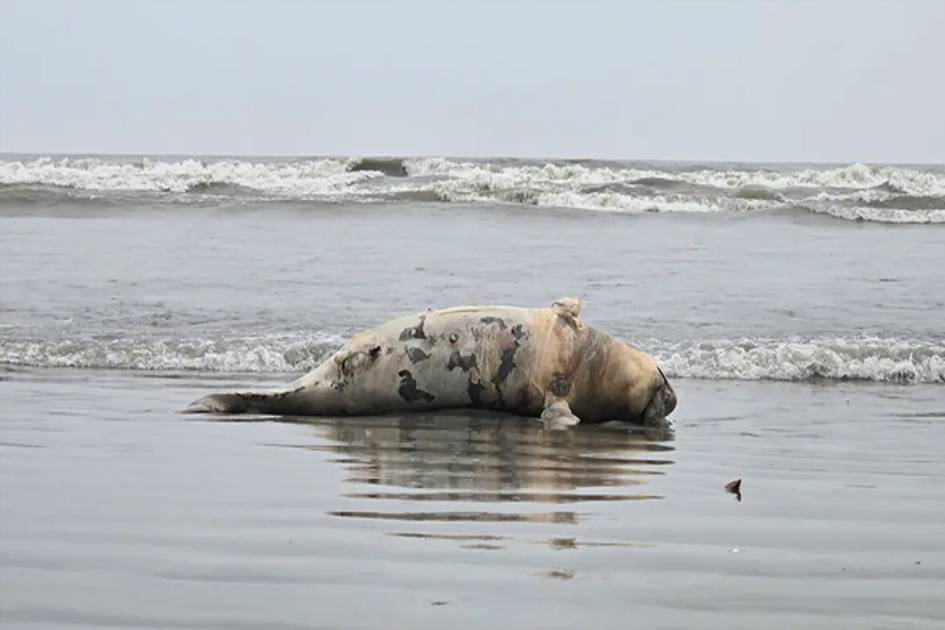



Conservationists urge research and stronger safeguards after the latest Kuakata dolphin death, citing possible threats from vessels, fishing gear and pollution in coastal waters.
A dead Irrawaddy dolphin has washed ashore again on Kuakata sea beach in Bangladesh’s southern Patuakhali district, raising fresh concern among local conservationists over repeated dolphin deaths along the coast.
The carcass floated in with the tide around noon on Sunday (July 12) in a section of the beach adjoining the national park. The dolphin was about eight feet long and is believed to have died three to four days earlier.
After receiving the news, members of the coastal environmental group Upokul Paribesh Rakkha Andolon, known as UPRA, the Forest Department and the upazila administration recovered the carcass and buried it.
K. M. Bachchu, convener of UPRA, said the number of dolphin deaths had declined somewhat compared with previous years but such incidents were still occurring regularly.
“We want the government and relevant research institutions to carry out effective research to determine the real cause of these deaths,” he said.
He said UPRA was running various programmes to raise awareness among coastal communities and protect marine biodiversity.
“Protecting dolphins means protecting our coastal environment and natural resources, which is extremely important for future generations,” he added.
Md Bakhtiar Rahman, a research assistant with the “Sustho Sagor” project, implemented by WCS and WorldFish with funding from the Blue Action Fund, identified the dead animal as an Irrawaddy dolphin, or Orcaella brevirostris.
He said bloody marks on the dolphin’s body suggested that it may have died after being struck by a vessel or becoming entangled or colliding with fishing nets or other fishing gear.
Industrial waste, plastic, oil and other pollution in rivers and estuaries also pose major threats to the species, he said, stressing the need to control the use of nets in dolphin sanctuary areas and raise awareness among local residents.
Ruman Imtiaz Tushar, team leader of the Kuakata Dolphin Protection Committee, said his group had been working for a long time to conserve dolphins along the coast.
“Our demand to the relevant authorities is that they identify the real causes of these deaths and take effective measures,” he said.
K. M. Moniruzzaman, forest officer of the Mahipur Range, said a team was sent to the spot as soon as the authorities were informed.
“The dead dolphin was buried properly so that the smell would not spread and create public health problems,” he said.
Dead dolphins have washed ashore in Kuakata several times before. Environmental activists say the recurrence of such incidents is a worrying signal for coastal marine biodiversity.




