

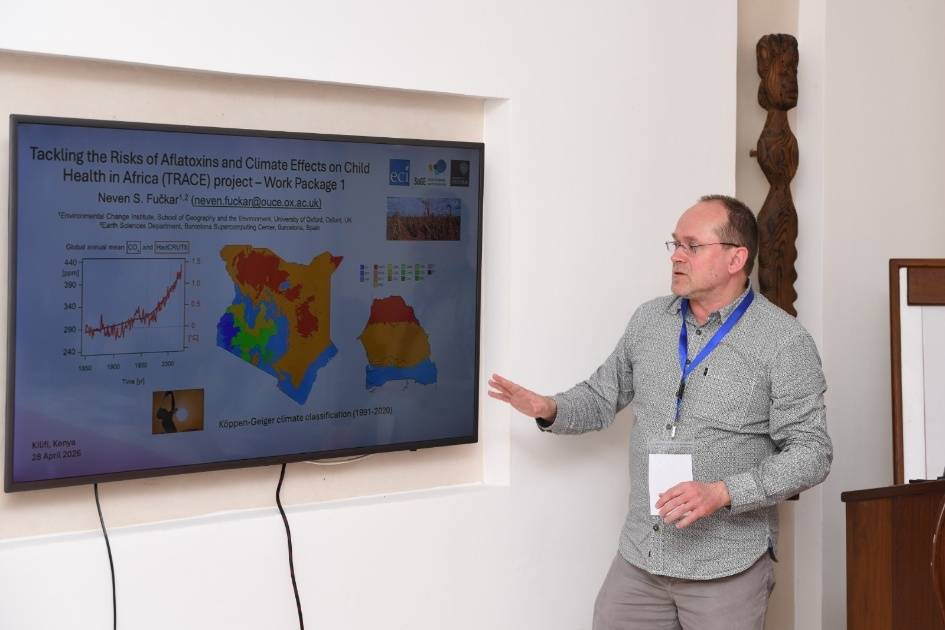



Kenya has launched a three-year TRACE study to examine how climate change is increasing aflatoxin exposure among children and shaping health risks linked to contaminated staple foods.
The Kenyan government and the Kenya Medical Research Institute have launched a new research initiative to examine how climate change is worsening aflatoxin exposure among children and to develop policies aimed at protecting child health across Africa.
The programme, known as the Tackling the Risk of Aflatoxins and Climate Effects on Child Health in Africa (TRACE) project, was unveiled during a workshop in Kilifi, where health experts warned that progress in reducing child mortality is facing growing challenges as deaths among children continue to rise.
Health stakeholders said the project seeks to generate scientific evidence and policy solutions to address the health risks linked to aflatoxins, toxic substances commonly found in contaminated food crops.
Dr Ambrose Agwaye, a paediatrician at KEMRI, said the initiative was driven by the widespread household consumption of grains, especially maize, which is highly vulnerable to aflatoxin contamination.
“The need to initiate this programme was necessitated by the high consumption of grains, especially maize, which is a staple in many households but is often contaminated by aflatoxins,” he said.
Agwaye said recent studies suggest aflatoxin exposure may reduce the effectiveness of vaccines in children, weaken immunity and contribute to stunted growth.
“Exposure to aflatoxins may reduce vaccine effectiveness and weaken children’s immunity, increasing vulnerability to diseases,” he said.
He added that climate change has intensified the aflatoxin threat, with prolonged droughts and extreme rainfall creating favourable conditions for fungi that produce the toxins.
“Rapid climate change has accelerated aflatoxin production, with drought and extreme rainfall creating favourable conditions for the fungus,” he said.
According to Agwaye, the multi-sectoral initiative will bring together experts and institutions from the health, agriculture and climate sectors to identify long-term solutions to the growing problem.
Dr David Githang’a, a paediatrician from the Kenya Paediatric Research Consortium, said children can be exposed to aflatoxins even before birth.
“Aflatoxin exposure starts during pregnancy when toxins are transferred to the foetus and later through breastfeeding, and this can have severe long-term effects on the child,” he said.
Githang’a warned that severe exposure can damage vital organs, increase the risk of cancer and affect brain development.
Stakeholders at the launch urged the public to remain cautious about food safety and advised consumers to ensure food products are certified by authorities such as the Kenya Bureau of Standards.
The three-year study will investigate community behaviours that expose children to aflatoxins, with researchers hoping the findings will help shape future policies aimed at safeguarding children’s health.




