

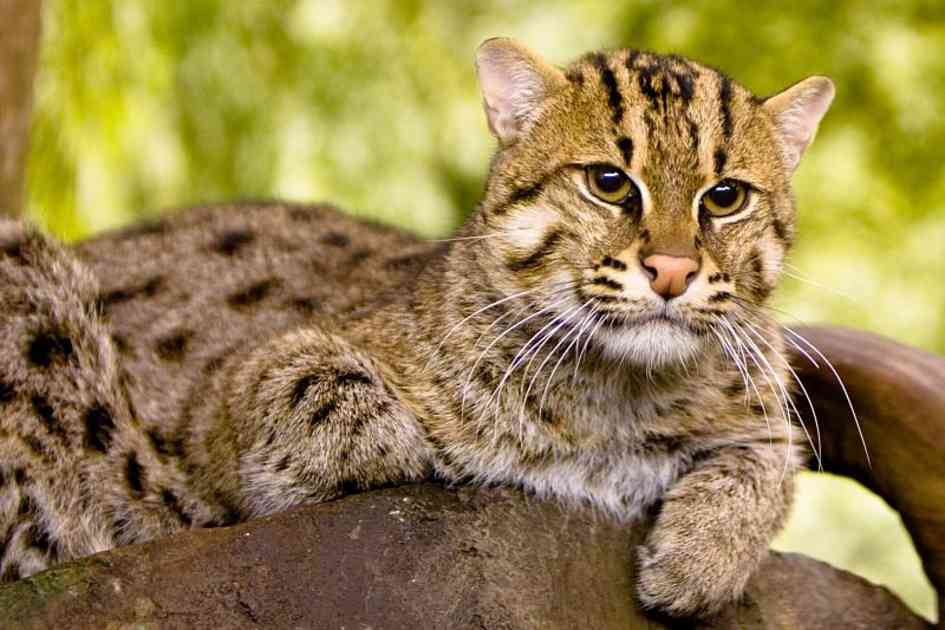



West Bengal’s state animal is losing wetland habitats as road deaths, shrinking ecosystems and conflict with people intensify pressure on one of India’s most threatened small wild cats.
West Bengal’s state animal under pressure from habitat loss, road deaths and human-wildlife conflict.
India’s rare wetland-dwelling Fishing Cat is facing a growing survival threat as a lawmaker has called for a nationwide conservation strategy to protect the species from disappearing from its natural habitat.
The state president of BJP, Shomik Bhattacharya has urged the Indian government to formulate a comprehensive National Action Plan for the conservation of the Fishing Cat, the official state animal of West Bengal, warning that the species is increasingly threatened by habitat destruction, infrastructure expansion and human-wildlife conflict.
Raising the issue during proceedings of the Rajya Sabha on August 7, Bhattacharya highlighted the declining population of the species and called for urgent government intervention to protect the vulnerable wild cat and its wetland ecosystems.
The Fishing Cat is protected under India’s Wildlife Protection Act, 1972 and classified as “Vulnerable” by the International Union for Conservation of Nature (IUCN). Despite these protections, it remains one of the most threatened small wild cats in India.
According to available records cited in Parliament, West Bengal has reported the highest number of documented Fishing Cat deaths, with 77 incidents recorded over a decade. Expanding highway networks and increasing traffic have also become major threats, with around 70 deaths reported in recent years due to vehicle collisions and habitat fragmentation.
Research presented during the parliamentary discussion indicates that suitable habitats for the species have declined by nearly 44 percent, contributing to increasing human-animal conflict. As wetlands shrink, Fishing Cats are increasingly forced closer to human settlements and agricultural areas in search of food, raising the risk of conflict and retaliatory killings.
The species depends heavily on wetlands, marshlands and riverine ecosystems, but these habitats are rapidly disappearing due to encroachment, unplanned urban expansion, pollution and aquaculture development.
Many Fishing Cats now survive outside protected forest areas, including wetlands in Howrah, Hooghly and the East Kolkata Wetlands, leaving them highly exposed to human activities.
The call for action comes amid growing global concern over biodiversity loss, with wetlands among the world’s fastest-declining ecosystems. Protecting the Fishing Cat also means safeguarding ecosystems that store carbon, reduce flood risks, support biodiversity and sustain the livelihoods of millions of people.
Climate change, rising sea levels and changing rainfall patterns are adding further pressure on wetland habitats across South and Southeast Asia, where the Fishing Cat is found.
Bhattacharya noted that the animal is often mistakenly identified as a tiger cub and killed in retaliatory attacks. He stressed that there is no documented evidence of Fishing Cats attacking humans.
To address the crisis, the MP proposed several urgent measures, including the immediate formulation of a dedicated National Action Plan for Fishing Cat conservation, formal protection of key wetland habitats under India’s Wetlands Rules, 2017, installation of mitigation measures on accident-prone roads and expansion of community-based conservation programmes.
He also called for the creation of a compensation mechanism for communities affected by human-wildlife conflict, arguing that local participation is essential for long-term conservation success.
Several conservation groups and researchers have already been working with communities in India to raise awareness, reduce conflict and protect remaining wetland habitats of the species.
“We must act now to ensure that our state animal does not disappear from its natural home,” Bhattacharya said, stressing the need for coordinated national action.
Conservationists say the survival of the Fishing Cat will depend on whether governments can protect shrinking wetlands before the loss of these ecosystems pushes one of South Asia’s most unique predators closer to extinction.




