

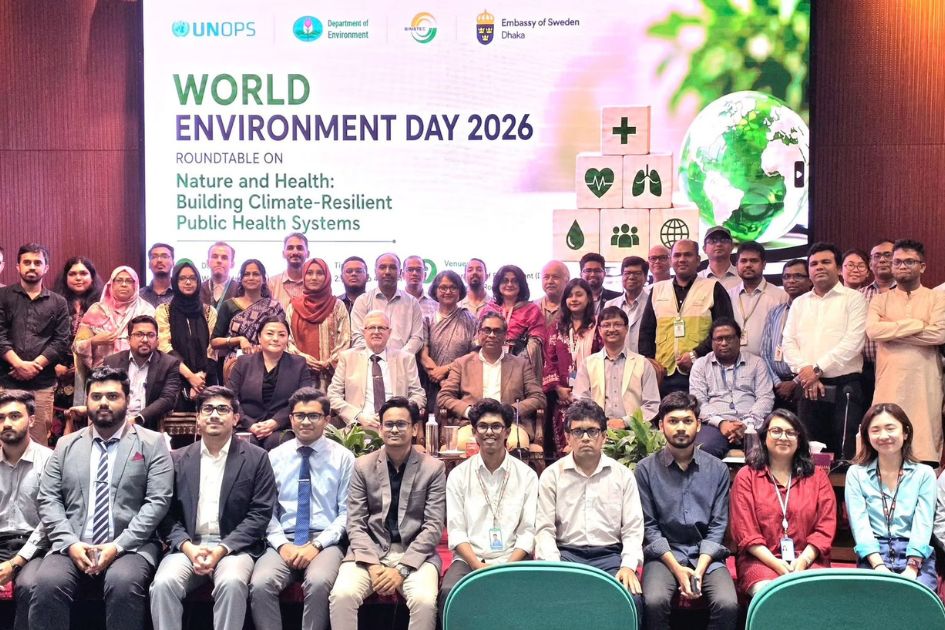



Policymakers, researchers and development partners outlined priorities including climate-smart health facilities, improved medical waste management, telemedicine and targeted services for flood-prone and remote communities as Bangladesh prepares its next national budget.
Bangladesh faces potential annual economic losses of around USD 2.8 billion by 2030 from climate-related health impacts unless urgent measures are taken, State Minister for Health Dr. M.A. Muhit warned, announcing plans to strengthen climate-resilient healthcare systems through digital innovation, sustainable infrastructure and community-based solutions.
Growing climate threats to public health
As one of the world’s most climate-vulnerable countries, Bangladesh is experiencing increasing health challenges linked to rising temperatures, heat-related illnesses, changing disease patterns, dengue and other climate-sensitive diseases, waterborne illnesses after floods, salinity intrusion, malnutrition risks and climate-induced displacement. These impacts are placing growing pressure on healthcare systems, particularly in vulnerable coastal, riverine and remote communities.
Speaking at a high-level roundtable titled “Nature and Health: Building Climate Resilient Public Health Systems” held at the Bangladesh Department of Environment on Wednesday, Dr. M.A. Muhit said Bangladesh must take immediate and coordinated action to reduce the growing health and economic risks associated with climate change.
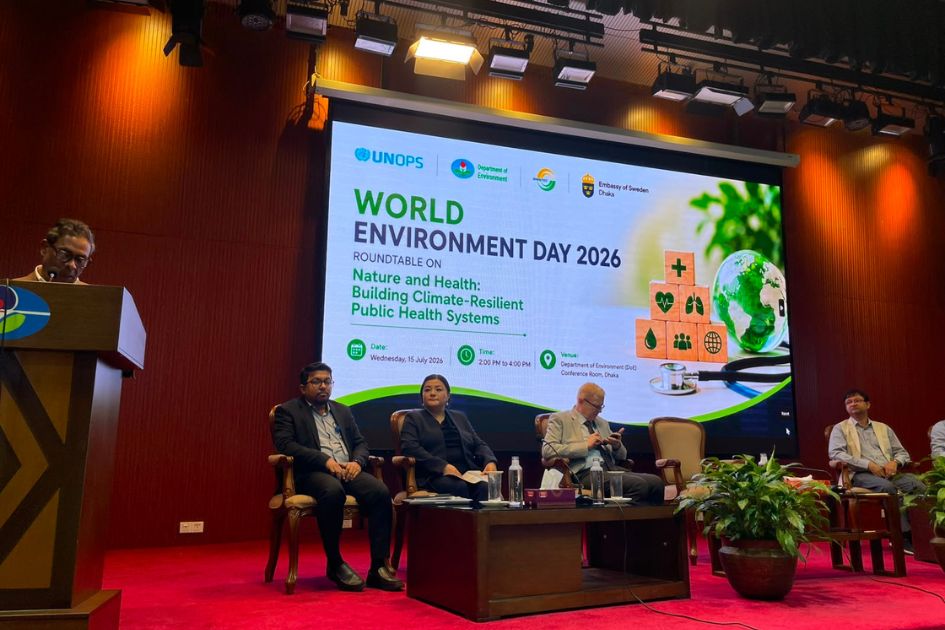
“If we fail to address the health and economic risks of climate change now, Bangladesh will have to bear an estimated burden of USD 2.8 billion every year by 2030. We need coordinated planning and action to prevent this loss,” he said.
The roundtable was organized by UNOPS Bangladesh with support from the Bangladesh Department of Environment, BIMSTEC and the Embassy of Sweden. It brought together policymakers, health experts, climate researchers, development partners and senior government officials to discuss strategies for building stronger and more adaptive public health systems.
Modern waste management and climate-smart healthcare
Dr. Muhit said climate adaptation in the health sector requires investment in climate-smart healthcare infrastructure, sustainable waste management, digital health services, disease surveillance systems and stronger collaboration among government institutions, researchers, development partners and communities.
Highlighting the importance of healthcare waste management, the State Minister said ensuring modern waste management systems at upazila-level health facilities is one of the government’s top priorities. Appreciating the key findings presented at the roundtable, he said the experience from ongoing pilot initiatives would help the Ministry of Health design and scale up larger waste management programmes across the country.
Digital health transformation for climate resilience
A major focus of the government’s future health strategy is digital transformation. Dr. Muhit said work is underway, in coordination with the Prime Minister’s Office, to establish a climate-adaptive Digital E-Health System.
The system aims to improve healthcare delivery, strengthen climate health early warning mechanisms, support telemedicine services, enable real-time disease monitoring and improve emergency responses during climate-related disasters.
Reaching vulnerable communities through innovative healthcare
For communities living in Bangladesh’s flood-prone river islands and remote char areas, climate change often creates severe barriers to accessing essential healthcare. Flooding, river erosion, geographic isolation and limited transport infrastructure frequently prevent people from receiving timely medical services.
Highlighting the need for innovative solutions, Dr. Muhit said healthcare delivery models must reflect the realities of frontline communities.
“My own constituency is located along the Jamuna River, and the area is currently experiencing flooding. To ensure primary healthcare reaches people living in remote char areas, we need not only mobile medical vans but also boat-based mobile hospital services,” he said.
He added that climate-vulnerable communities require long-term and integrated support. Reiterating his call for establishing a Char Development Foundation, Dr. Muhit said such an initiative could support the sustainable development and resilience of people affected by river erosion, displacement and climate impacts.
The government’s approach recognizes that women, children, older people, persons with disabilities and other vulnerable groups often face disproportionate health risks during climate emergencies. Ensuring equitable healthcare access for these communities remains central to building climate resilience.
Climate health priorities for the national budget
Discussing the upcoming fiscal budget, Dr. Muhit said the timing of the roundtable was important as Bangladesh begins its new budget cycle. He requested that the recommendations and summary report from the discussion be submitted quickly to the Ministry of Health so that relevant priorities and necessary projects could be considered for inclusion in the budget.
“The timing of this roundtable at the beginning of the budget year is very valuable. If we receive the recommendations and brief report quickly, we can still consider incorporating important lessons and necessary projects into the budget,” he said.
Experts and participants at the event emphasized that Bangladesh’s climate health strategy must combine scientific research, government leadership, community participation and locally led adaptation approaches. The success of these initiatives will depend on sustained financing, effective coordination and ensuring that solutions reach communities facing the greatest climate risks.
Through climate-adaptive healthcare systems, digital innovation, sustainable infrastructure and community-driven solutions, Bangladesh aims to strengthen public health resilience and contribute to global learning on how climate-vulnerable countries can protect the health and well-being of their people.
As climate impacts intensify, ensuring that every person, regardless of location, income or vulnerability, has access to quality healthcare will be central to building a safer, healthier and more resilient Bangladesh.




