

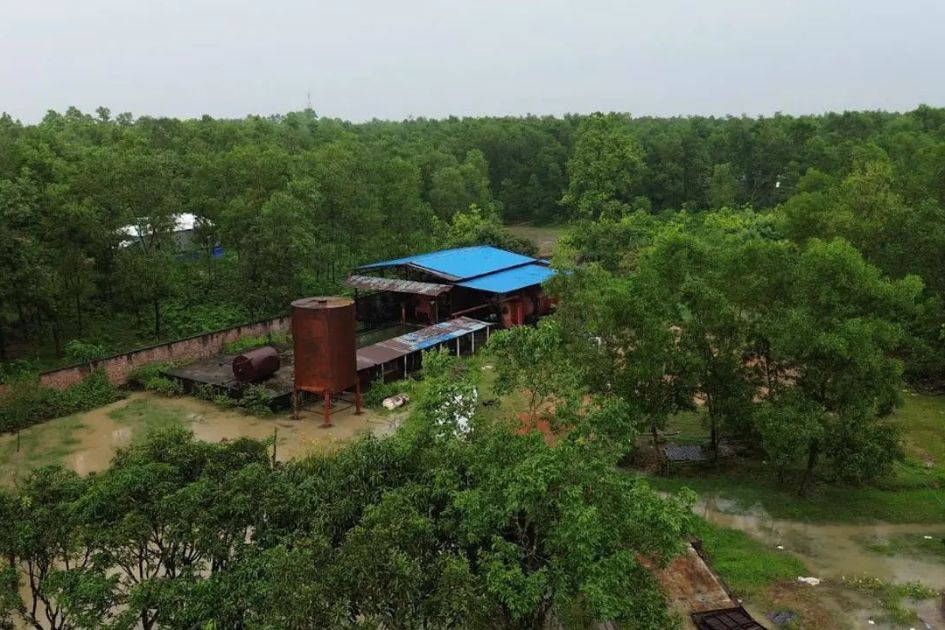



Illegal lead-acid battery smelting inside Gazipur’s forest areas is causing toxic air pollution, threatening public health, damaging vegetation, and raising concerns over environmental governance and enforcement failures.
Illegal battery smelting operations hidden deep inside forested areas of Kaliakair Upazila in Gazipur district are raising serious environmental and public health concerns, with residents reporting toxic air pollution, vegetation damage and worsening living conditions.
Investigations and field observations in the Jathalia, Majidchala and Mouchak unions indicate that at least two unlicensed facilities are operating inside or near forested areas, where used lead-acid batteries are allegedly burned using coal-based methods to extract lead. The process releases dense black smoke and acidic fumes that spread across nearby villages and forest ecosystems.
Eyewitnesses said the operations take place mainly from evening until dawn, with trucks transporting materials in and out under the cover of darkness. Locals allege that the facilities operate without effective monitoring due to their remote locations inside forested areas.
Residents reported visible environmental damage, including soot-like deposits on rooftops and tree leaves, along with persistent foul odors and severely degraded air quality.
“The smell makes it impossible to eat or sleep at night. Even breathing feels unsafe,” said Sajjad Hossain, a local resident.
Al Amin from Bastoli village said thick smoke regularly engulfs the area. “The surroundings turn dark with smoke. We protested together, but there has been no response,” he said.
Another resident, Zahirul Haque from Jathalia, described what he called “uninhabitable conditions” during operational hours. “We cannot eat or breathe properly. Every morning, black residue is found on our roofs,” he said.
Environmental activists say the operations are putting both public health and fragile forest ecosystems at risk. Motale Mia, a member of a local environmental group, called for the immediate shutdown of the facilities, warning that agricultural livelihoods in the area are also being affected.
Experts note that informal recycling of lead-acid batteries is a major source of toxic pollution globally, contributing to air contamination, soil degradation and long-term health risks, including respiratory illnesses and heavy metal poisoning.
Officials from the local administration confirmed that battery smelting in forested or residential areas is strictly prohibited and operates without legal authorization. The Upazila Nirbahi Officer of Kaliakair Upazila said authorities are investigating the matter and will soon take legal action against those responsible.
Residents continue to demand urgent intervention, warning that unchecked operations could accelerate environmental degradation in one of central Bangladesh’s remaining forested areas.
Sohanur Rahman, Executive Coordinator of YouthNet Global, said the situation reflects a deeper governance failure in protecting ecosystems from hazardous informal industries.
“This is not just local pollution. It is an environmental justice issue. Allowing toxic recycling activities inside forest landscapes endangers biodiversity, public health and the rights of nearby communities. Strong enforcement and accountability are urgently needed,” he said.




