




Bonn climate talks ended without agreement on adaptation, deepening mistrust over finance and governance as vulnerable communities face mounting losses from accelerating climate impacts.
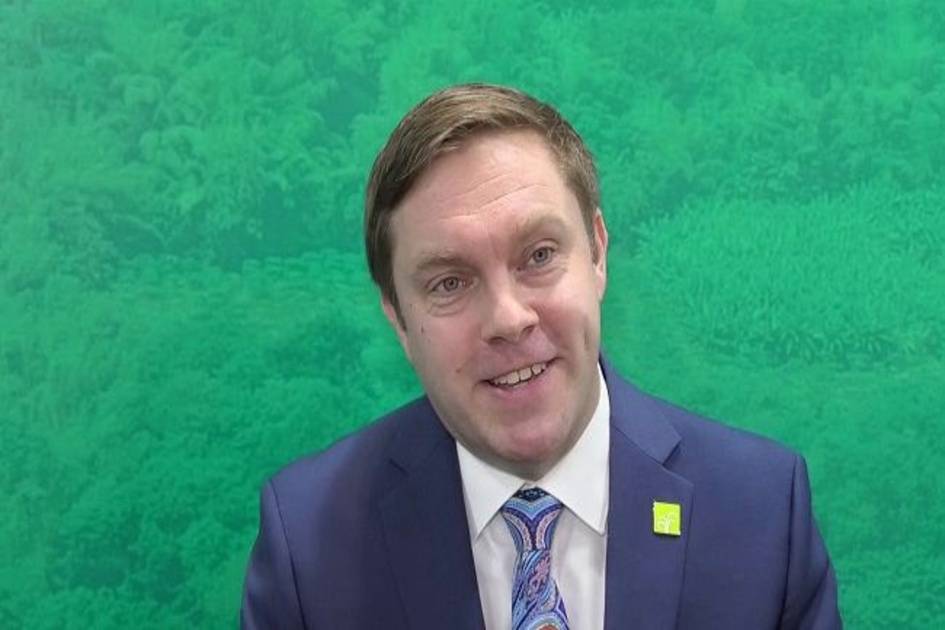
“If we don’t address adaptation, it will lead to loss and damage, and that will be even more costly,” said Mikko Ollikainen, capturing the urgency that defined but ultimately failed to resolve the Bonn Climate Conference, which ended on June 18 without agreement on the Global Goal on Adaptation (GGA).
Four days after the talks closed, the fallout continues. Analysts warn that the deadlock has deepened mistrust between developed and developing countries and left key questions on adaptation finance and implementation unresolved at a time when climate impacts are accelerating worldwide.
Negotiations collapsed after countries failed to bridge deep divisions over scaling up adaptation finance and defining the structure of the global adaptation framework. The GGA agenda has now been pushed to SB65 and COP31, leaving core implementation questions without direction at a critical moment.
Developing countries pushed for a major increase in support, including proposals to triple adaptation finance, arguing that current flows remain far below rising needs. Developed countries resisted embedding finance commitments within the GGA, insisting these belong under separate financial negotiation tracks.
A parallel dispute over governance further reinforced the impasse, particularly over whether adaptation indicators should be technically led or Party driven, exposing long standing tensions over control and accountability in climate reporting systems.
Finance fault lines widen
Beyond the collapse of the GGA talks, Bonn exposed a deeper and persistent divide over adaptation finance. Developing countries demanded predictable, grant based and accessible support, while wealthier nations maintained that finance must remain within separate dedicated negotiation tracks.
The Baku Adaptation Roadmap progressed only through technical discussions and background papers, with no breakthrough on accelerating implementation.
Meanwhile, side events across Bonn reflected continued activity on adaptation and resilience, but these discussions failed to translate into agreed global outcomes.
Adaptation Fund and carbon market uncertainty
To receive revenue from the Paris Agreement carbon market, the Adaptation Fund must transition fully to serving the Paris framework, a move currently blocked by divisions over climate finance responsibility.
At COP26 in Glasgow, governments agreed that the Fund would receive 5 percent of proceeds from Article 6.4 carbon credits, excluding credits generated in least developed countries and small island states.
The scale of future income remains uncertain, depending on project volumes and carbon prices.
Under the Kyoto Protocol’s Clean Development Mechanism, the Fund received just over 200 million dollars from a similar share of proceeds, far below earlier expectations, though still described by Mikko Ollikainen as “not insignificant”.
By comparison, the Fund has been seeking around 300 million dollars annually from donor governments in recent years, highlighting the gap between needs and actual flows.
A widening adaptation gap
Many countries have now developed National Adaptation Plans, but implementation remains constrained by limited, fragmented, and unpredictable finance.
That gap between global systems and local realities is already visible on the ground.
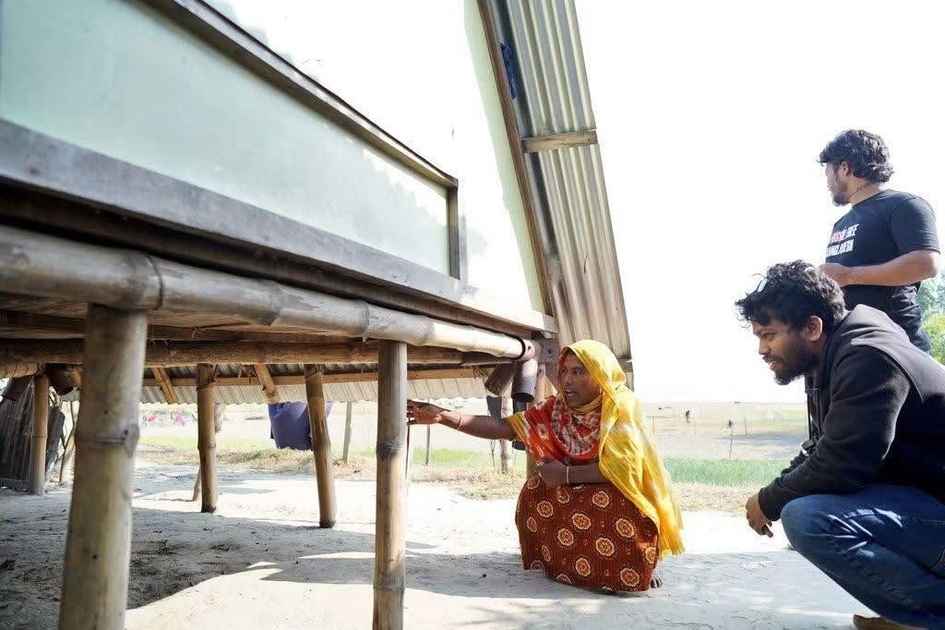
In Kainmari, in Dacope Upazila of Khulna, Bangladesh, nearly two thousand people live on the banks of the Pashur River near the Sundarbans mangrove forest in one of the world’s most climate exposed coastal zones.
Here, climate change is not a future risk but a daily condition shaping survival.
Salinity intrusion has transformed once green surroundings into a harsher landscape marked by dying trees, degraded soil, and ecological stress. For families, this is not an abstract environmental shift but a direct disruption of livelihoods.
During the monsoon, tidal surges regularly flood homes and destroy income sources. Rising sea levels continue to reshape settlement patterns, while repeated cyclones force households into cycles of rebuilding from nothing.
Despite these pressures, communities continue to adapt with limited resources. But without adequate and accessible adaptation finance, their capacity to withstand escalating climate shocks remains severely constrained. Kainmari stands as a reminder that climate injustice is already being experienced by those who contributed least to the crisis.
Attention in Bonn also highlighted the unequal distribution of risk, with repeated warnings that women, children, Indigenous Peoples and other marginalised groups face disproportionate impacts while remaining underrepresented in decision making and finance systems.
Pressure shifts to COP31
With Bonn ending without agreement, attention has now shifted to COP31 in Antalya as the next critical test for breaking long standing deadlock on adaptation finance and governance.
Small island states and African negotiators have warned that continued delays risk further eroding trust in global climate finance systems, even as climate impacts accelerate faster than institutional responses.
“We are already seeing that adaptation finance is not abstract negotiation language. It is the difference between survival and displacement for communities like Kainmari,” said Sohanur Rahman, Executive Coordinator, YouthNet Global.
Four days after Bonn negotiations closed, the central message is increasingly clear. Adaptation has moved beyond a technical negotiation track. It is now a core political fault line.
Without urgent compromise, adaptation will remain the weakest pillar of global climate action and the most immediate expression of climate injustice.




