




A new report warns rising temperatures could sharply increase deaths in Bangladesh by 2050, highlighting inequality, regional disparities and urgent need for adaptation, climate finance and public health preparedness.
Bangladesh is on the frontline of a growing global health emergency, with rising temperatures threatening lives, livelihoods and public health across the country. Vulnerable groups including outdoor workers, rickshaw pullers and river-dependent communities are expected to face the greatest risks as extreme heat becomes more frequent and intense.
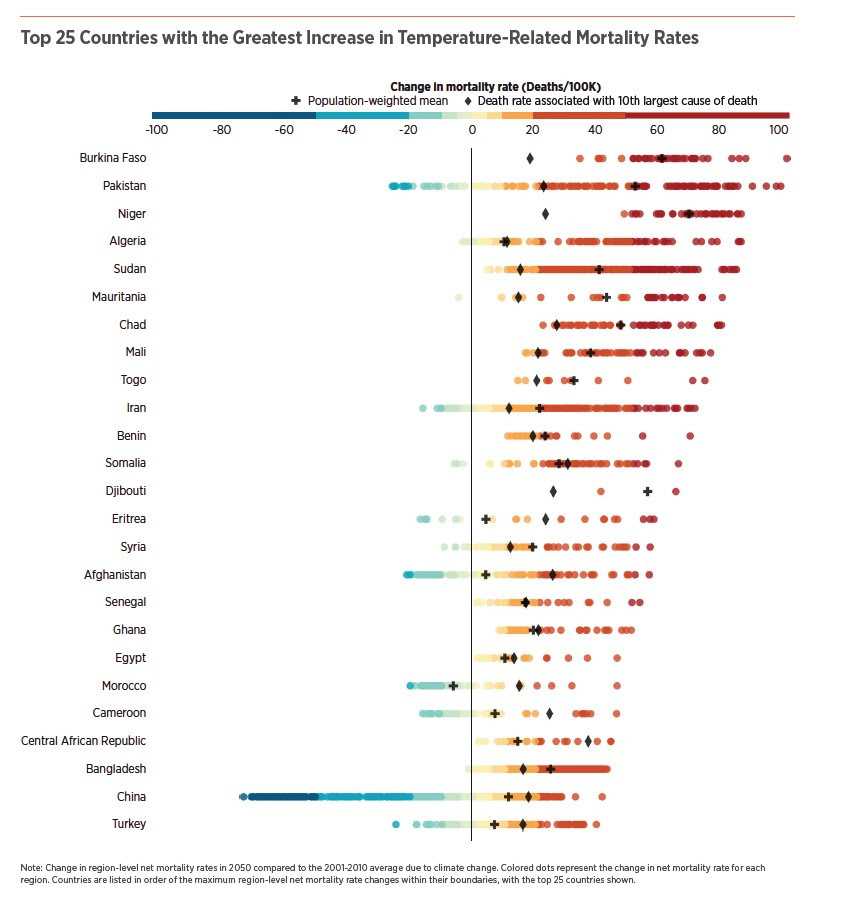
A report released Wednesday by the Climate Impact Lab projects that Bangladesh could see an additional 24 deaths per 100,000 people each year due to rising temperatures by 2050, placing it among the 25 most affected countries globally.
Regional Disparities Deepen Risk
The findings reveal stark internal inequalities. Southwestern Khulna is projected to face the highest burden, with heat-related deaths reaching 36 per 100,000 people annually, exceeding the country’s current mortality rate from chronic obstructive pulmonary disease.
In the capital Dhaka, where the urban heat island effect is intensifying, deaths are expected to rise to 22 per 100,000. Meanwhile, port city Chittagong may see 12 deaths per 100,000 linked directly to increasing temperatures.
Inequality at the Core of the Crisis
The report underscores a widening global divide. Despite contributing minimally to global emissions, countries like Bangladesh are projected to bear the overwhelming burden, accounting for more than 90 percent of heat-related deaths worldwide.
By mid-century, heat-related fatalities in poorer nations could be ten times higher than in wealthier countries.
“This report uncovers one of climate change’s cruelest ironies. It is projected to kill millions of people in the countries that have generally done the least to cause it,” said Michael Greenstone.
Echoing this concern, climate advocates stress the urgency of justice-based solutions.
“Heat is fast becoming a silent killer in Bangladesh. Communities that have contributed the least to global emissions are now facing life-threatening risks every summer. Climate finance, locally led adaptation and a just transition must be accelerated because for countries like Bangladesh this is not just about climate, it is about survival,” said Sohanur Rahman, executive coordinator of YouthNet Global.
Adaptation and Policy Response Critical
Experts emphasize that future mortality will depend not only on rising temperatures but also on how effectively countries invest in adaptation.
Measures such as wider access to cooling technologies, establishment of cooling centres, climate-resilient urban planning and stronger public health systems could significantly reduce heat-related deaths.
Bangladesh has already taken steps through initiatives such as the Bangladesh Climate Prosperity Plan and its ongoing National Adaptation Plan, aiming to strengthen resilience and promote climate-resilient development. However, experts say implementation gaps and limited financing remain key challenges.
“The regions where increases in mortality are highest are also those with few resources and limited capacity,” said Tamma Carleton. “Targeted adaptation investments could have massive impacts on who lives and who dies.”
A Global Call for Just Climate Action
The study, part of the “Adaptation Roadmap” series, aims to guide policymakers toward investments that can save the most lives. Backed by more than a decade of research, the Climate Impact Lab has informed major global institutions, including the International Monetary Fund and the United Nations Development Programme.
As temperatures continue to rise, the warning is clear. Without urgent climate finance, locally led adaptation and an equitable global response, extreme heat will not only remain an environmental threat, it could become one of the deadliest public health crises of the 21st century.




