

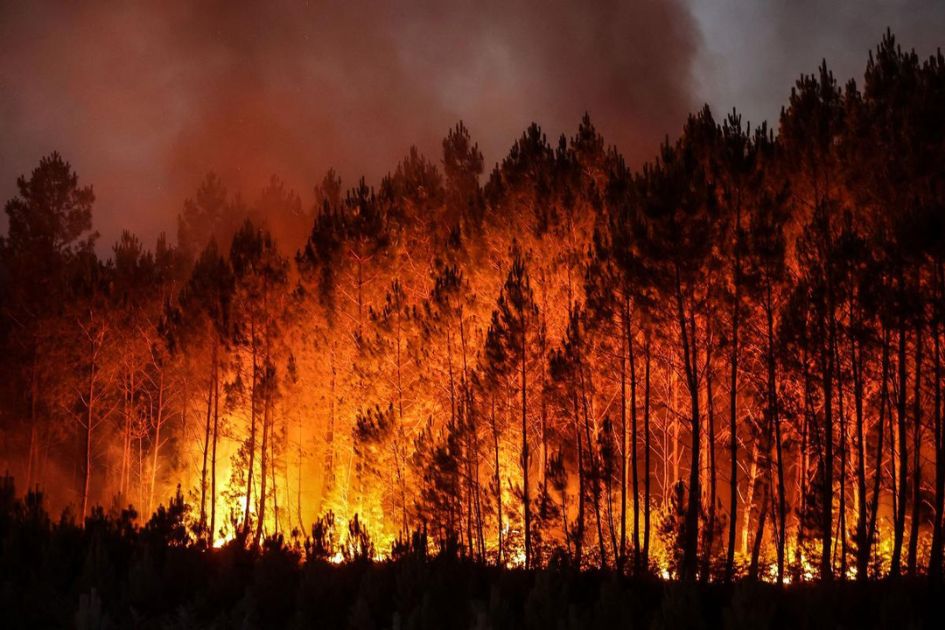



Western Europe’s record heat has deepened drought, lowered river levels, fueled major wildfires and coincided with record global sea surface temperatures in July.
Western Europe has experienced its hottest June and July on record, with extreme heat, severe drought and devastating wildfires intensifying the region’s climate crisis, according to the European Union’s climate monitoring agency Copernicus Climate Change Service.
The agency said in a report that the average temperature across western Europe during the two months reached 21.62 degrees Celsius (70.9 degrees Fahrenheit), 2.79 degrees Celsius above the normal average. The figure surpassed all previous records, including the previous record set in 2022.
Copernicus said prolonged and exceptional temperatures this summer have pushed the climate crisis in western Europe to an extreme level. Soil moisture this year has also fallen significantly below levels recorded during the severe drought of 2022.
Samantha Burgess, head of climate at the European Centre for Medium-Range Weather Forecasts, said a persistent high-pressure system had trapped heat in the atmosphere over western Europe. At the same time, extreme temperatures have further intensified drought across the land.
As the soil has dried out, its natural ability to cool the environment has weakened, driving temperatures even higher. In this way, drought and heat are reinforcing each other, Burgess said.
River water levels fall
Severe drought and a lack of rainfall have caused water levels in major European rivers, including the Seine, Rhine and Danube, to fall to unusually low levels.
Reduced water flows have severely disrupted irrigation systems and normal water supplies. Hungary and Slovenia, which rely on river water, have been forced to operate their nuclear power plants at reduced production capacity.
Unprecedented wildfires in France and Spain
France and Spain have both experienced record levels of drought, worsening already destructive wildfire conditions.
Toward the end of July, a devastating wildfire in the Gironde department of southwestern France burned about 42,000 hectares (103,785 acres) of land. More than 220,000 people were forced to evacuate to safer locations.
Meanwhile, the largest wildfire in Spain’s recent history occurred in the province of Avila, near Madrid. About 44,000 hectares (108,725 acres) of forest were destroyed by the fire.
Copernicus warned that smoke from such massive wildfires can reach the upper layers of the atmosphere and travel thousands of kilometres, posing a serious threat to air quality and public health in other nearby countries.
New global record for sea surface temperatures
The warming has not been confined to land. Ocean temperatures have also reached a new record.
According to Copernicus data, the average global sea surface temperature outside the polar regions reached 20.96 degrees Celsius in July, surpassing the previous record of 20.89 degrees Celsius set in 2023.
Source: Al Jazeera




