

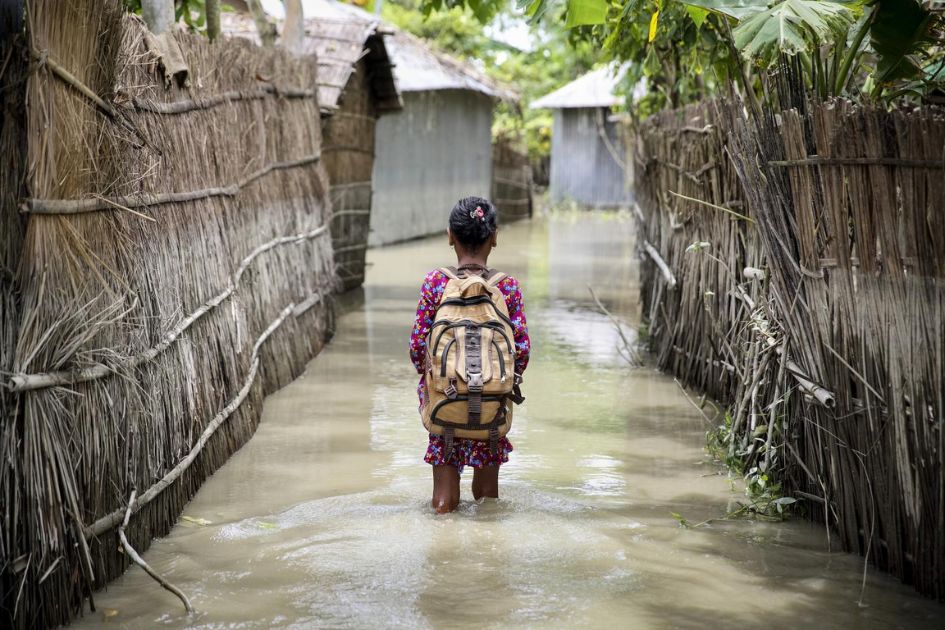



UNICEF warns storms, floods and heatwaves are widening education gaps, with Bangladesh’s flood-hit schools showing how climate risks threaten classrooms, exams and children’s future earnings.
More than 1.1 million students affected by floods in Bangladesh, while 569 educational institutions were damaged in Chattogram Division
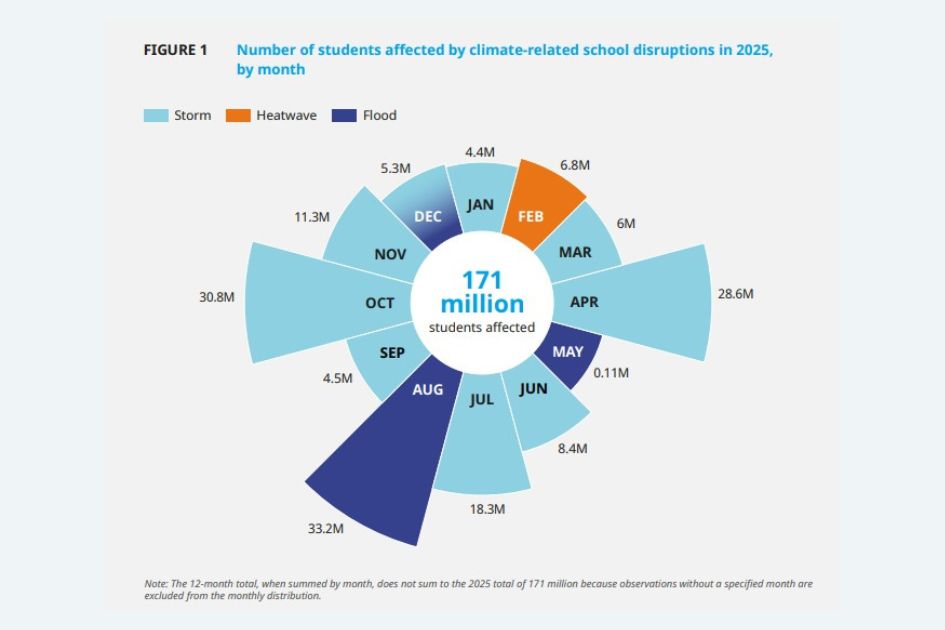
Climate change is no longer only an environmental and livelihood crisis. It has also become a major threat to the education of hundreds of millions of children worldwide. In 2025, climate-related disasters disrupted the education of at least 171 million students in 106 countries and territories.
The figure was revealed in a new analysis by the United Nations Children’s Fund, UNICEF. The report, “Learning interrupted: Global snapshot of climate-related school disruptions in 2025,” said nearly one in 10 students globally had their education disrupted in some way because of climate disasters.
The report identified storms, floods, heatwaves, droughts and wildfires as major climate risks to education systems. Because of these disasters, schools had to be closed in some places, educational institutions were damaged in others and classroom teaching in many areas had to be shifted temporarily to online or distance learning.
As a result, teaching time was reduced, student attendance declined and the risk of millions of children dropping out increased.
Storms caused the biggest disruption
Storms caused the largest disruption to education worldwide. Storms alone disrupted the education of about 109 million students.
Floods disrupted the education of at least 70 million students, while heatwaves affected nearly 50 million students.
According to the report, nearly 75 percent of students affected by climate disasters live in low and lower-middle-income countries. As a result, the climate crisis is deepening existing education inequalities.
For about 66 percent of affected students, schools had to be closed or classes suspended. Another 21 percent of students could not return to classrooms on time because their school buildings were damaged or were being used as emergency shelters.
Education disrupted for more than 1.1 million students in Bangladesh
The situation is also alarming in Bangladesh, one of the world’s most climate-vulnerable countries.
According to UNICEF data, the education of 1,125,726 students in Bangladesh was disrupted, mainly because of floods. Many students were cut off from regular lessons because schools were closed, transport links were disrupted and various educational institutions were used as shelters.
The education sector in Chattogram Division, in southeastern Bangladesh, was also badly affected by floods in 2026. According to official figures, 569 educational institutions in 11 districts of the division were damaged by floods.
These included 387 institutions in Chattogram district, 65 in Cox’s Bazar, 56 in Bandarban, 32 in Rangamati and 29 in Khagrachhari.
Floodwater damaged classrooms and other education infrastructure in many schools, disrupting normal education activities. At the same time, many students’ homes were flooded, damaging textbooks, exercise books and other learning materials.
Even after the floodwater receded, many students could not quickly return to normal studies.
Exams postponed, learning gaps widen
Floods also forced the postponement of Higher Secondary Certificate, or HSC, and equivalent examinations in Bangladesh.
Damaged roads and transport links, as well as the poor condition of some examination centres, made it difficult for students to reach exam venues. Prolonged disruptions to classes and examinations also raised concerns about learning gaps and exam preparation.
Beyond education, disasters are also putting pressure on students’ mental health. Damage to homes, loss of books and learning materials, suspension of studies and uncertainty over exams have increased stress among students.
Students from poor families are particularly at risk. When family livelihoods are damaged, continuing education can become difficult for them and the risk of dropping out of school increases.
Girls face higher risk of dropping out
UNICEF has warned that girls face a comparatively higher risk of dropping out when schools are closed or education is disrupted for long periods because of climate disasters.
Damage to school infrastructure, displacement and reduced family income can place additional responsibilities on girls, including household work, caring for family members and collecting water.
Such situations can also increase the risk of child marriage. As a result, even after schools reopen, it can become difficult for many girls to return to classrooms.
India worst affected in South Asia
Among South Asian countries, India had the highest number of affected students. Storms and other climate disasters across different states disrupted the education of 26,096,071 students.
In Nepal, intense heatwaves were the main climate risk to the education system. At least 398,025 students in the country had their classes or education activities disrupted.
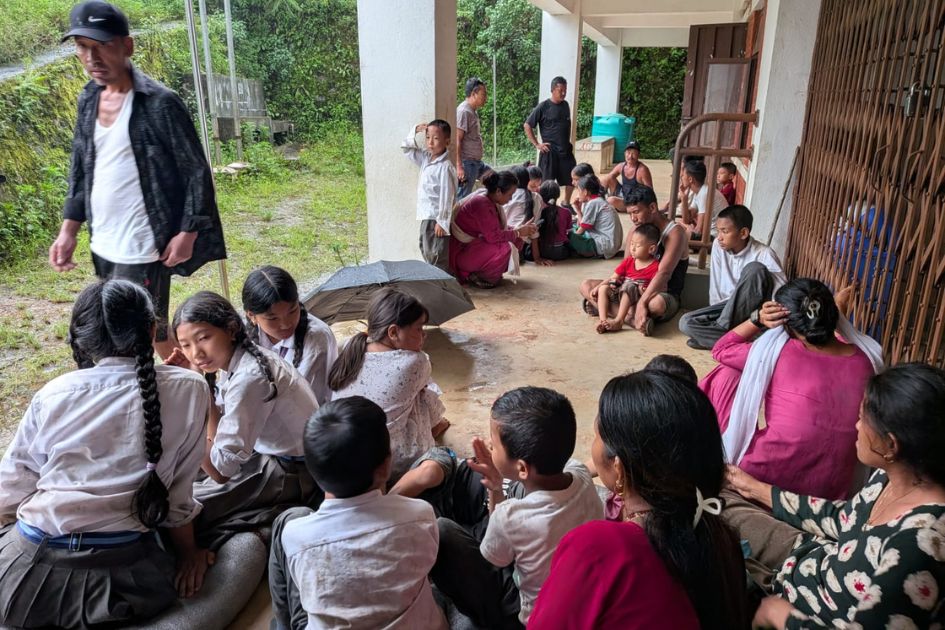
Floods in Nepal in 2026 damaged or destroyed at least 69 educational institutions and disrupted the education of about 19,000 students.
Europe not beyond risk
The climate-related education crisis is no longer only a problem for poor or climate-vulnerable countries. In several European countries, heatwaves, storms and floods disrupted education for millions of students.
In Belgium, France, Luxembourg and the Netherlands, intense heatwaves disrupted normal education activities for at least 1.5 million students.
In Belgium alone, 865,904 students were affected by heatwaves. In France and its territories, storms disrupted the education of more than 1.548 million students, while floods in Italy disrupted the education of nearly 1.176 million students.
Storms affected more than 1.135 million students in Ireland and nearly 1.091 million students in the United Kingdom.
Today’s education crisis, tomorrow’s economic loss
UNICEF has warned that if education loss and dropout rates continue to rise because of climate disasters, the productivity of the future workforce could decline, economic growth could be hampered and efforts to reduce poverty could become more difficult.
The report warned that without proper action, students whose education is disrupted by climate disasters could collectively lose at least $200 billion in future lifetime earnings.
UNICEF called on governments and development partners to increase investment in climate-resilient education systems.
The agency recommended integrating climate resilience into national education plans, strengthening school infrastructure and creating effective systems to keep education running during and after disasters.
It also stressed the importance of including climate education in curricula so that children and young people can gain the skills needed to adapt to climate change, respond to disasters and take part in climate action.
UNICEF data shows that the impact of climate change is no longer limited to nature, agriculture or livelihoods. It is directly threatening children’s education, future skills and long-term economic prospects. For climate-vulnerable countries including Bangladesh, investment in resilient school infrastructure, emergency education systems and climate adaptation-based education planning is therefore becoming increasingly urgent.




