

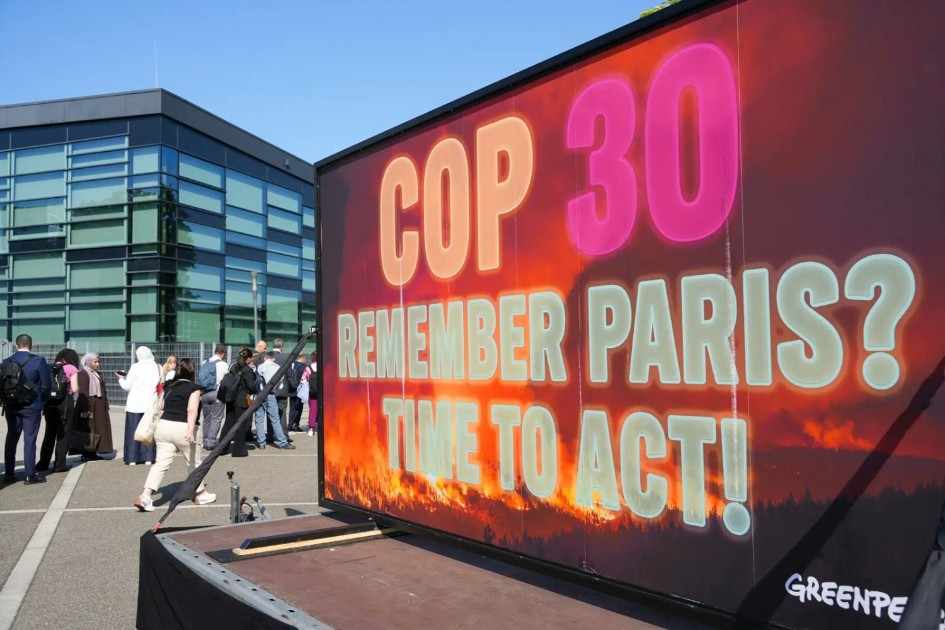

Global leaders gather in Belém for COP30, but hopes are low. Amid shrinking delegations, Bangladesh urges fair finance, just transition, and full Loss and Damage Fund operation by 2026 as the Amazon takes center stage in climate diplomacy.
The world’s attention turns to the Amazon this week as Brazil hosts the 30th United Nations Climate Change Conference (COP30) in the gateway city of Belém. Representatives from around 150 countries are gathering to chart the planet’s climate future, yet expectations remain muted amid global political tensions, economic slowdowns, and policy reversals by major powers.
Low expectations amid growing fatigue
Hopes for ambitious climate breakthroughs are dim. Many observers suggest that COP30’s greatest success may simply be keeping the multilateral process alive. Others are calling for a complete overhaul of the COP mechanism, arguing that the three-decade-old process has become overly bureaucratic, politicized, and detached from real action.
With global cooperation faltering and political will fading, the key question looms large: can COP30 restore faith in international climate diplomacy, or will it become another summit long on promises but short on results?
Participation falls sharply
The tone surrounding COP30 is notably cautious. Preliminary UN data show that only about 12,200 delegates have registered, a sharp drop from 54,000 in Baku for COP29 and nearly 84,000 in Dubai for COP28.
Brazil had initially expected at least 45,000 attendees, but limited hotel capacity and high travel costs have forced many countries to downsize their delegations. Belém, with around 53,000 beds prepared for visitors, is making an extraordinary effort to meet logistical challenges.
Bangladesh pushes for Climate Justice
A source from the Ministry of Environment, Forest and Climate Change confirmed that while Chief Advisor Professor Muhammad Yunus, Environment and Climate Change Advisor Sayeda Rizwana Hasan, and Secretary Farhina Ahmed will not attend COP30, Bangladesh has outlined five key priorities aimed at advancing climate justice and protecting its most vulnerable communities.
Dhaka is urging the adoption of a new global climate finance goal of USD 300 billion annually by 2035, alongside the immediate delivery of the long-overdue USD 100 billion pledge. It also calls for the full operationalization of the Loss and Damage Fund by 2026, ensuring direct access for the most climate-affected nations.
Bangladesh’s other priorities include:
Doubling global adaptation finance by 2025 to support locally led, gender-responsive, and youth-inclusive initiatives.
Promoting a just transition that phases out fossil fuels responsibly while ensuring green jobs, labor protection, and equitable access to renewable energy.
Strengthening regional cooperation with Bhutan and Nepal.
Linking the Global Stocktake process to finance, technology transfer, and accountability mechanisms.
“Our people are already facing the worst impacts of climate change. COP30 is not just about promises — it’s about urgent action and real solutions for vulnerable communities,” said Sohanur Rahman, Executive Coordinator of YouthNet Global. “Bangladesh stands ready to lead on climate justice, but the world must step up with fair finance, technology, and support for adaptation and loss and damage,” he added.
Host Nation Highlights Amazon’s central role
Brazil has launched three weeks of climate-focused events across Rio de Janeiro, São Paulo, and Belém to build momentum ahead of the main summit (November 10–21). The host nation seeks to remind the world that the Amazon rainforest is not just Brazil’s heritage — it is the planet’s lungs.
In São Paulo, business leaders are urging stronger incentives for renewable energy and faster progress on the energy transition. Meanwhile, Rio de Janeiro’s Local Leaders Summit is facing tension after protests erupted over a deadly police operation last week.
Adding to the high-profile activities, Britain’s Prince William is in Rio de Janeiro to present his annual Earthshot Prize, celebrating global environmental innovation.
Amazon and indigenous voices at the center
Belém’s selection as COP30’s venue was deliberate — meant to bring the Amazon and its Indigenous peoples to the forefront of global climate diplomacy. A flotilla of Indigenous leaders and activists is currently sailing down the Amazon River to deliver their conservation demands directly to world leaders. Many groups plan to camp in the surrounding rainforest during the conference to symbolize resistance and stewardship.
“It’s inspiring to see business leaders and mayors from around the world converging in Brazil to share solutions and build momentum for climate action,” said Dan Ioschpe, chairman of auto-parts manufacturer Ioschpe-Maxion, who is leading private-sector efforts at COP30.
As negotiations begin in Belém, the stakes could not be higher, for the Amazon, for the planet, and for the credibility of the global climate process itself.




