

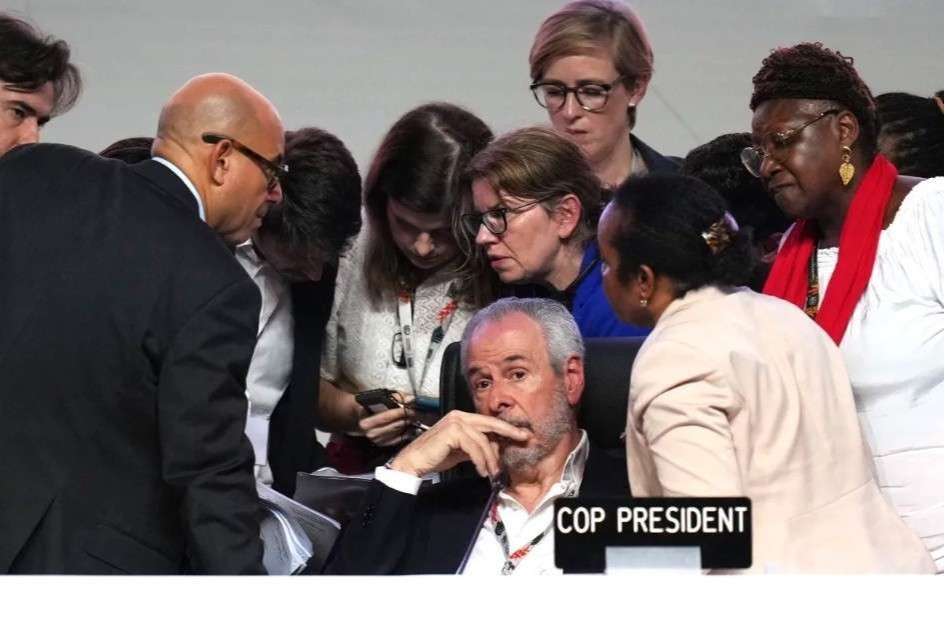

After a tense 24-hour extension, COP30 closed in Belém with major progress on adaptation finance, just transition and gender equality. But the summit ended in frustration for over 88 nations as negotiators failed to secure a roadmap for phasing out fossil fuels.
The UN climate talks in Belém wrapped up after a tense 24-hour extension on Saturday, delivering major wins on adaptation finance, just transition mechanisms and gender action planning but ending in deep frustration for more than 88 nations after negotiators failed to secure a roadmap to phase out fossil fuels.
Countries endorsed a pledge to double adaptation finance by 2025 and triple annual flows from US$40 billion to US$120 billion by 2035. Delegates also agreed to a new step for the Loss and Damage Fund, calling for proposals enabling direct access of US$5-20 million annually. A strengthened Gender Action Plan was adopted as well.
The summit committed to mobilising US$1.3 trillion in annual climate finance by 2035 and launched two global initiatives, the Global Implementation Accelerator and the Belém Mission to 1.5°C aimed at driving faster emissions cuts. But the absence of a fossil fuel phase-out roadmap overshadowed the gains.
In his closing remarks, UN Climate Chief Simon Stiell said COP30 showed that multilateral climate diplomacy “remains alive and kicking” despite global geopolitical turmoil.
“COP30 showed that climate cooperation is alive and kicking, keeping humanity in the fight for a livable planet,” Stiell said. “I am not saying we are winning the climate fight. But we are undeniably still in it.”

He highlighted three achievements: the agreement to triple adaptation finance, the new pact on just transition and a collective declaration that the shift to low-emission, climate-resilient development is “irreversible.”
Still, Stiell warned that disinformation and political polarisation pose growing threats to climate progress. “This COP has started to deliver on everyday concerns not perfectly, not fast enough, but concretely,” he said. “The old polluting economy is running out of road. But disinformation is trying to keep it alive.” He urged countries to carry forward the Brazilian ethos of mutirão-collective effort-beyond Belém.
The World Resources Institute (WRI) described COP30 as a summit of “mixed outcomes,” applauding advances for forests and local communities while criticising the lack of fossil-fuel ambition.
“COP30 delivered breakthroughs to triple adaptation finance, protect the world’s forests and elevate Indigenous voices like never before,” said Ani Dasgupta, WRI President and CEO. “But many will leave Belém disappointed that negotiators couldn’t agree on a roadmap to transition away from fossil fuels.”
He added that Brazil’s Presidency must now craft a roadmap outside formal negotiations. “It’s up to President Lula to turn that into a globally credible plan,” he said.
WRI also welcomed the launch of the Tropical Forest Forever Facility, new multi-level climate cooperation platforms, and increased pledges for Indigenous Peoples’ land rights.
Frustration as fossil fuel roadmap dropped; GGA fallout
Despite intense overnight talks, the final COP30 text contains no explicit reference to phasing out oil, gas or coal, a longstanding demand of vulnerable nations and progressive economies.
“It is a devastating failure of political will,” said Harjeet Singh, Founding Director of the Satat Sampada Climate Foundation. “More than 80 countries wanted the world to stop using fossil fuels at a faster pace. Instead, petrostates protected their economic interests.”

He added: “The industry bought silence in the COP30 text, but they cannot buy our silence in the streets.”
Oil-producing nations, including Saudi Arabia and others, insisted on retaining the right to exploit fossil resources to grow their economies. Colombia and a coalition of more than 80 nations pushed for an equitable phase-out, but the final language fell far short.
Dr. A.K.M. Saiful Islam of Bangladesh University of Engineering and Technology (BUET) observed: “COP30 lacked a clear, sufficient commitment to phasing out fossil fuels and a roadmap aligned with 1.5°C. It also struggled to secure grant-based finance for vulnerable nations.”
Beyond fossil fuels, COP30 failed to deliver a coherent outcome on Global Goal on Adaptation (GGA) indicators despite it being a core priority. The adopted package of 60 indicators spans finance, technology, capacity building and gender-responsive policy, but last-minute compromises weakened two years of expert work. Implementation now risks fragmentation, and the possibility of revisions until 2027 could undermine national monitoring and the second global stocktake.
COP30 did adopt the long-pending NAP assessment, acknowledging progress and challenges, yet it provides limited direction on scaling support or aligning adaptation with biodiversity objectives.
Adaptation and loss & damage: Progress, but far from sufficient
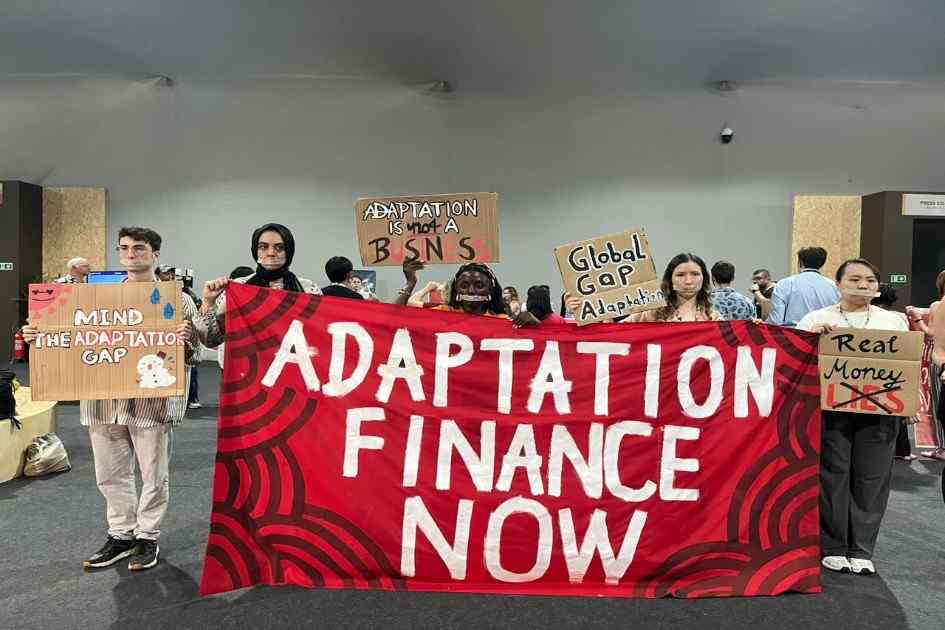
The pledge to triple adaptation finance by 2035 was welcomed as an important step, but civil society and scientists said the timeline is dangerously slow.
“The outcome on adaptation is an insult to every community currently underwater or on fire,” said Harjeet Singh. “Tripling by 2035 ignores the disasters unfolding today.”
On Loss and Damage, negotiators declared the new institutional arrangements “fit for purpose,” but activists argue that without substantial grant-based contributions, the system risks stalling.
“A system cannot rebuild a home without money,” Singh said. “Bureaucratic pledges cannot feed a family whose crops have failed.”
Advocate Hafizul Islam, co-chair of the WIM Executive Committee, urged vulnerable countries to submit strong proposals.
“In the next two years, countries can access US$250 million from the Loss and Damage Fund. Nations like Bangladesh must prepare robust, evidence-based programmes for direct access,” he said.
However, COP30 saw no new pledges for the fund, which currently totals US$756 million.
Finance: ambitious targets, weak commitments
COP30 reaffirmed the enormous scale of climate finance needs, estimating US$1.3 trillion annually by 2035. But negotiators failed to translate this into binding responsibilities for developed countries.
“The draft Global Mutirão text exposes a central truth: climate-vulnerable nations are still being pushed into debt for a crisis they did not create,” said M. Zakir Hossain Khan, CEO of Change Initiative.
“We welcome recognition of the true scale of finance and the promise of tripling adaptation support but developed countries are already diluting firm commitments into vague language.”
Khan said the Belém Facility and the Loss and Damage Fund “offer hope, but only if backed by capital, direct access and binding obligations.”
Harjeet Singh shared similar concerns: “By refusing to put real numbers on the table, the EU and other rich countries are dodging their legal and moral obligations.”
Scientists warn 1.5°C remains in jeopardy
The final decision launched the “Belém Mission to 1.5°C,” tasking the COP30 and COP31 Presidencies with presenting a report at COP31 on enabling greater NDC and NAP ambition. But the Mission lacks a formal mechanism to feed back into the UNFCCC process.
The Global Implementation Accelerator was also launched to speed up implementation of climate commitments. If effectively designed, both initiatives could still advance the conversation toward a concrete fossil-fuel phase-out roadmap.
Yet climate scientists remain concerned. “COP30 lacked a clear, sufficient commitment to phasing out fossil fuels and a specific roadmap to meet the minimum conditions for a credible 1.5°C pathway,” Dr. Saiful Islam said. “The summit also struggled to secure concrete grant-based finance for vulnerable nations.”
New gender action plan & just transition mechanism adopted
COP30 delivered two major equity-focused outcomes: the new Gender Action Plan (GAP) and the establishment of a landmark Just Transition Mechanism.
The GAP strengthens commitments to gender-responsive climate policy, requiring gender-disaggregated data, robust gender analysis, and enhanced coordination across climate, gender and development institutions. It urges countries to integrate gender across all national climate frameworks and UNFCCC reporting, creating new accountability structures. The plan also acknowledges that race, disability, age and other factors shape vulnerability and participation, providing a foundation for more inclusive implementation over the next decade.

Alongside this, Parties agreed on a Just Transition Mechanism centred on human rights and social justice. It commits countries to uphold labour rights, protect Indigenous Peoples and ensure decent work, while enhancing cooperation, technical assistance, capacity-building and knowledge-sharing. Though celebrated as one of the strongest rights-based outcomes in UN climate negotiations, critics note the absence of timelines, implementation modalities and financing commitments.
What’s next?
“COP30 delivered historic progress with a just transition mechanism, a strengthened gender action plan, and a pledge to triple adaptation finance by 2035. Yet the failure to confront fossil fuels means the final deal still falls short of the urgent ambition climate-vulnerable communities like ours deserve,” said Bangladeshi youth delegate Sohanur Rahman, Executive Coordinator of YouthNet Global.
Manjeet Dhakal, Head of the LDC Support Team, reflected on the “Mutirao” political package:
“The Belém political package has been adopted, and the Mutirao decision is its backbone. The term reflects inclusive engagement and collective action. It includes our long-standing call to triple adaptation finance. It may not give us everything, but the language we fought for is there.
“It also contains the Belém Roadmap for 1.5°C, offering hope that the goal remains alive. Across the package, there are decisions on adaptation, mitigation, finance, loss and damage and technology, including a call to further replenish the Loss and Damage Fund.
“We may not have achieved all we hoped for, but this is a step forward. It strengthens trust in multilateralism at a difficult geopolitical moment. Now the focus must shift to implementation.”
COP31 will convene in Turkey, with Australia taking the unusual role of “President of Negotiations.”
Antalya will host COP31, with Turkey serving as COP President-Designate, organising the World Leaders Summit, appointing High-Level and Youth Champions, and leading the Action Agenda. Australia will preside over negotiations and host a pre-COP in the Pacific.
Brazil has committed to maintaining momentum by delivering roadmaps for deforestation and a just transition away from fossil fuels. President Lula will take the fossil fuel transition roadmap to the G20 summit in Johannesburg, where Brazil, Australia, Turkey and others endorsed a climate declaration despite US objections.
With the US stepping back, stronger leadership from others is essential. COP31 aims to reinforce solidarity with Pacific Island states, while COP32 in Ethiopia will be the first-ever COP led by an LDC.
Attention must now shift to accelerating domestic NDC implementation, especially among countries advocating for a fossil-fuel transition.




