




From floods to forced labour: Bangladesh’s climate migrants trapped in modern slavery
Climate-driven displacement in Bangladesh is pushing millions into unsafe migration, slums and exploitative labour, revealing how environmental crisis, debt and weak protections fuel modern slavery and threaten human dignity.
Yesterday was International Migrants Day. It recognises the vital contributions migrants make worldwide and underscores the urgent need to protect their rights and dignity. In Bangladesh, one of the world’s most climate-vulnerable countries, this call carries particular weight.
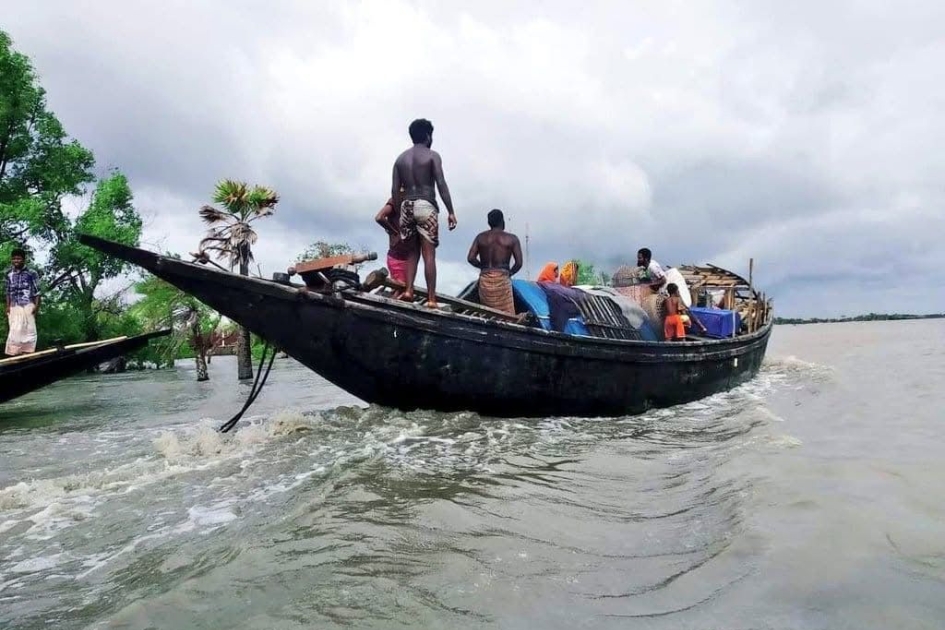
Each year, nearly 700,000 Bangladeshis are forced to leave their homes due to intensifying monsoon floods, riverbank erosion and rising sea levels, according to the Internal Displacement Monitoring Centre (IDMC).
For many, displacement does not lead to safety or opportunity. Instead, it pushes them into overcrowded cities, informal labour markets, deep debt and what human rights organisations increasingly describe as modern slavery.
Bangladesh’s low-lying geography and high population density make it particularly vulnerable to the impacts of climate change. As livelihoods disappear and rivers and seas swallow land, millions face a future shaped not only by environmental loss but by exploitation and insecurity.
Life by the River, Lost Again and Again
Bizly Begum and her husband, Khairul, once lived in Bhola, a coastal district repeatedly battered by floods and river erosion. Their modest home was washed away once, rebuilt and then destroyed again, three times in total.
“After the third time, we realised this was no longer safe,” Bizly said.
With their four-year-old son Yeasin, the family left behind ancestral land farmed for generations and moved to Dhaka, hoping the city might offer safety and a chance to rebuild. Like thousands of others, they joined the growing tide of climate migrants seeking survival rather than prosperity.
A City Bursting at the Seams
Dhaka’s greater metropolitan area is now home to more than 36 million people, with an estimated 2,000 climate migrants arriving every day. Many seek work in garment factories, construction sites, transport or domestic service, any opportunity to earn a living.
But opportunity is scarce.
“Most of them are climate victims,” said Manish Kumar Agrawal, Country Director of Concern Worldwide Bangladesh. “They come for better livelihoods, but Dhaka is already overcrowded. Many end up in slums with limited access to water, education, healthcare and basic services. Living conditions are extremely difficult.”
Without permanent addresses or legal recognition, climate migrants struggle to access schooling, healthcare or worker protections. Informality becomes the norm, leaving families exposed to abuse and exploitation.
Korail, a Fragile Refuge
Korail, Dhaka’s largest informal settlement, illustrates this vulnerability. According to the UN Migration Agency, nearly 70 percent of Korail’s residents fled environmental shocks such as floods, cyclones or river erosion in their home districts.
Recently, a massive fire swept through the settlement, destroying hundreds of homes. Among those affected was Minu Begum, a mother of two.
“Everything in my home is totally gone. I could not even save one dress for my child,” she said.
Emergency aid provided short-term relief through food, water and temporary shelter, but long-term housing and stable livelihoods remain elusive. Overcrowding, lack of tenure security and exclusion from formal systems make recovery painfully slow, even after external support arrives.
The Hidden Cost, Debt and Exploitation
For many climate migrants, displacement does not end with relocation. It marks the beginning of a deeper cycle of debt and exploitation.
A study by the International Institute for Environment and Development shows that climate-affected households are 161 percent more likely to migrate internally and 214 percent more likely to migrate abroad. Overseas migration often costs families more than Tk 4 lakh, forcing them to sell land or borrow from informal lenders at crippling interest rates.
Once indebted, migrants lose bargaining power.
“Modern slavery through debt bondage, forced labour, unsafe working conditions and withheld wages is becoming a hidden outcome of climate migration,” said Sohanur Rahman, Executive Coordinator of YouthNet Global.
He stressed that climate migrants are not choosing to move but are being forced by circumstances beyond their control.
“Climate migrants are not statistics or burdens; they are rights holders. Protecting their dignity demands urgent action to secure safe livelihoods, legal protection and social inclusion. Governments, donors and the international community must act now to put climate migrants at the heart of climate justice and development responses,” Rahman said.
The study found that 92 percent of internal climate migrants experience conditions linked to modern slavery, including excessive working hours, hazardous workplaces, restricted freedom and wage theft. For international migrants, particularly those in Gulf countries, exploitation is often more severe, with many working without contracts or legal protections in high-risk sectors such as construction.
Bangladesh’s climate crisis is therefore not only an environmental emergency. It is also a labour rights and human dignity crisis.
The Numbers Behind the Crisis
Government projections suggest that by 2050, one in seven Bangladeshis, around 24 million people, could be displaced by climate change. For a densely populated country of 170 million, the pressure on cities, labour markets and social services is immense.
Children face disrupted education, rising health risks and psychological trauma. Families struggle to secure food, clean water and shelter. These pressures entrench poverty and dependency long after floods recede or cyclones pass.
Future projections are even more alarming. The Intergovernmental Panel on Climate Change warns that sea levels could rise between 0.48 and 2 metres by 2100, potentially displacing millions more and overwhelming already fragile urban systems.
Climate Change as a Security Crisis
Bangladesh’s Environment Adviser Syeda Rizwana Hasan recently warned that climate change threatens the country’s security and stability, cautioning that rising seas could force Bangladesh to redraw its map within decades.
A one-metre sea-level rise, plausible by mid-century, could submerge 21 coastal districts, displacing millions and salinising rivers that sustain agriculture and fisheries.
“We are talking about the surrender of sovereignty, the loss of national territory and the erasure of communities,” she said.
With 65 percent of the population reliant on freshwater fisheries for protein, saline intrusion threatens food security at a national scale. Climate change, she stressed, is not a distant environmental issue but a multiplier of instability.
Floods, cyclones and droughts already cost Bangladesh 1 percent of GDP annually, a figure expected to double by 2050.
Resilience Amid Hardship and the Need for Action
Despite these challenges, resilience endures. Families like Bizly’s continue to seek work, rely on community networks and strive to provide stability for their children. NGOs and international organisations offer training, shelter and basic services, but the scale of need far exceeds available support.
Bangladesh’s climate migration crisis can no longer be treated solely as a humanitarian issue. It is a labour rights, urban planning and social justice emergency. Without safe migration pathways, debt regulation, climate-resilient rural livelihoods, decent urban housing and strong worker protections, millions will continue to move from environmental disaster into human-made exploitation.
“We survived the river,” Khairul said quietly. “But now the city itself is our biggest challenge.”
As climate impacts intensify, the line between survival and slavery is growing dangerously thin. Protecting climate migrants’ rights and dignity is no longer optional. It is essential to climate justice and to safeguarding Bangladesh’s future.




