




New study warns NDC 3.0 needs $316 billion by 2030; calls for OECD grant-based finance to avert collapse of climate ambition
Bangladesh may be on track to deliver on its domestic climate promises, but the future of its global pledges is hanging by a thread. A new study by Change Initiative has revealed today at Hotel in Dhaka that while the country has managed to meet almost nine percent of its unconditional emission reduction target under NDC 2.0, the conditional part of the commitment nearly 90 million tonnes of potential cuts has been stymied by a near total lack of international finance. Of the USD 270 billion required in external support, just 1.25 percent has materialized.
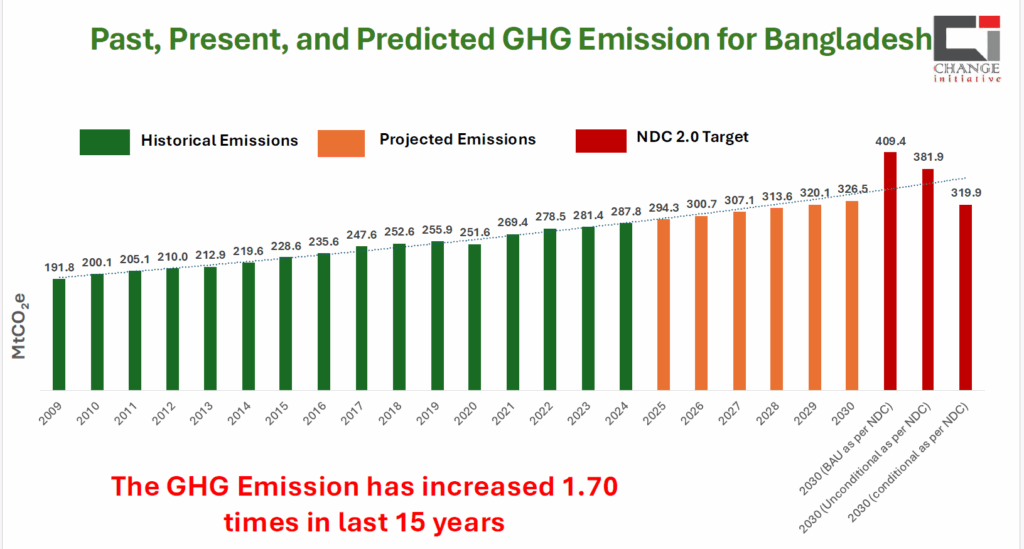
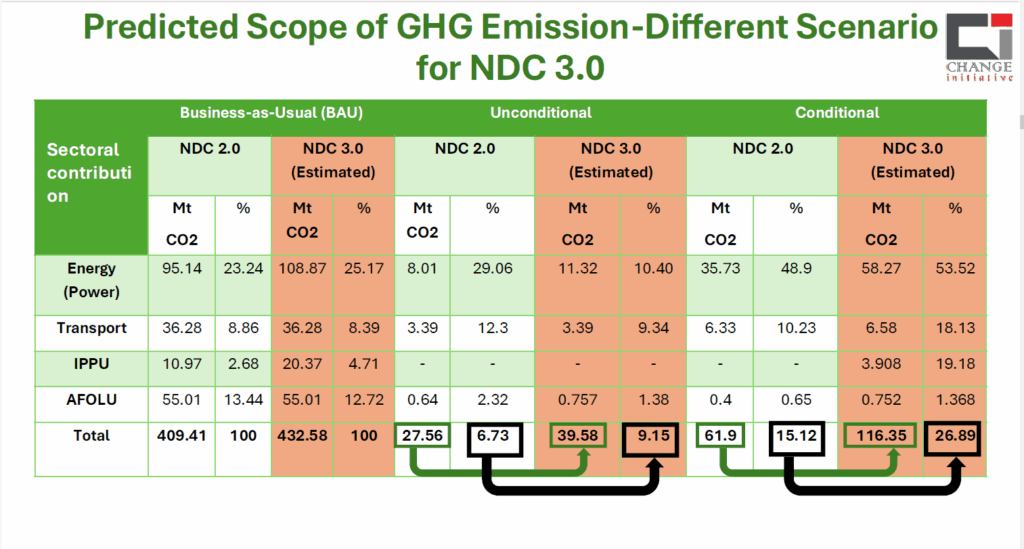
The report, titled “Bangladesh’s NDC-3.0: Pathways for Ambition, Action, and Finance,” comes as the government prepares to update its national pledge ahead of COP30 in Belém. According to the findings, Bangladesh will need USD 316 billion by 2030 to implement its new climate plan. Only USD 46 billion of this is expected to come from domestic resources. The rest USD 270 billion depends on international cooperation that has so far proved elusive.
“This is not charity, this is carbon justice,” said M. Zakir Hossain Khan, Chief Executive of Change Initiative, who led the research. “The world’s richest polluters must realize that our ambition will falter if they do not pay their share. For the OECD, this is not only about money it is a test of credibility, equity, and justice.”

The report paints a vivid picture of how transformative Bangladesh’s climate pathway could be if finance flowed. In the energy sector, for instance, installing 24,000 megawatts of renewable capacity could slash emissions by more than 58 million tonnes. In cities like Dhaka, simply raising the default air-conditioning temperature from 22 to 26 degrees Celsius could reduce peak electricity demand by over 4,000 megawatts. Agroforestry and mangrove restoration could deliver both carbon cuts and economic benefits, especially if blue carbon credits valued as high as USD 90 per tonne are tapped. In transport, widespread adoption of electric vehicles could turn one of the country’s fastest-growing sources of emissions into a cornerstone of its low-carbon transition.

But for all its potential, the study also identifies critical weaknesses. Poor waste management, inadequate urban planning, weak coordination among government agencies, and the absence of reliable emissions data threaten to undermine progress. The lack of a central monitoring and verification system means even existing reductions are difficult to track. An annual finance shortfall of nearly USD 3 billion further compounds the crisis.

Energy expert Professor Ijaz Hossain, who was involved in shaping the draft NDC 3.0, warned that failure to act decisively would come at a heavy price. “Dhaka is one of the world’s most densely populated cities, yet it is becoming unlivable,” he said. “This is not just about meeting global commitments, it is about safeguarding our own people. A just transition must be built on renewable energy and better waste management, and it will require genuine dialogue with citizens as well as international partners.”
As Bangladesh looks ahead to COP30, the message from the study is clear: ambition is not the problem, finance is. Without meaningful, grant-based support from developed countries, the country’s climate targets will remain aspirations on paper. Zakir Khan put it bluntly: “CoP30 is the final wake-up call. Anything less than real climate finance is not only a betrayal of Bangladesh, it is a betrayal of the Paris Agreement itself.”




