

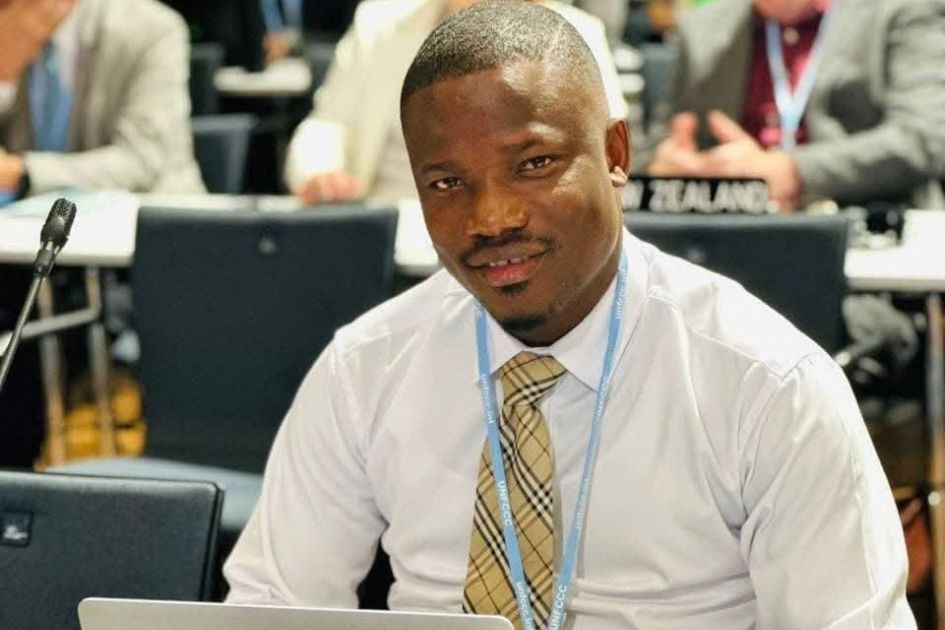



Liberian climate advocate Teddy P. Taylor has been appointed ACE Coordinator for the African Group of Negotiators, strengthening Africa’s climate education, public participation, youth engagement, and awareness efforts.
Liberian climate advocate Teddy P. Taylor has been appointed as the Action for Climate Empowerment (ACE) Coordinator for the African Group of Negotiators (AGN), a strategic role aimed at strengthening climate education, public awareness and citizen participation across Africa.
The appointment was confirmed on June 12, 2026, at the ongoing SB64 climate talks in Bonn by the Chair of the African Group of Negotiators, marking a significant step in efforts to place climate learning and public engagement at the center of Africa’s climate response.
In this new role, Taylor will help coordinate African positions on Action for Climate Empowerment, a UNFCCC framework that promotes climate education, public participation, access to information, training and international cooperation. The initiative is considered a key pillar in ensuring that communities across the continent are informed and actively engaged in climate solutions.
Taylor currently serves as Liberia’s National ACE Focal Point under the UNFCCC and is also the Focal Point for the Freshwater Challenge Initiative. He additionally holds the position of Assistant Director for External Relations in the Department of Multilateral Environmental Agreements at Liberia’s Environmental Protection Agency.
Over the years, he has worked closely with government institutions, civil society organizations and youth groups to strengthen climate awareness, improve stakeholder engagement and expand community participation in environmental decision-making processes in Liberia.
His appointment comes at a time when African countries are increasingly calling for stronger climate justice, expanded adaptation support and greater investment in resilience-building to address escalating climate impacts across the continent.
Officials say Taylor’s leadership will support the implementation of the Glasgow Work Programme on Action for Climate Empowerment while also strengthening coordination and cooperation among African governments and stakeholders.
The role is expected to enhance Africa’s collective voice in global climate negotiations and deepen collaboration on climate education, youth engagement and public awareness initiatives.
As Africa prepares for upcoming climate negotiations, Taylor’s new mandate is seen as a step toward ensuring that climate action is not only negotiated at diplomatic levels but also understood and driven by citizens, educators and young people at the community level.




