

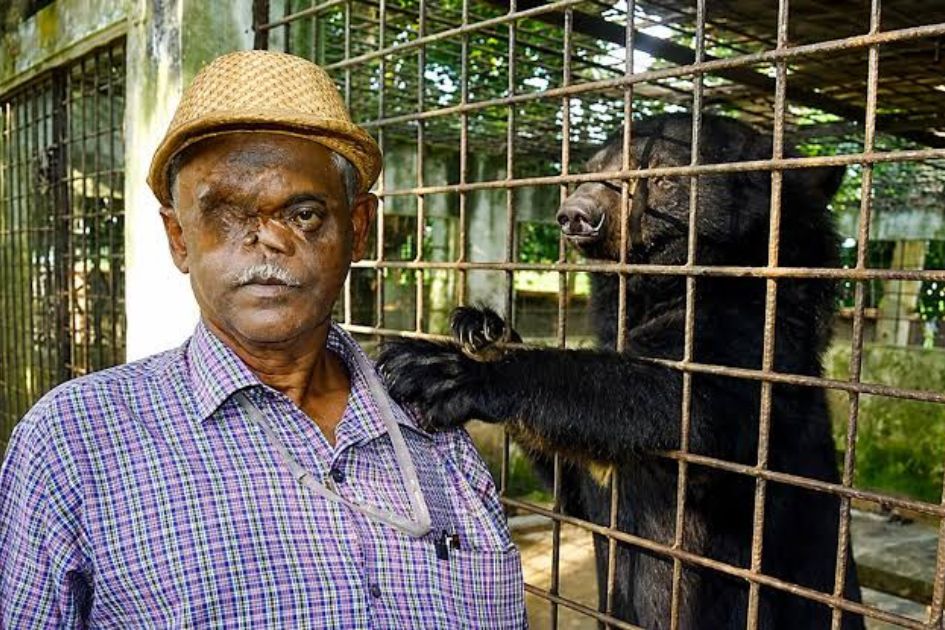



Revered for rescuing and rehabilitating injured wild animals over four decades, the founder of the Bangladesh Wildlife Service Foundation leaves behind a lasting legacy in wildlife conservation and rehabilitation.
Sitesh Ranjan Deb, the founder and chairman of the Bangladesh Wildlife Service Foundation who dedicated his life to rescuing and rehabilitating injured wild animals, has died at the age of 81.
He breathed his last at 9:05 a.m. on Tuesday at his home on Ramakrishna Mission Road in Sreemangal municipality in Moulvibazar district.
His family said he had been receiving treatment at home for several days after falling ill. When his condition deteriorated on Tuesday morning he was taken to Sreemangal Poly Clinic, where doctors declared him dead.
He is survived by three sons, four daughters-in-law, four daughters, grandchildren and many admirers, relatives and well-wishers.
After his death, his body was taken from the hospital to the Bangladesh Wildlife Service Foundation, where injured animals under the foundation’s care were brought before him for a final farewell. Hundreds of people gathered there to pay their last respects.
At 3:00 p.m. his body was taken to his ancestral home in Nowagaon, Sreemangal, where villagers and people from different walks of life paid tribute to him. His funeral rites were scheduled to be held at the family’s cremation ground.
Mohammad Mujibur Rahman Chowdhury, the member of parliament for the Moulvibazar-4 constituency comprising Sreemangal and Kamalganj, expressed deep sorrow over Deb’s death. In a condolence message, he prayed for the eternal peace of the deceased and conveyed his sympathy to the bereaved family.
Sreemangal Upazila Executive Officer Mohammad Ziaur Rahman also paid tribute to his body.
The Sreemangal Upazila Press Club, Sreemangal Press Club, Sreemangal Chandranath Government Primary School, environmental organisations, wildlife conservationists and leaders of social and cultural organisations also expressed their condolences.
They said his death was an irreparable loss to Bangladesh’s wildlife conservation movement.
Haripada Roy, president of the Sreemangal branch of the Bangladesh Puja Celebration Council, said: “People like Sitesh Babu are not born in every generation. He devoted his life to voiceless animals. His passing is an irreparable loss not only for Sreemangal but for the entire country.”
Ekramul Kabir, a leader of the Sreemangal Primary Teachers’ Association, said: “The countless rescued animals that thrived under his affection and care have now lost their guardian. Even the caged and injured animals seem to be searching for him. Sitesh Babu cared for them as if they were his own children.”
Teacher Jahar Tarfadar said Deb’s father had also been a wildlife enthusiast. Long before Bangladesh’s independence, his father used to bring various animals home and care for them, planting in him a lifelong compassion for wildlife.
He said that as forests were destroyed, habitats disappeared and wildlife became increasingly threatened by human cruelty, Deb emerged as a protector of wild animals. Until the last day of his life, he remained devoted to rescuing injured, sick and distressed wildlife, treating them and returning them to their natural habitats.
His life changed after a bear attack
In January 1991, Deb was attacked by a large Indian bear while trying to drive away wild boars at Patrakhola Tea Garden. The bear’s claws left him without one eye, his nose, part of his cheek and mouth and several teeth. After a prolonged battle for survival, he underwent multiple plastic surgeries at the Combined Military Hospital in Dhaka and was given a new lease of life.
He often described it as “my second life.” He dedicated that second life to the service of wildlife.
A saviour of thousands of animals
Over four decades, Deb rescued thousands of wild animals. Pig-tailed macaques injured by electrocution, pythons, fishing cats, civets, spectacled langurs, wild boars, eagles, tokay geckos and various species of snakes were among the many animals that found new life through his care.
His home in Sreemangal became widely known as a “mini zoo”, although it was in fact a sanctuary for injured and helpless wild animals.
He never stopped despite financial hardship
To meet the costs of food, treatment and care for the animals, Deb relied on income from his fish farm. Even during periods of financial hardship, he never suspended his work for wildlife.
In 2011, on the advice of former Bangladesh Bank Governor Atiur Rahman, he established the Bangladesh Wildlife Service Foundation. The organisation subsequently expanded its activities, treating countless rescued animals before releasing them into natural habitats including Lawachara Forest.
This post is republished from bdnews24.com.




