

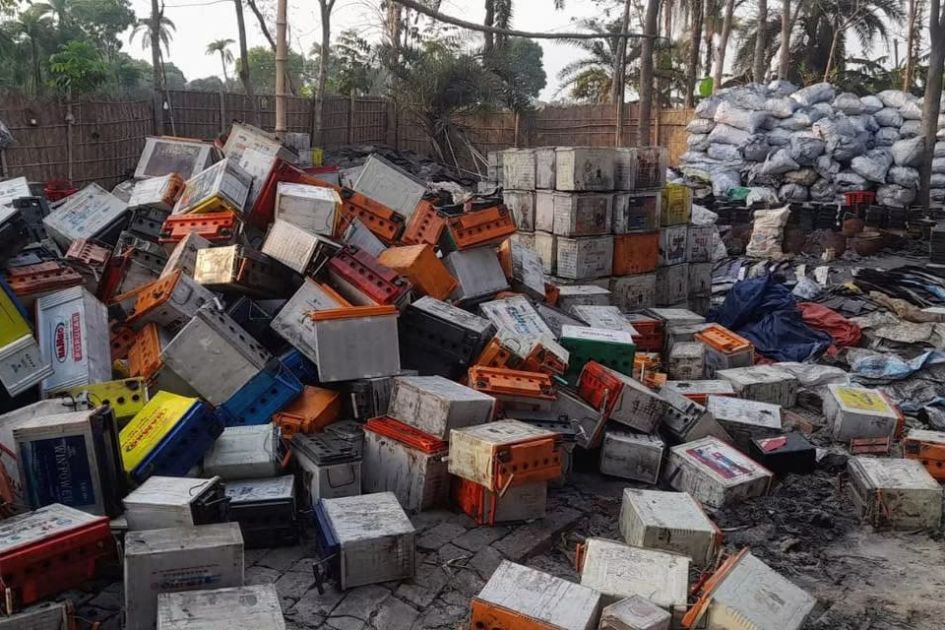



Bangladesh has shut 11 illegal lead recycling factories in six months as widespread toxic battery smelting exposes millions, prompting stronger enforcement amid calls for sweeping reforms and stricter environmental governance.
Bangladesh has intensified enforcement against informal lead-acid battery recycling and smelting operations, shutting down 11 hazardous facilities over the past six months, including some with alleged Chinese links, across Savar, Dhamrai, Keraniganj, Gazipur, Narsingdi, Shariatpur and Munshiganj. The repeated enforcement drives highlight a deepening public health emergency driven by toxic industrial activity operating largely beyond effective regulatory oversight.
Bangladesh ranks fourth globally in lead pollution, affecting an estimated 36 million children, roughly 60 percent of the country’s youth. This widespread exposure results in a severe loss of childhood IQ and hundreds of thousands of adult cardiovascular deaths, costing the nation up to US$28 billion annually, or about 6 to 9 percent of its GDP.
In Dhaka, some studies by icddr,b found that more than 90 percent of tested children exceeded elevated blood lead safety thresholds.
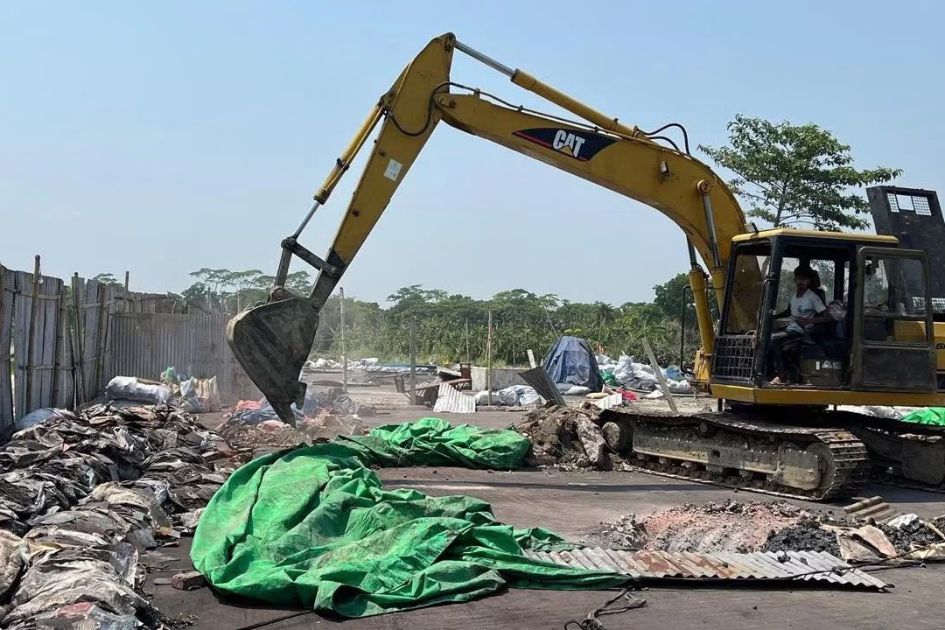
While brick kilns have long been associated with Bangladesh’s deteriorating air quality, informal lead-acid battery recycling has emerged as a more concentrated and less visible source of pollution. These operations release fine lead particles through crude smelting processes, creating severe health risks, particularly for children in densely populated industrial and peri-urban areas.
The government is currently finalizing a National Strategy and Action Plan on lead pollution aimed at coordinating long-term responses across the environmental and health sectors. Additional Secretary Fahmida Khanom said the framework is being prepared for submission to the cabinet.
Scale of a Hidden and Expanding Industry
A recent study by Ahsanullah University of Science and Technology reveals a stark regulatory disparity in Bangladesh’s battery recycling sector, identifying approximately 1,100 such facilities operating across the country, while only seven hold official environmental clearance from the Department of Environment (DoE). Among these few authorized operations, Kishan Accumulators Ltd. stands out as the largest environmentally friendly facility. However, the DoE admits that an accurate census of the vast illicit landscape remains elusive, as these clandestine operations are frequently established in tiny makeshift spaces that evade detection. While official figures remain conservative, environmental experts argue that the true scale of the crisis is far more severe, estimating that the actual number of informal hazardous battery recycling units could be as high as 5,000.
Experts describe a fragmented system in which most used lead-acid battery processing occurs outside formal oversight, creating major gaps in environmental governance and enforcement capacity.
International research shows that rapid growth in lead-acid battery use, especially driven by battery-powered three-wheelers, has increased the flow of used batteries into informal recycling networks, where weak regulation enables unsafe smelting practices.
This aligns with UNICEF warnings that Bangladesh remains among the countries most affected by childhood lead exposure, with millions of children at risk of irreversible neurological and developmental damage.
Formal Industry vs Informal Recycling Networks
The lead-acid battery market in Bangladesh is valued at approximately BDT 10,000 crore, nearly US$840 million. Driven by the explosive growth of electric rickshaws, easy-bikes, automotive replacements and solar power systems, this billion-dollar industry, including associated recycling networks, currently powers mobility and off-grid energy across the country.
The Accumulator Battery Manufacturers and Exporters Association of Bangladesh (ABMEAB) represents the formal battery manufacturing sector, including companies such as Rahimafrooz, Hamko and Panna Batteries. The association includes around 19 licensed firms operating under regulated industrial and environmental standards. Local manufacturers produce the vast majority of lead-acid batteries, with key players including Hamko, Navana, Saif Power and Walton.
However, this formal sector represents only a small fraction of the overall market. Industry estimates suggest that 70 to 75 percent of battery recycling activity is controlled by informal and largely unregulated operations, commonly known as “bhattis”, informal smelting furnaces operating outside licensing and environmental compliance systems. Electric three-wheelers and easy-bikes account for roughly 65 to 75 percent of domestic battery usage, with the remainder split between Starting-Lighting-Ignition (SLI) automotive units, telecom towers and solar home systems.
Enforcement Targets Industrial Hotspots
Authorities have concentrated enforcement efforts in recurring industrial hotspots where illegal facilities repeatedly emerge.
In Gazipur’s Sreepur area, an unlicensed recycling unit in Mansurabad under Maona Union, located in the middle of the Sal forest, was recently raided, with smelting equipment seized after operators fled the site. In Savar’s Hemayetpur and Jhauchar areas, multiple sites were dismantled due to a lack of environmental clearance and reports of toxic emissions affecting nearby communities and farmland.
In Dhamrai, authorities destroyed several illegal smelting operations in Bhararia and Sutipara. Enforcement drives in Konapara, Manda and Samadnagar under the wider peri-urban Dhaka industrial belt led to the sealing of multiple installations, while in Aminbazar six furnaces used for open burning of used batteries were demolished in a coordinated operation.
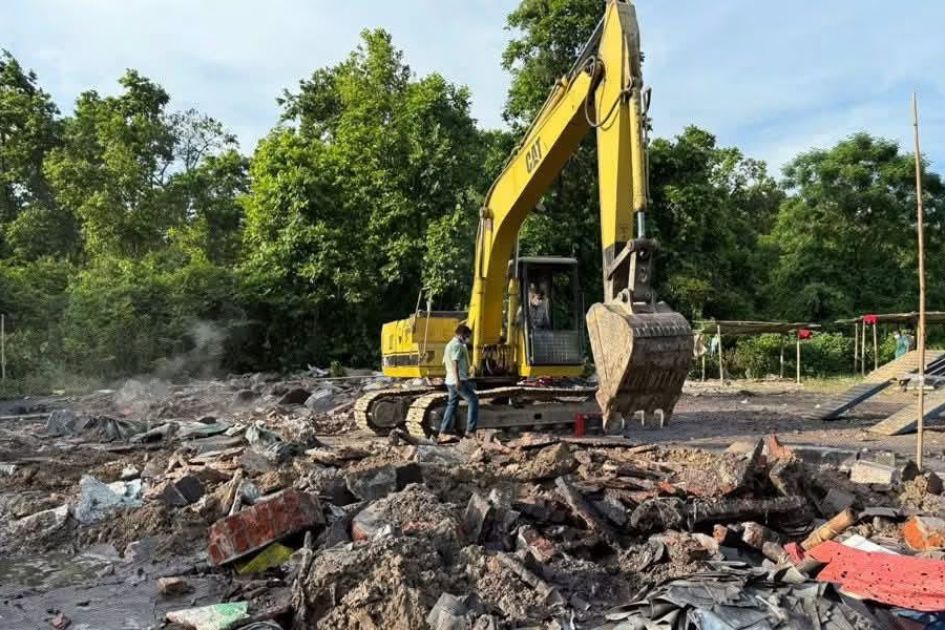
Environmental experts say the pollution process is direct and persistent. Used batteries are broken apart and smelted in rudimentary open or semi-open furnaces, releasing dense toxic plumes containing lead and other hazardous compounds. These pollutants settle into soil and water systems, gradually entering the food chain through agricultural contamination and creating long-term exposure risks that are difficult to reverse.
Health and Economic Burden Deepens Concern
Lead exposure is estimated to cost Bangladesh around US$29 billion annually, nearly 8 percent of GDP, through healthcare costs, productivity losses and reduced human capital development. This burden reflects not only a health crisis but also a major structural drag on national development.
Globally, lead poisoning affects one in three children and is linked to millions of deaths annually, along with irreversible neurological damage, reduced cognitive development and long-term productivity losses driven by lower IQ and reduced lifetime earning potential.
In Bangladesh, studies suggest millions of children are exposed to elevated lead levels, with long-term consequences for public health systems, education outcomes and economic resilience.
Public health experts warn that lead exposure often remains undetected for years, making it one of the most dangerous yet under-recognized environmental health threats.
Prof. Quazi Ahmed Zakki of the Institute of Epidemiology, Disease Control and Research said lead pollution remains a critical but under-addressed public health issue, calling for stronger regulation, improved surveillance and greater public awareness.
Calls for Systemic Reform and Local Governance Action
Policy experts argue that periodic crackdowns are insufficient without structural reform. They call for Extended Producer Responsibility mechanisms to hold manufacturers accountable for the full lifecycle of batteries, expansion of licensed recycling capacity, stronger environmental monitoring systems and investment in safe regulated infrastructure.
As enforcement continues across industrial hotspots, the repeated cycle of shutdowns and relocation highlights a deeper governance failure. Regulatory systems are not keeping pace with a rapidly expanding informal toxic economy, leaving communities exposed to preventable long-term contamination risks.
Environmental advocates warn that enforcement alone cannot resolve the crisis.
“The toxic emissions from burning used batteries are highly hazardous, especially for children,” said Sohanur Rahman, Executive Coordinator of YouthNet Global. “Enforcement must be sustained, coordinated and preventive, not reactive.”
Officials acknowledge the complexity of enforcement. Md. Ziaul Haque, Additional Director General of the Department of Environment, said, “Because these factories operate in small informal spaces, it is incredibly difficult to track them. When one is shut down, they often relocate and restart in nearby areas.”
“We have already asked district administrations to monitor informal lead battery industries,” Additional Secretary Fahmida Khanom said, emphasizing plans to gradually formalize the sector. Md. Rayhan Kaosar, Secretary of the Ministry of Environment, added that engaging local government bodies will be essential to breaking the enforcement and restart cycle.
A Structural Governance Test
The ongoing cycle of shutdowns underscores a critical turning point in Bangladesh’s environmental governance. Enforcement alone cannot keep pace with a rapidly expanding informal toxic economy, where exposure is continuous, diffuse and largely preventable.
Without systemic reform, stronger accountability mechanisms and investment in safe regulated recycling infrastructure, the country risks locking in a long-term public health burden that silently undermines human capital, productivity and child development for generations.
The challenge is no longer only about shutting down illegal factories. It is about closing the governance gap that allows them to keep returning.




