

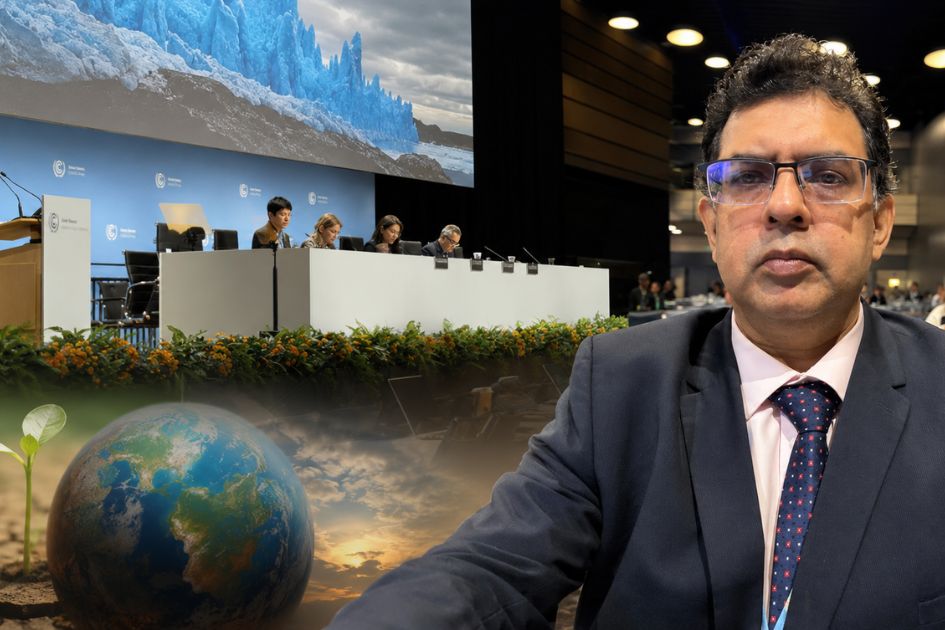



At SB64 in Bonn, Bangladesh and other LDCs are pressing for climate finance, adaptation support, loss and damage funding, technology transfer, and stronger implementation to protect vulnerable communities.
Bangladesh and other Least Developed Countries (LDCs) are pushing for urgent implementation of climate commitments at the ongoing SB64 climate negotiations in Bonn, with a strong focus on climate finance, adaptation, loss and damage, and support for vulnerable nations, a Bangladeshi climate negotiator said.
SB64 is primarily about ensuring that climate negotiations move from promises to implementation, according to Professor A.K.M. Saiful Islam, one of Bangladesh’s official negotiators at the conference and a climate scientist from the Bangladesh University of Engineering and Technology (BUET).
Among the most important priorities for Bangladesh is securing predictable, adequate and grant-based climate finance for adaptation and resilience-building. The country is seeking scaled-up climate funding, stronger links between finance and National Adaptation Plans (NAPs), and progress on the roadmap from COP30 to COP31.
Bangladesh is also calling for easier access to adaptation finance, increased support for coastal protection, climate-resilient agriculture and urban resilience, along with greater transparency on how developed countries will deliver their climate finance commitments.
Another key issue at the negotiations is the Global Goal on Adaptation (GGA), where discussions are focused on advancing indicators and methodologies to measure adaptation progress. For vulnerable countries such as Bangladesh, adaptation remains a matter of survival.
Bangladesh is advocating for recognition of adaptation needs in deltaic and coastal regions and for indicators that capture climate impacts on water security, food security, health and displacement. The country is also seeking stronger support for implementing its National Adaptation Plan.
Loss and damage remains another major concern. Although there is no standalone agenda item on the issue at SB64, discussions continue through the Warsaw International Mechanism, the Santiago Network and the Fund for Responding to Loss and Damage (FRLD).
Bangladesh is urging the operationalization and capitalization of the Loss and Damage Fund to support communities affected by sea-level rise, salinity intrusion, cyclones, floods and climate-induced displacement. The country is also seeking recognition of non-economic losses, including damage to cultural heritage and ecosystem degradation.
Negotiators are also discussing the outcomes of the Global Stocktake (GST), which Bangladesh believes should shape the next round of Nationally Determined Contributions (NDCs) and future implementation efforts.
The country is calling for stronger mitigation measures by major greenhouse gas emitters to keep the 1.5 degrees Celsius temperature target within reach and for adaptation and resilience priorities to be fully integrated into future climate action.
On the issue of Just Transition and fossil fuel transition, Bangladesh is seeking mechanisms to implement COP30 outcomes, access to finance and technology for renewable energy expansion and assurances that energy transition efforts will not compromise development goals or energy access. The country supports a fair transition that reflects national circumstances.
Technology transfer and capacity building are also high on Bangladesh’s agenda, with calls for greater access to climate technologies, early warning systems, climate information services and technical support.
According to Professor Islam, success at SB64 for Bangladesh and other LDCs would mean accelerated adaptation finance, a fully operational loss and damage architecture, stronger implementation of the Global Goal on Adaptation and enhanced climate ambition from major emitters to preserve the 1.5C goal.
“Vulnerable countries cannot wait for action at COP31, implementation must begin now,” he said.
Writer: Professor A.K.M. Saiful Islam, one of Bangladesh’s official negotiators at SB64 and a climate scientist from the Bangladesh University of Engineering and Technology (BUET)




