

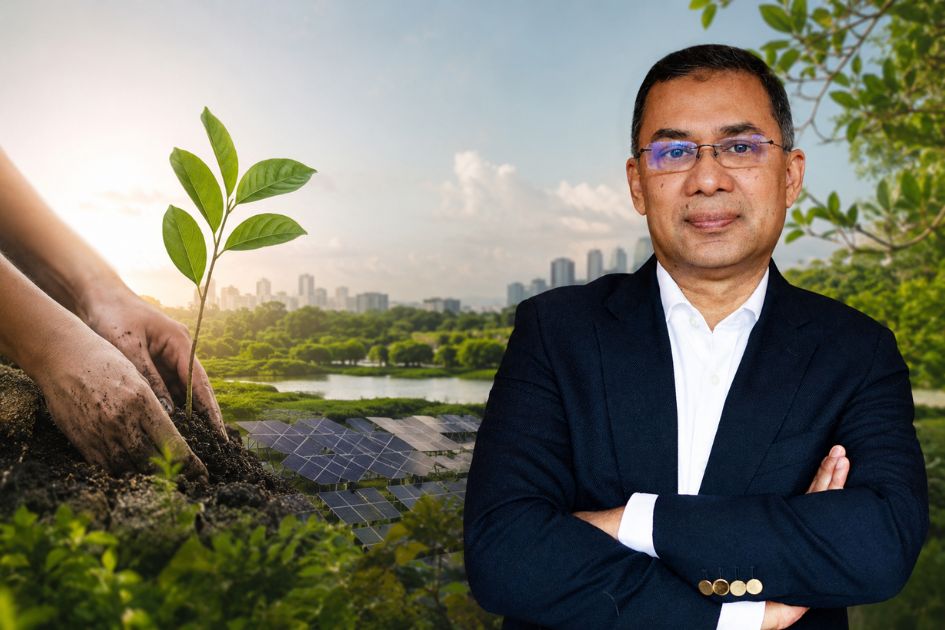

Marking World Environment Day 2026, Prime Minister Tarique Rahman announced ambitious climate measures, including planting 250 million trees, strengthening adaptation efforts, expanding renewable energy and promoting climate resilience nationwide.
Prime Minister Tarique Rahman reaffirmed Bangladesh’s commitment to tackling climate change and building climate resilience, announcing an ambitious programme to plant 250 million trees over the next five years as the country marked World Environment Day 2026.
World Environment Day, observed annually on June 5, is the United Nations’ flagship environmental campaign aimed at mobilizing global action to protect the environment. This year’s theme, “Climate Action,” designated by the United Nations Environment Programme (UNEP), highlights the urgent need for accelerated efforts to address the escalating climate crisis.
In a message issued on the occasion on Thursday, Rahman described climate change as one of the greatest challenges facing humanity, warning that its impacts are already being felt across the globe through rising sea levels, extreme heat, erratic rainfall, cyclones, storm surges, flash floods, droughts and biodiversity loss.
“Climate change has become a harsh reality for people around the world,” he said, stressing that environmental degradation and climate-related disasters are increasingly affecting economies, ecosystems and livelihoods.
Although Bangladesh contributes only a negligible share of global greenhouse gas emissions, the prime minister noted that the country remains among the world’s most climate-vulnerable nations due to its geographical location, high population density and climate-sensitive economy.
Citing the Climate Risk Index 2026, Rahman said Bangladesh continues to face significant climate threats, including increasing salinity intrusion in coastal regions, declining agricultural productivity, climate-induced displacement and the growing intensity and frequency of natural disasters.
Bangladesh has frequently been recognized as one of the countries most exposed to climate-related risks despite contributing only a fraction of global emissions, making climate adaptation and resilience a national development priority. The country has also emerged as a leading voice for climate justice and increased support for vulnerable nations in international climate negotiations.
To address these challenges, the government is implementing a comprehensive policy framework through the National Adaptation Plan (NAP) and Nationally Determined Contributions (NDCs) under the Paris Agreement. Rahman said efforts are underway to strengthen coastal protection, expand social forestry programmes, enhance disaster preparedness, rehabilitate climate-displaced communities and promote nature-based solutions.
Reaffirming his government’s commitment to environmental protection and sustainable development, the prime minister announced a programme to plant 250 million trees over the next five years. He said the initiative would contribute significantly to biodiversity conservation, ecosystem restoration, carbon sequestration and climate resilience.
Rahman also highlighted the government’s ongoing initiative to excavate and re-excavate 20,000 kilometres of canals nationwide to improve water management, restore ecosystems and enhance climate adaptation capacity.
He stressed the importance of transforming Bangladesh’s agricultural sector into a more sustainable, modern and climate-resilient system through integrated planning and investment. Research, innovation, training and agricultural extension services, he said, will be prioritized to help communities adapt to changing climatic conditions.
The prime minister further emphasized expanding renewable energy, promoting green industrialization, encouraging environmentally sustainable urban development, improving waste management systems, strengthening public transportation and accelerating the adoption of environmentally friendly technologies.
He also underscored the importance of leveraging opportunities in carbon credits and international carbon markets to support Bangladesh’s transition toward a low-carbon and climate-resilient economy.
Rahman reiterated the need for enhanced international cooperation, climate finance, technology transfer and capacity-building support for vulnerable developing countries facing the disproportionate impacts of climate change.
Calling for greater environmental awareness and responsible behavior, he expressed confidence that coordinated action by governments, businesses, civil society organizations and citizens can help build a greener, safer, more livable and climate-resilient future.
“Through collective action, environmental responsibility and sustained commitment, we can build a green, secure and climate-resilient Bangladesh for future generations,” the prime minister said.
He wished success for all programmes and initiatives undertaken across the country to mark World Environment Day 2026.




