

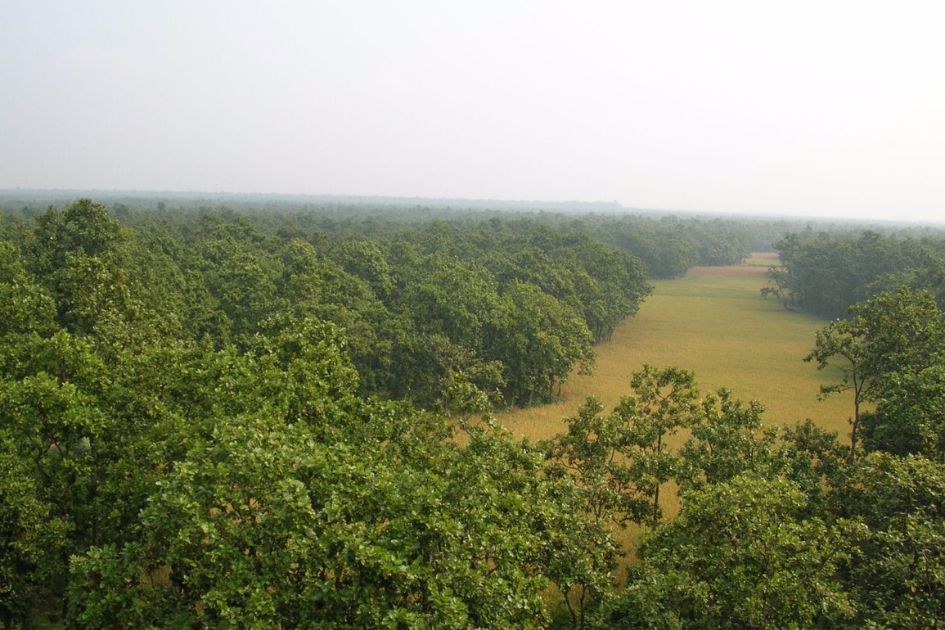



Bangladesh launches an ambitious plan to plant 250 million trees, restoring forests, creating jobs, protecting biodiversity, and strengthening climate resilience through community engagement and technology driven monitoring across the country.
Bangladesh is taking major steps to reverse decades of forest loss with a nationwide plan to plant 250 million trees over the next five years. The initiative, valued at approximately BDT 1,500 crore (USD 18 million), aims to restore degraded forests, protect biodiversity, improve urban air quality and strengthen climate resilience.
The Forest Department plans to submit the project proposal to the Planning Commission by April, with the program expected to begin in June. Prime Minister Tarek Rahman is scheduled to inaugurate the initiative.
The program will generate up to 600,000 jobs by creating 10,000 nursery-based enterprises and engaging local communities in tree planting and forest management. The plan also introduces modern technology, including a digital “My Tree Monitoring” app to track the growth and care of newly planted trees.
Regional Focus and Implementation
The 250 million saplings will be distributed across six key regions based on ecological and socio-economic needs. Coastal regions will receive 100 million trees aimed at restoring degraded mangroves, building green belts and protecting communities from storms and erosion. Hill forests in Chittagong, Sylhet and central areas will receive 50 million trees to revive degraded sal forests, which are a type of dry tropical forest, prevent landslides and improve soil fertility.
Urban areas will benefit from 12.5 million trees to reduce heat and air pollution, while production-focused forests will help ease pressure on natural woodlands used for timber, paper and other forest products. Community-led reforestation on marginal lands will plant 37.5 million trees along roads, railways, canals and riverbanks. Another 37.5 million trees will be planted around residential areas, schools, religious institutions and offices nationwide.
The program will be implemented in short-term, medium-term and long-term phases, planting 15 million trees in 2026, 135 million between 2027 and 2028 and another 100 million from 2029 to 2030.
Forest Decline Highlights Urgency
Bangladesh’s forest cover has declined from 12.76 percent in 2015 to 12.11 percent in 2025, with total forest area shrinking from 1.884 million hectares to 1.784 million hectares. Hill regions, particularly Rangamati, have suffered the greatest loss, with 80,000 hectares cleared over the past decade.
Over the same period, government infrastructure projects contributed to tree loss, with an estimated 1.3 million trees removed between 2023 and 2025. Critical forests such as Chunti Wildlife Sanctuary in Chittagong, Medhakachapia National Park in Cox’s Bazar and Fasiakhali Wildlife Sanctuary have been fragmented by roads and railways, affecting wildlife corridors.
Climate and Biodiversity Goals
Environment, Forest and Climate Change Minister Abdul Awal Mintu emphasized that the National Green Mission will not only restore forests but also enhance climate resilience, support salt-tolerant agriculture in southern regions and protect rivers and canals from pollution. The program prioritizes mangrove plantations across 200 hectares in coastal districts and includes community-led forest maintenance, ensuring local people benefit directly from tree growth and eventual sales.
Minister Mintu also called on citizens to plant forest, fruit and medicinal trees such as betel nut, mango, mahogany, shilkoroi, kadam, jackfruit, arjun, neem, haritaki and chalata in their homes and neighborhoods.
Sohanur Rahman, Executive Coordinator of YouthNet Global, highlighted the importance of local engagement, stating, “Locally led reforestation and ecosystem-based adaptation are key to building resilience against climate impacts while restoring biodiversity and supporting livelihoods in vulnerable communities.” He added that encouraging site-specific plantations with a detailed plan is critical and that plantation management is very important after planting for at least three to four years.
The initiative positions Bangladesh as a leader in combining large-scale reforestation, technological innovation and community empowerment to address climate change and biodiversity loss.




