

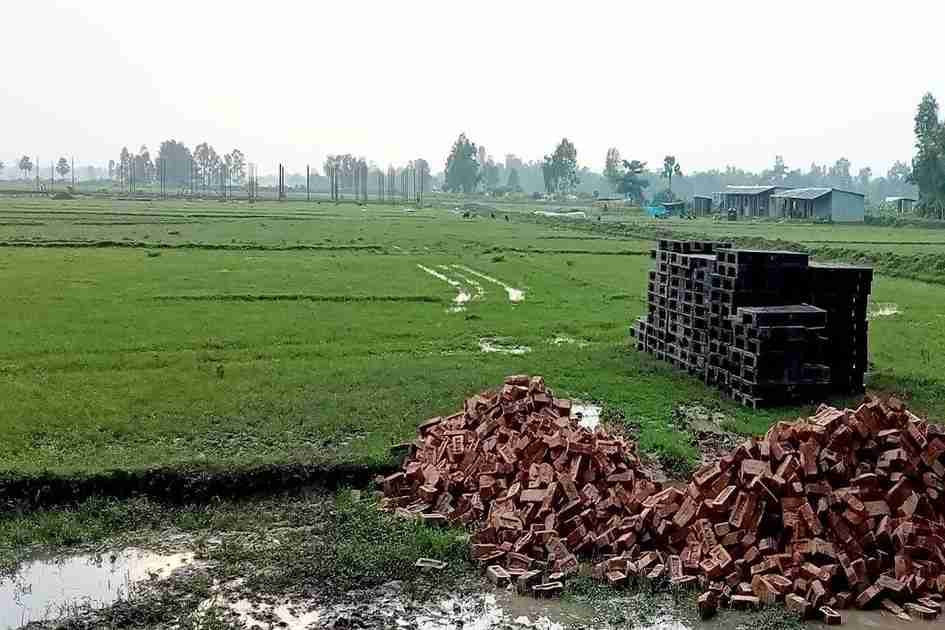

Bangladesh has issued a new land use ordinance imposing jail and fines to stop misuse of farmland, wetlands and hills, aiming to safeguard food security and the environment nationwide enforcement.
Bangladesh has taken a major step to protect agricultural land, wetlands and hills by promulgating the Land Use Control and Agricultural Land Protection Ordinance 2026. The new law introduces strict penalties, including up to three years’ imprisonment or fines of up to Tk 10 lakh or both.
The ordinance was issued by the President on January 19 and gazetted by the Legislative and Parliamentary Affairs Division of the Law Ministry. It will not apply to the three hill districts of Rangamati, Bandarban and Khagrachhari.
The government said the ordinance aims to protect agricultural land, ensure food security, prevent environmental degradation and promote sustainable and planned land use across the country.
Syeda Rizwana Hasan, adviser to the Ministry of Environment, Forest and Climate Change and the Ministry of Water Resources, said arable land in Bangladesh is shrinking by nearly one percent every year, posing a serious threat to national food security. She added that the ordinance seeks to curb widespread misuse of farmland, hill cutting and wetland filling that endanger food security and ecological balance.
Under the ordinance, changing land zoning without prior approval can result in up to six months’ imprisonment or a fine of up to Tk 1 lakh or both. Using agricultural land for non-agricultural purposes without approval may lead to up to one year’s imprisonment or a fine of up to Tk 2 lakh or both.
Construction on agricultural land, water bodies and wetlands, including commercial housing, resorts, industrial establishments and factories, will be punishable by up to two years’ imprisonment or fines of up to Tk 4 lakh or both. Using, selling, transporting or removing topsoil from agricultural land, hills, hillocks or water body banks for brick kilns or other purposes will also be punishable, carrying up to two years’ imprisonment or fines of up to Tk 5 lakh or both.
For damage to land in designated special agricultural zones, altering landform or using land for non-agricultural purposes, the maximum punishment has been set at three years’ imprisonment or fines of up to Tk 10 lakh, along with provisions for compensation and corrective measures.
The ordinance classifies offences related to damage to water bodies, wetlands, hills, forests and forest land as non-cognisable, bailable and non-compoundable. Penalties under existing laws for similar offences will apply, along with orders for restoration of land, removal of illegal structures and tree plantation.
To ensure planned land use, the government will prepare a nationwide land use zoning map dividing land into 18 zones, including agricultural, special agricultural, rivers and canals, wetlands, residential, commercial, industrial, forest and protected areas, ecologically critical areas, cultural heritage zones, hills and hillocks and fallow land. Draft maps will be published for public feedback, allowing citizens to submit objections within 30 working days. District committees led by deputy commissioners will review objections, with provisions for appeal to the government.
Officials said the zoning process will be transparent and public participation will be ensured at every stage. Special agricultural zones will be declared to safeguard food security, where land use changes will be strictly prohibited. Even outside such zones, land with two or more crops cannot be used for non-agricultural purposes. Tobacco cultivation will be banned on land with three or more crops and gradually restricted on single and double-crop land.
All government and private development projects must comply with the ordinance. Landowners may construct limited structures, such as homesteads, places of worship, family ponds or cottage industries, with proper permission. Violations of permit conditions may result in cancellation and removal of structures.
Environmental experts have welcomed the ordinance but stressed the need for strict enforcement. They said that if implemented properly, it could mark a turning point in stopping hill cutting and agricultural land loss, but without consistent enforcement, the objectives may remain unfulfilled.




