

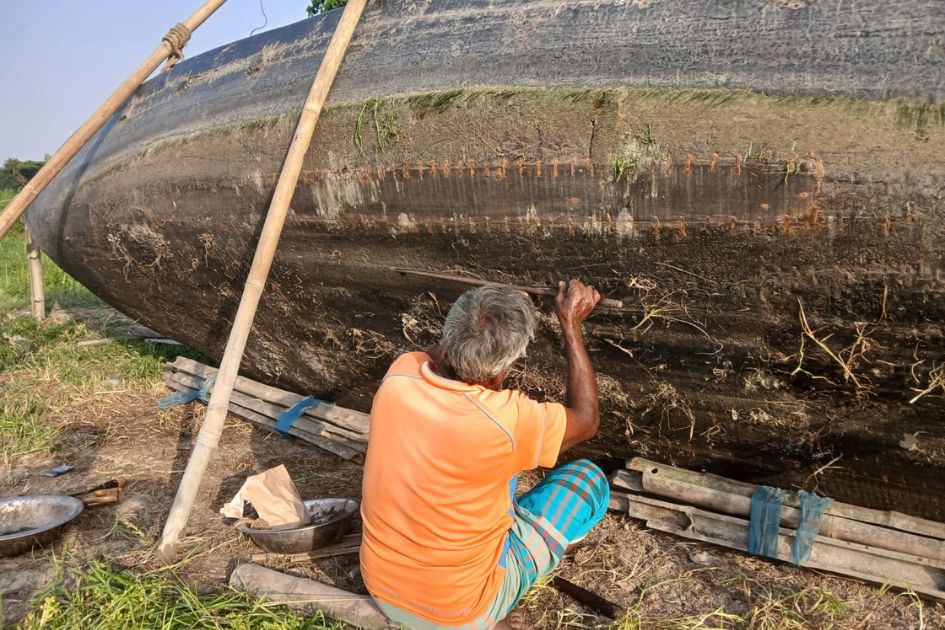



Blocked links to the Padma are shrinking catches and unravelling a Rajbangshi economy built on boats, nets and women’s labour. A restoration project is now under way, but residents say the most important three kilometres remain blocked.
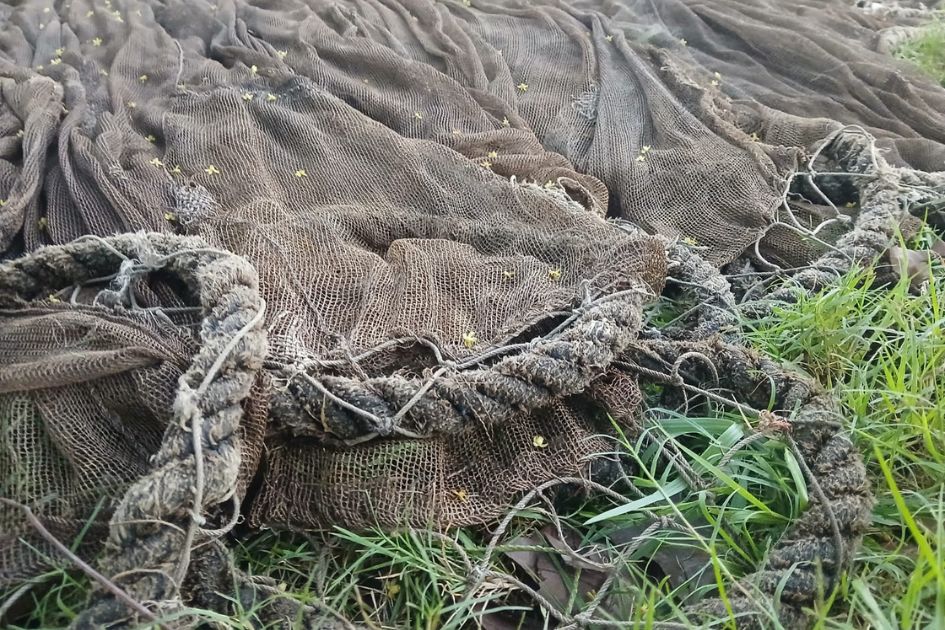
Padmarani Rajbangshi is sitting in the courtyard on a lazy afternoon, reminiscing about the beautiful past. In the monsoon, sacks of unripe gab fruit arrived at her home beside Arial Beel. Women crushed the fruit in large pots, squeezed out the juice and rubbed the dark liquid into pale fishing nets. The treatment made the mesh harder for fish to see and helped it survive longer in the water.
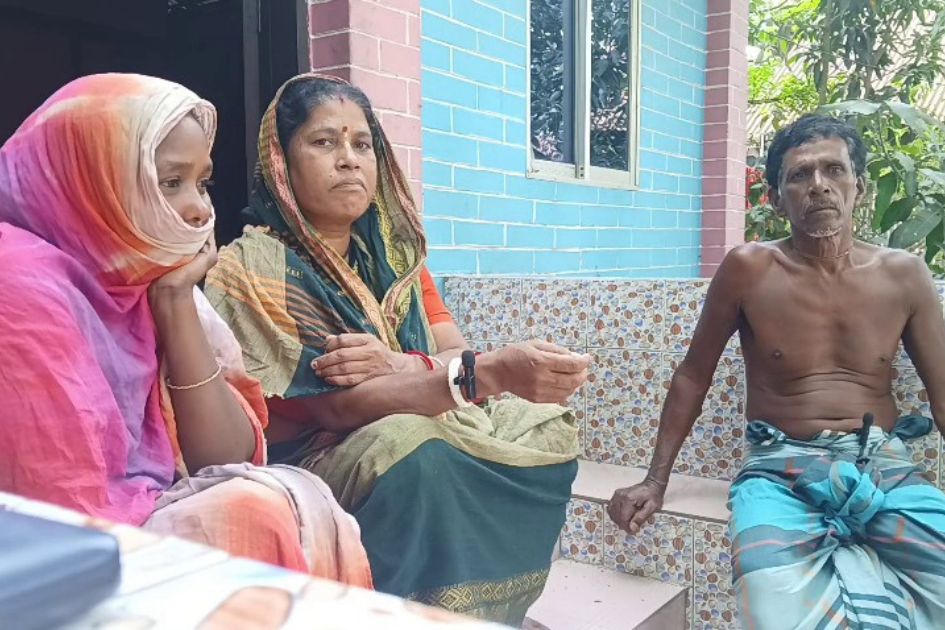
Gab is sometimes loosely translated into English as “velvet apple”, but that name can be misleading. The tree traditionally used to dye nets in Bangladesh is deshi gab, or Diospyros malabarica, also known as Indian or gaub persimmon. The use of its unripe fruit as a natural dye for fishing nets is part of a documented rural practice.
The dyeing was one task in a chain of work that once organised the wet season. Women repaired torn nets, dried fish that could not be sold fresh, kept track of sales and waited for the boats to return. Mothers-in-law and daughters-in-law sat together over the mesh. They sang as they worked.
“All the voices combined to create a different magical melody,” one woman recalled. The singing made long hours feel lighter. It also turned a household task into a shared space for women.
Now there are fewer nets to mend and dye. Shobha Rani Rajbangshi once used her earnings from fishing work and the sale of surplus fish to help repay microloans. “Instead of sewing nets, I am now sewing kantha (cloth),” she said, referring to the embroidered quilts common in Bengal.
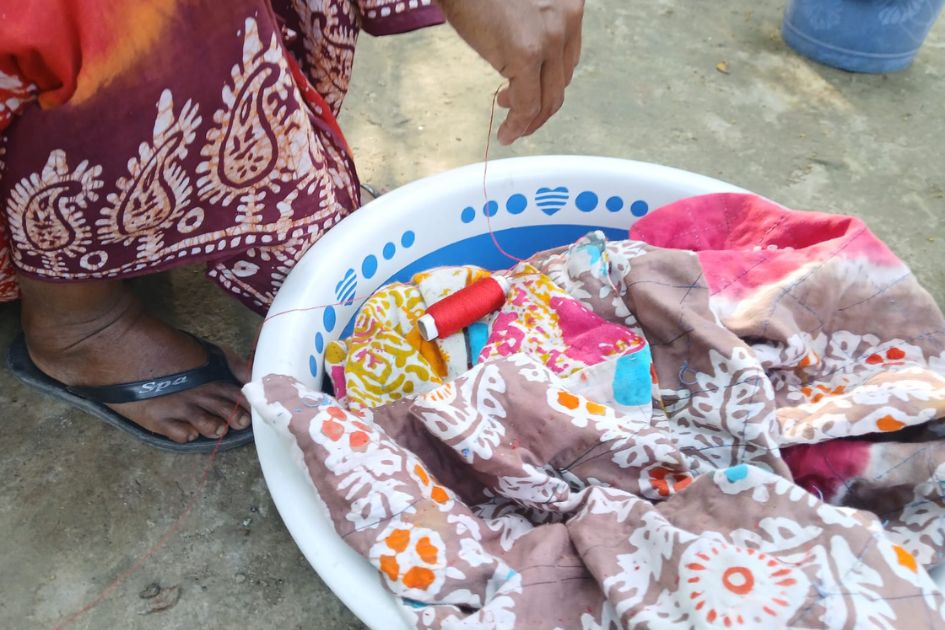
Another woman said gab still visits her dreams. Sometimes she is crushing the green fruit into dye. Sometimes she is eating it ripe. In waking life, the work has almost disappeared.
A wetland built on moving water
Arial Beel is a seasonal wetland in central Bangladesh. Its core lies in Srinagar upazila of Munshiganj district, not Dhaka, and its influence extends into Dohar and Nawabganj upazilas of Dhaka and Sirajdikhan in Munshiganj. The Padma lies to the south and the Dhaleshwari river system to the north. An Urban Development Directorate study puts the wetland’s watershed at about 136 square kilometres.
Residents describe a six-month pulse. Water usually begins spreading through the beel in Jaistha, roughly mid-May to mid-June, and remains until Kartik, roughly mid-October to mid-November. The exact timing changes with rainfall and river levels. For much of the remaining half of the year, the shallower land dries enough for boro rice and vegetables. Deeper basins, locally called denga, retain water and provide refuge for fish and other aquatic life. Government fieldwork also records rice and vegetable cultivation on the exposed floodplain in the dry season.
This alternating landscape shaped Rajbangshi life. Fishing was not simply an occupation. It determined when boats were repaired, when credit was taken, how work was divided within a family, and what children learned from their elders. Residents estimate that about 10,000 Rajbangshi people live around the beel, although no recent official count was found.
Fifteen years ago, Krishna Rajbangshi had four fishing boats at Sadrampur. He said they employed about 100 people. Today he has one boat, worked by a crew of about ten. His family once owned roughly 100 nets; now it has about twenty.
“There were days when my team had to fight against strong storms and waves,” Krishna said. Fishing was dangerous, but a good season could sustain a family. The danger remains. The abundance does not.
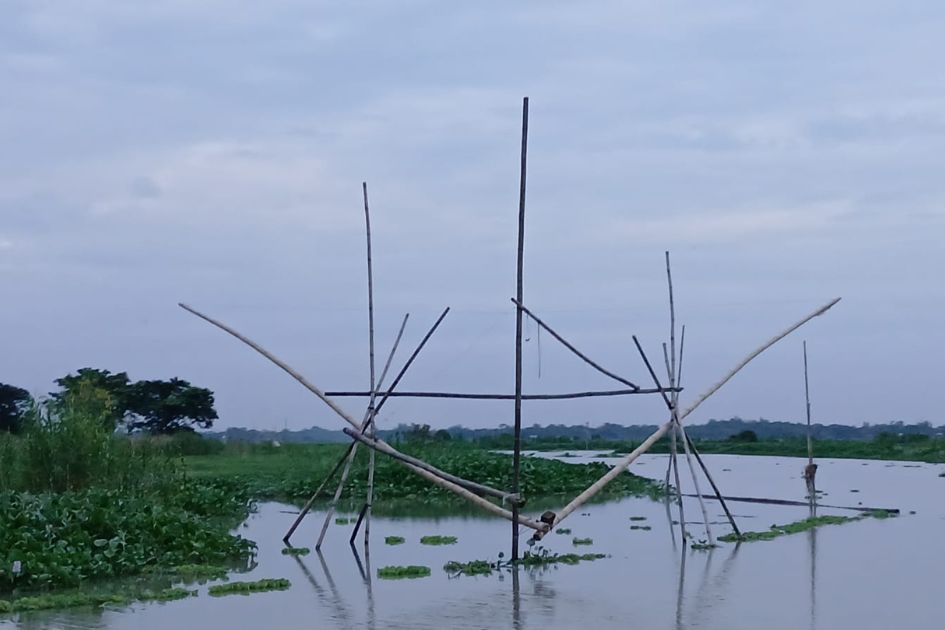
Jaydev Rajbangshi, 53, measures the change by the vesal, a large lift net fixed to a bamboo frame. “One vesal used to yield 60 to 80 kilograms of fish a day,” he said. “Now I get about five kilograms.”
He remembers thousands of vesals across the beel and believes fewer than 1,000 remain. That is his estimate, not a government count. The retreat is visible in younger people’s choices: after hauling up a few fish for a day’s labour, many do not return the next morning.
The three-kilometre choke point
To residents, the story begins upstream. Their accounts and the reporter’s field tracing describe the canal system from Goalimanda to Syedpur as roughly 40 kilometres long. From the Padma near Holudia in Srinagar, it reaches Arial Beel after about 15 kilometres, then continues north towards the Dhaleshwari at Syedpur in Keraniganj. They identify the immediate bottleneck as a roughly three-kilometre stretch between the Padma and Goalimanda.
These distances are local and field estimates, not measurements published in the government studies reviewed for this article. They should be checked against Bangladesh Water Development Board or Institute of Water Modelling geographic data before any engineering decision.
Residents also point to other possible reconnection points in Srinagar, Munshiganj and in Dohar, Dhaka, where shorter excavations might link the beel to the Padma. Their proposal is not simply to dig the longest visible canal. It is to compare routes and restore the hydraulic connections that can move water, sediment and fish without creating new problems for farms and homes.
The broader diagnosis is well documented. The government’s 2025 change-detection study found that built-up land in the Arial Beel watershed rose from 0.04 per cent in 2005 to 4.25 per cent in 2025. From 2020 to 2025 alone, mapped dry-season water bodies declined by about 95 acres while built-up land increased by roughly 278 acres. The report links the loss of water retention and connectivity to settlements, roads, embankments, intensive agriculture and obstructed drainage.
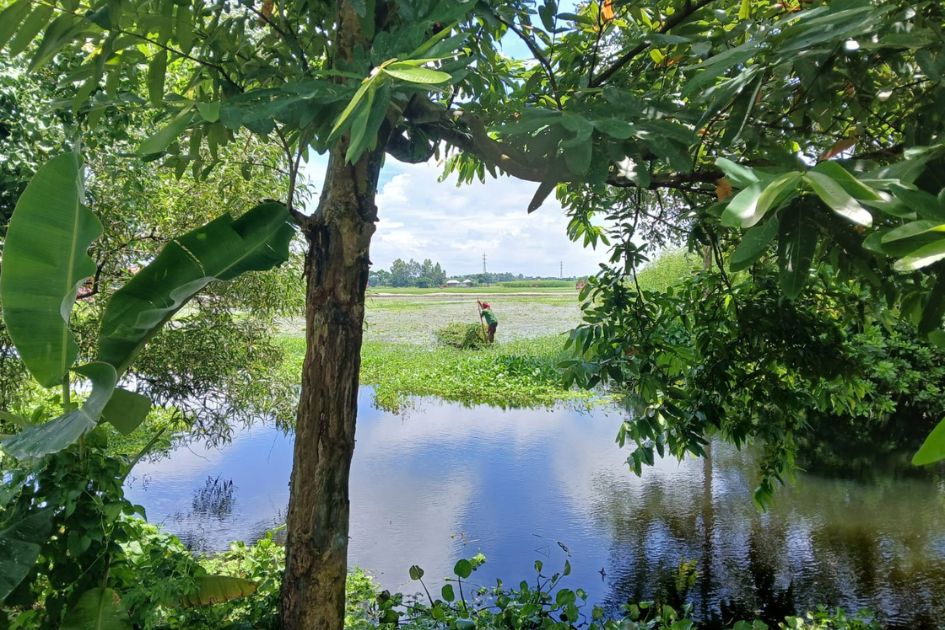
An Institute of Water Modelling study reached a similar conclusion. It found that the Srinagar-Dohar embankment had cut eight canals off from the Padma, leaving them impassable by boat. The study director estimated that about 30 per cent of the wetland had been filled or occupied and identified some forms of fish farming and waste from Dohar municipality as further threats.
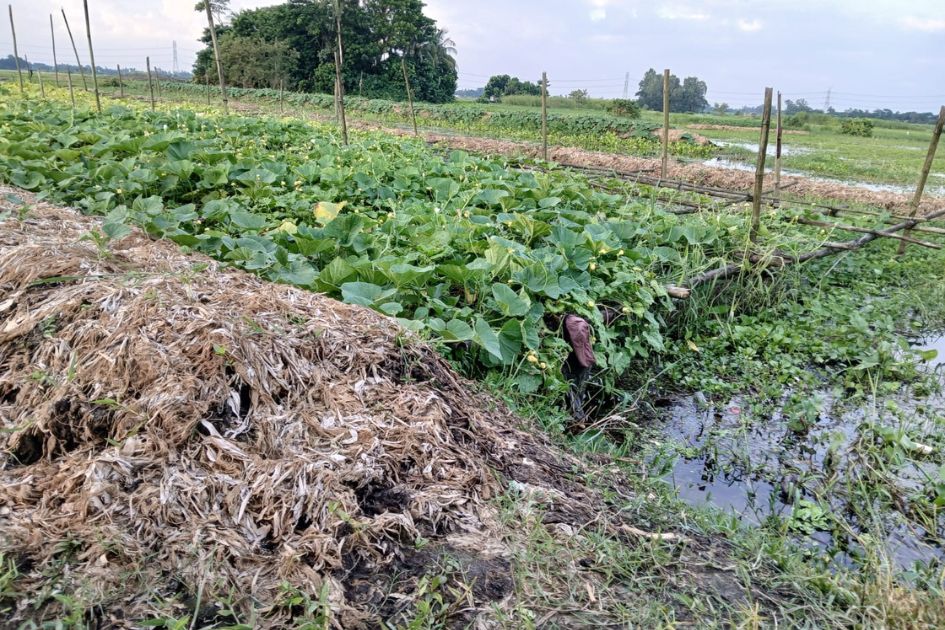
When a canal closes, the damage does not stop at the banks. River water no longer carries fish, sediment and nutrients into the beel as it once did. Straw and vegetable residues can rot in stagnant water. Breeding routes narrow. A monsoon flood may still make the wetland look full, but the water is less connected and less alive.
When women’s work disappears
The decline reaches households before the last boat is sold. Residents say thousands of women from Rajbangshi and other communities once earned seasonal income by mending and dyeing nets, drying fish, sorting catches and keeping sales records. No labour survey was found to confirm that number, so it remains a community estimate. The scale of the lost work, however, is evident in the disappearance of the tasks themselves.
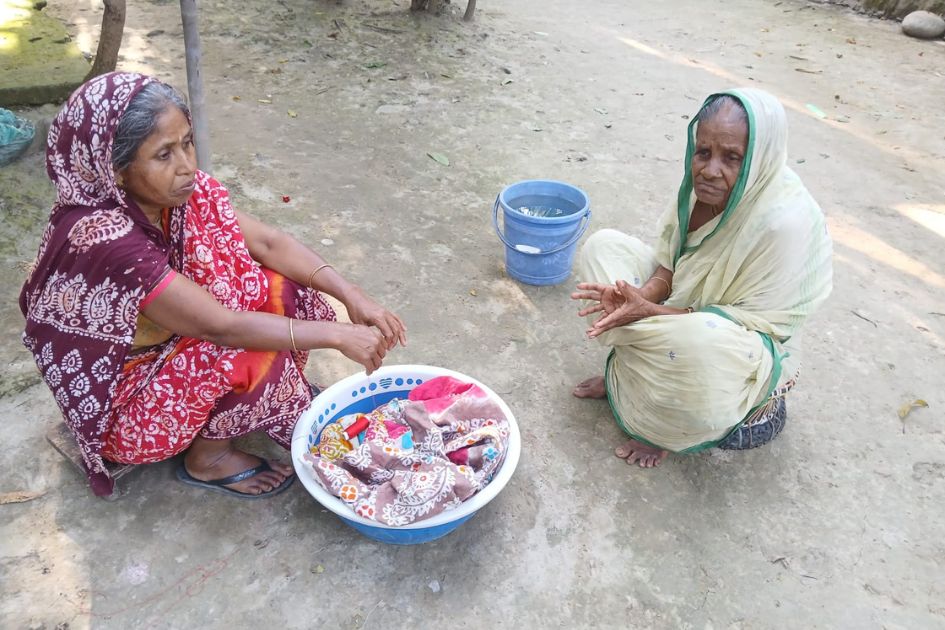
Women’s earnings helped cover food, school costs and loan instalments. The work also gave them a place in the fishing economy that was partly their own. When families cut the number of nets, women lose paid work first. Kantha stitching can replace a little income, but it does not replace the collective labour, skills or songs built around fishing.
The gab tree followed the nets. Residents say that as net use fell many times over, demand for gab dye collapsed and locally available trees declined at a similar pace. A species-level inventory is needed before describing the tree as “near extinction”. Gab is scarce in these settlements, residents say, but local scarcity is not the same as national extinction.
Their observation fits a wider pattern of ecological loss. A 2026 peer-reviewed study of trees in Arial Beel found that 99 per cent of surveyed residents perceived a decline in tree availability over the previous two decades. The study did not measure gab separately, but it strengthens the case for a proper inventory of the species and for including useful native trees in wetland restoration.
The fish that no longer arrive
Ranjit Rajbangshi, 48, said two other fishing methods have nearly vanished. Longlines are no longer profitable when fish are scarce. Hunting fish at night with a torch and an iron spear is rarely worth the effort. In his estimate, catches have fallen at least tenfold over twenty years. He blames the loss of the Padma connection above all.
The government biodiversity survey still recorded 76 fish species in Arial Beel in 2025, including 15 considered nationally threatened. Jaydev said sarpunti, meni and several kinds of shrimp, once regular catches, are now rare in his nets. When villagers call a fish “almost extinct”, they are describing local disappearance, not announcing a scientific extinction.
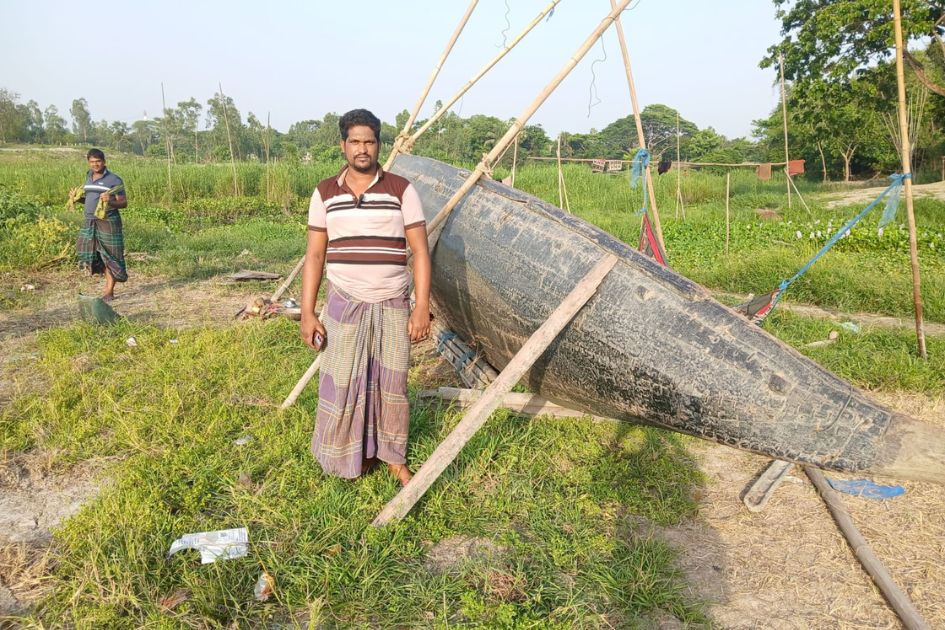
Older residents also say the seasons have changed. Jaydev remembers sustained rain in Baishakh and Jaistha, when storms threatened houses, but floodwater opened breeding habitat. Padma Rani remembers winters lasting about four months; she now feels the cool period is closer to two and a half.
Those memories matter, but they cannot establish climate causation on their own. Rainfall, temperature, river levels, embankments, pollution, pesticides, land conversion and fishing pressure can interact. The official evidence is clearest on land-use change and broken waterways. Blaming climate change alone would obscure the people and structures directly blocking canals.
The economic loss is personal. Shyamal Rajbangshi, 30, now runs a tea stall. “Fishing is in my blood,” he said. On a boat, he had knowledge, status and a role in a team. Behind the tea counter, those skills carry little value.
Soman Biswas, 30, said four productive fishing months once supported a family for the year. Now fishing income often fails to cover food, education and medical costs. Families first reduce their nets, then their crews, then the number of days on the water. Leaving the profession is rarely one decision. It is a slow retreat.
The old economy also reused almost everything. Worn nets protected vegetable plots, poultry houses and cattle sheds. Dung fertilised fields. Crop residues, insects and aquatic plants fed fish. As natural catches fell, some farmers borrowed money to lease ponds, buy feed and intensify production. That separated system costs more and can add chemicals and waste to already stagnant water.
A restoration project begins
Concern over encroachment has already reached the courts. In August 2023, the High Court ordered authorities to stop new earth filling, construction and encroachment in Arial Beel and asked for satellite maps and progress reports. A court order, however, does not reopen a blocked canal.
In June 2025, an Institute of Water Modelling study proposed a five-year programme worth about Tk 6.14 billion. It included canal re-excavation, removal of illegal structures, boundary markers, fish sanctuaries and other livelihood and conservation measures. On 25 January 2026, the Executive Committee of the National Economic Council approved the integrated water and land management project for Arial Beel.
By mid-2026, publicly indexed procurement notices showed that the Water Development Board had invited bids to re-excavate several canals under the project, including five kilometres of Deolvog canal in Srinagar and routes in Dohar. The project, in other words, has moved beyond a study. Whether it restores the most important connection to the Padma is still the central question for residents.
At the time of reporting, Farzana Babi Mitu, then the upazila nirbahi officer of Louhajang, said six canals had been approved in the first phase but the Goalimanda canal was not among them. Abdus Salam Azad, the current member of Parliament for Munshiganj-2, told the reporter that a roughly 20-kilometre excavation from Goalimanda to Arial Beel was planned. Residents’ estimate of about 40 kilometres refers to the larger Goalimanda-Syedpur system, not only the segment between the Padma and the beel.
Excavation alone will not restore a wetland. A bridge with too narrow an opening can obstruct flow again. A structure that holds water for dry-season crops may also block migrating fish. Re-excavated canals can be filled or occupied again if boundaries are not enforced. Land, crops, roads, homes, fisheries and seasonal water must be planned together.
Md Shamsuddoha, chief executive of the Center for Participatory Research and Development, said the first task is to restore the Padma connection and then correct the governance failures that allow canals to be occupied again. Development, he said, must treat the environment as essential infrastructure, not as an obstacle to business.
Philip Gain, director of the Society for Environment and Human Development, said the knowledge of local fishing families belongs in the engineering plan. They know where water once moved, where fish bred and which openings have closed. They are not marginal users of the canal. Their lives are part of its hydrology.
What returns with the water?
The name Rajbangshi is sometimes translated as “of royal lineage”, and the history of the Koch kingdom is part of the community’s wider story. Cooch Behar’s official history traces the kingdom to Biswa Singha in the early sixteenth century and records its 1773 treaty with the East India Company. But Rajbangshi identity cannot be reduced to literal descent from one royal family. Around Arial Beel, it has also been shaped by kinship, migration, language, and generations of work with boats and nets.
Krishna believes that renewed Padma flow would flush rotting material from the beel and allow fish habitat to recover. He does not expect twenty years of damage to disappear in one season. Opened canals would need protection. New filling would have to stop. Denga and breeding grounds would need time to revive.
The sequence Padma Rani remembers is simple. Women worked because the nets were needed. The nets were needed because fish moved. The fish moved because water moved.
The government has now approved a project intended to restore that movement. For the families of Arial Beel, its success will be measured not by the kilometres excavated or the money spent, but by what travels through the reopened canals: river water, fish, boats, work and, perhaps, the songs that once made long days feel short.
This story is published as part of the CPRD–TCW Reporting Fellowship 2025




