




Salinity, epiphytes and plastics are endangering the forest’s existence
How long will it take us to wake up?
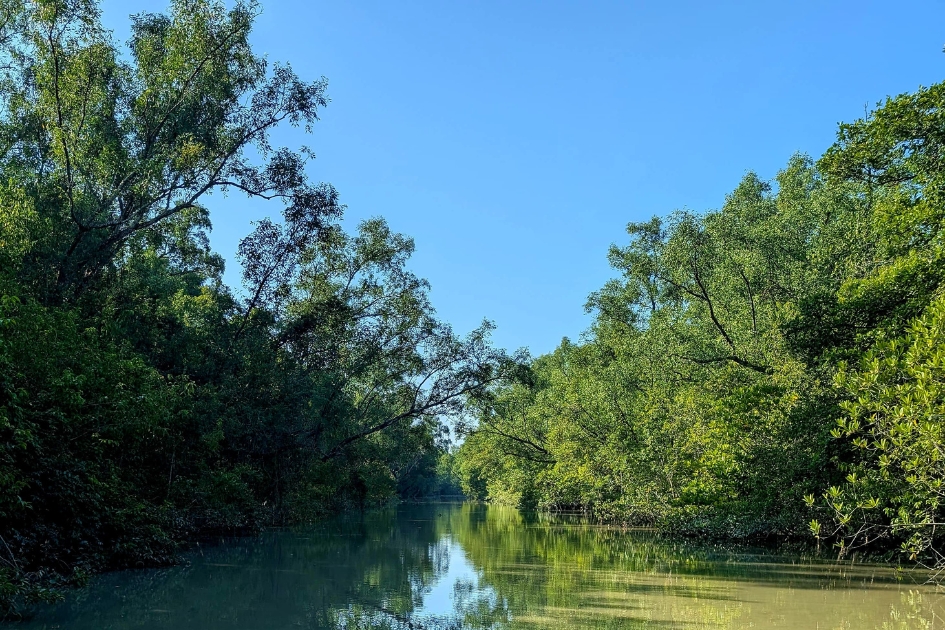
The Sundarbans, the world’s largest contiguous mangrove forest, is undoubtedly a natural gift to Bangladesh. Its dense vegetation works not only as an air purifier and a shelter and food source for wildlife, but also as a natural shield for the coastal regions of Bangladesh during natural disasters.
Located in the south-western part of Bangladesh and extending into the south-eastern part of India, the Sundarbans is shared by the two countries, with Bangladesh owning around 60 percent of the forest. The government has divided the Bangladeshi part of the Sundarbans into four administrative ranges: Khulna range covering parts of Khulna district, Satkhira range covering parts of Satkhira district and Chandpai and Sarankhola ranges of Bagerhat district.
The Sundarbans is rich in diverse plant, animal and aquatic life. It is home to various mammal species, including the world-famous Royal Bengal Tiger, along with numerous reptiles and bird species. The forest supports several plant species such as Sundri, Gewa, Goran and Keora.

Recently, our team visited several areas of the Sundarbans as part of the third-year fieldwork of the Department of Geography and Environmental Studies at the University of Chittagong. Our study area included Andharmanik, Kotka-Jamtola, Dimer Char, Dublar Char, Nilkamal and Karamjal, where various forms of environmental degradation revealed the alarming condition of the Sundarbans.
The name Sundarbans is believed to be derived from the Sundri tree, which is abundant in the region. Today, these Sundri trees are being extensively attacked by epiphytes, particularly in Andharmanik. The trees already have a history of top-dying disease linked to increasing salinity. A new challenge has now emerged with a surge in epiphytic growth. The epiphytes are suspected to include Bird’s nest fern (Asplenium nidus) and ferns from the Drynaria genus, though no official confirmation has yet been made.

Sundri trees naturally thrive in freshwater and low-salinity conditions. The Gorai River, the main tributary of the Ganges, supplies freshwater to the Passur and Sibsa rivers, which play a vital role in sustaining the Sundarbans ecosystem. Over the past few decades, freshwater inflow from the Ganges through the Gorai River into the Passur River has declined significantly due to water diversion at the Farakka Barrage in India.
Reduced freshwater discharge from upstream, combined with rising sea levels, has increased soil and water salinity, making Sundri trees more vulnerable to disease and epiphytic infestation. These parasitic plants absorb nutrients from the host trees, causing them to weaken, dry out and eventually die. According to Forest Department officials, 25 to 30 percent of Sundri trees are already infected. If this trend continues, the Sundarbans may eventually lose their signature Sundri trees. Proper investigation and research into this issue are still lacking.
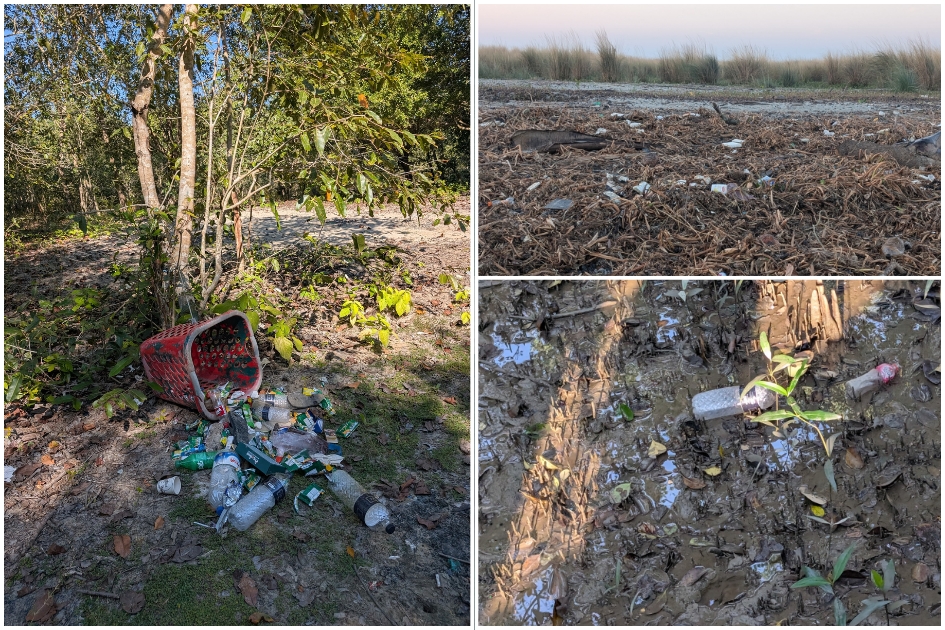
Another major concern for the Sundarbans is the rapid increase in plastic pollution. Although the Government of Bangladesh imposed a ban on single-use plastics in the Sundarbans in March 2023, the measure appears to be ineffective. Plastic waste was found scattered across almost every area we visited. In Dimer Char, large amounts of plastic waste were deposited along with plant seeds by tidal action. In Kotka, piles of plastic discarded by tourists were clearly visible.
Cities surrounding the Sundarbans generate and consume vast amounts of plastic daily. Much of this waste from nearby localities and factories is dumped into rivers, carried toward the Bay of Bengal and eventually deposited in the Sundarbans by tidal currents. Unregulated tourism further worsens the problem. A local tour guide with 15 years of experience said, “We always try to prevent tourists from taking single-use plastics into the forest. Sadly, we receive no support from the government for waste disposal inside the forest.”
In 2022, a joint study by Nalanda University and the Central University of Jammu in India, along with Noakhali Science and Technology University in Bangladesh, reported that nearly four million tons of microplastics are discharged annually from rivers in India and Bangladesh into the Sundarbans and the Bay of Bengal. This growing plastic pollution poses a serious threat to biodiversity, wildlife and marine life. Soil fertility is declining, animals often mistake plastic debris for food and microplastics have recently been found in local fish, which ultimately enter the human food chain.
Call for Action
Climate change and human activities are putting the Sundarbans at grave risk. Accelerating salinity, the spread of epiphytes, rising sea levels, land loss and plastic pollution have all reached alarming levels. Unfortunately, strong and coordinated action has yet to be taken.
We urge the Forest Department to immediately investigate the causes behind the epiphytic surge in Sundri trees, take steps to prevent further spread and prioritize conservation of the species. The government must also address the issue of freshwater flow into the Sundarbans rivers. Plastic discharge into the forest needs strict control and tourism must be made eco-friendly and carefully monitored to prevent further damage.
The Sundarbans hold immense ecological and economic value. Any degradation of this forest directly affects Bangladesh. Decline of the forest will weaken the natural barrier against cyclones and tidal surges, leaving coastal communities more vulnerable to loss of life and property. It will also lead to habitat loss for wildlife, pushing many species toward extinction.
Lack of awareness and poor management are accelerating the deterioration of the Sundarbans. Strengthened biodiversity and wildlife management, along with better-regulated tourism, are urgently needed. It is time to take decisive action to protect and preserve the Sundarbans before it is too late.




